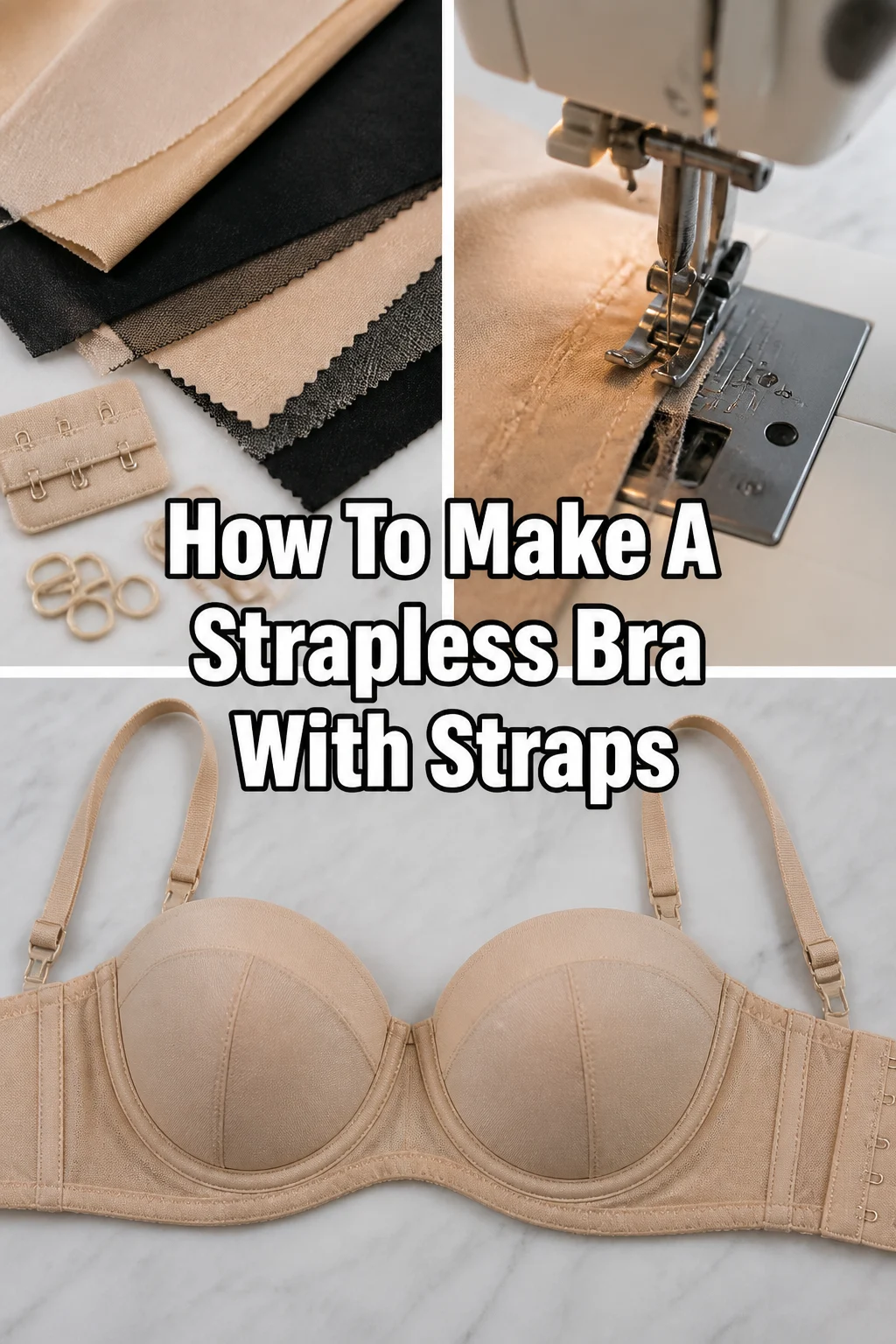
🧵 How To Make A Strapless Bra With Straps
Ever found the perfect strapless dress, only to wish your strapless bra offered a bit more security?
I’ve been there, constantly tugging and adjusting, which is why I mastered this simple hack.
This guide will show you how to add secure, comfortable straps to any strapless bra, transforming your wardrobe and confidence.
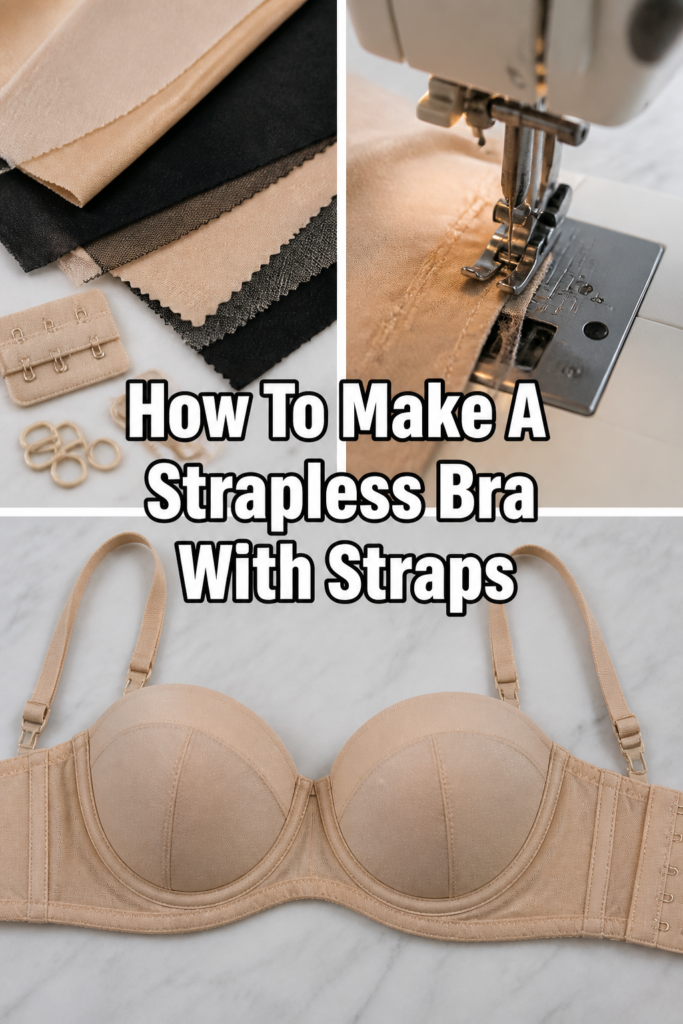
Quick Overview
This project empowers you to convert a standard strapless bra into a versatile, strapped version. You will gain a custom-fit bra that offers both support and flexibility for various outfits. It’s a practical skill for anyone looking to maximize their existing undergarments.
- Time needed: 45-75 minutes
- Difficulty: Intermediate
- What you’ll need: A strapless bra, 1 yard of bra strap elastic, 2 bra rings, 2 bra sliders, matching thread, hand sewing needle, fabric scissors, measuring tape, tailor’s chalk (optional).
Step-by-Step Instructions
Step 1: Gather Your Materials
Before you begin, lay out all your necessary tools and materials on a clean, well-lit surface. Having everything within reach streamlines the entire process. Confirm you have a sturdy needle suitable for bra fabric.
Ensure your chosen elastic matches the width of standard bra straps for comfortable wear. The rings and sliders should also be the correct size to accommodate your elastic. A contrasting thread can be used for practice, but for the final product, match your bra’s color.
Step 2: Prepare the Bra for Attachment Points
Identify the ideal locations on your strapless bra where the straps will attach. Typically, these are at the top edge of the bra cups, near the armpit, and at the back band, closer to the center. Mark these spots with tailor’s chalk or small pins.
Reinforce these attachment points on the bra itself. Using a needle and thread, sew a few small, tight stitches around the marked areas. This creates a stronger foundation for the rings, preventing fabric tearing once the straps are under tension.
Pro Tip: Look for existing loops or reinforced areas on the bra where removable straps might have once attached. These are ideal spots and often require less pre-reinforcement.
Step 3: Attach Rings to the Bra
Take one bra ring and position it securely over one of the reinforced attachment points on the front of the bra. Use your matching thread and needle to sew the ring firmly onto the bra fabric. Pass the needle through the fabric and around the ring multiple times.
Create several small, tight stitches to ensure the ring is anchored without any give. Repeat this process for the second ring on the other front attachment point. These rings will serve as the anchor points for the adjustable straps.
Make sure the rings are facing the correct direction, allowing the strap elastic to pass through smoothly without twisting. Double-check their symmetry on both sides of the bra for even strap placement.
Step 4: Measure and Cut Strapping Elastic
Measure yourself from the front ring attachment point, over your shoulder, and down to the back band attachment point. Add an extra 6-8 inches to this measurement for adjustability and sewing allowance. This length will be for one complete strap.
Cut two pieces of elastic to this measured length. Ensure your cuts are straight and clean to prevent fraying. You now have two identical lengths of elastic for your bra straps.
Pro Tip: If you have an existing bra with comfortable straps, you can use one of its straps as a guide for length. Simply measure the full length of the strap when fully extended.
Step 5: Assemble the Adjustable Straps
Take one length of elastic. Thread one end of this elastic through the center bar of a bra slider. Fold the elastic end over the bar by about half an inch and sew it securely in place. Use small, tight stitches to prevent any slippage.
Now, thread the other end of the elastic through one of the bra rings you attached to the front of the bra. After passing through the ring, thread the elastic back through the remaining two slots of the slider, creating a loop. This forms your adjustable strap.
Repeat this assembly process for the second strap, using the second length of elastic, the remaining slider, and the other front bra ring. Ensure both straps are assembled identically to maintain symmetry.
Step 6: Attach Straps to the Back Band
With your adjustable straps now connected to the front rings, it’s time to secure them to the back band of the strapless bra. Hold the bra up to your body or a mannequin. Identify the back attachment points you marked in Step 2.
Take the loose end of one assembled strap and thread it through the back attachment point on the bra band. Fold the elastic end over by about an inch and sew it firmly to itself, creating a secure loop around the bra band.
Ensure the strap is not twisted before sewing. Repeat this for the second strap on the other side of the back band. Use strong, reinforcing stitches for all four attachment points (two front rings, two back loops).
Step 7: Test and Adjust the Fit
Once all straps are sewn in place, try on your newly modified bra. Adjust the sliders to find the most comfortable and supportive strap length. The straps should feel snug but not dig into your shoulders.
Walk around, sit, and move your arms to test the bra’s stability. Make any fine-tune adjustments to the strap length until the bra feels perfectly secure and comfortable. Pay attention to how the cups sit and if the band remains level.
Step 8: Finish and Reinforce
After achieving the perfect fit, go back over all your sewn attachment points. Add extra stitches where needed for maximum durability and security. Trim any loose threads close to the fabric.
Consider adding a tiny dab of fabric glue to the sewn ends of the elastic where it loops around the sliders and the back band. This provides an extra layer of security against fraying or unraveling, though it’s optional. Your custom strapless bra with straps is now complete.
Common Mistakes to Avoid
Incorrect Strap Length
Cutting your elastic too short or too long can lead to discomfort or poor support. If straps are too short, they will dig into your shoulders, causing pain. If too long, they won’t provide adequate lift, defeating the purpose. Always measure carefully and add extra for adjustments.
Weak Attachment Points
Failing to reinforce the areas where the rings and straps attach to the bra can result in fabric tearing or straps detaching. Bra fabric, especially on strapless designs, might not be designed for the upward pull of straps. Always add a few extra reinforcing stitches to these crucial areas.
Using the Wrong Materials
Opting for non-elastic ribbon or thin, weak elastic will compromise comfort and durability. Bra straps need to be elastic to move with your body and provide consistent support. Ensure your rings and sliders are also robust enough to handle daily wear and washing.
Skipping Reinforcement Stitches
A few quick stitches might seem sufficient initially, but they won’t stand the test of time. Overlooking the need for multiple, tight, and well-secured stitches at every attachment point will lead to unraveling. Take your time to create strong, lasting connections.
Troubleshooting
Straps Digging In
If your newly added straps are digging into your shoulders, they are likely too short or too narrow. Try loosening the sliders to extend the strap length first. If they are still uncomfortable, consider replacing the elastic with a wider, softer variety.
A wider strap distributes pressure over a larger area, significantly increasing comfort. You might also check if the bra band itself is too tight, pushing the straps up.
Bra Still Slipping
Even with straps, a strapless bra can sometimes still slip if the band fit is poor. Ensure the bra band is snug around your ribcage; it should be firm but not painful. The band provides the majority of a bra’s support.
If the band is loose, consider altering it to be tighter or adding silicone grippers to the inside of the band. The straps are there to enhance support, not to be the sole source of lift.
Uneven Support
If one side of the bra feels more supportive than the other, or if the cups sit unevenly, check the symmetry of your straps. Ensure both straps are the same length and are attached at identical points on both sides of the bra.
Adjust each slider independently until the bra feels balanced and the cups sit correctly. Sometimes, small differences in body shape can also necessitate slight adjustments to individual strap lengths.
Key Takeaways
- Proper measurement is crucial for comfortable and effective strap length.
- Reinforce all attachment points on the bra to prevent tearing and ensure durability.
- Select high-quality, elastic materials for both straps and hardware for lasting wear.
- Test the fit thoroughly by trying on the bra and moving around before final reinforcement.
- Customizing your bra offers enhanced comfort, support, and extends its versatility in your wardrobe.
Frequently Asked Questions
Can I use old bra straps from another bra?
Yes, you absolutely can reuse old bra straps, provided they are in good condition. Simply cut them to the desired length, ensuring they include their existing rings and sliders. This is a great way to recycle and save on materials.
What if my strapless bra doesn’t have any loops or reinforced areas?
If your bra lacks pre-existing attachment points, you’ll need to create them. Use a small piece of sturdy fabric or ribbon, folded and sewn into a loop, then firmly stitch this loop onto the bra at your chosen attachment points. Reinforce these loops extensively.
Can this modification be done without any sewing?
While temporary clip-on solutions exist, a permanent, secure modification requires sewing. Sewing ensures the straps are firmly attached and can withstand movement and washing. Non-sewn methods are generally less reliable for long-term wear.
Will this method work on any type of strapless bra?
This method works best on strapless bras with a firm band and sturdy cup construction. Bras made of very delicate lace or extremely thin fabric might not offer enough support for the added tension of straps. Always assess your bra’s material strength first.
Our Top Recommended Finds
- High-Quality Bra Strap Elastic: Look for soft, plush-back elastic that’s gentle on the skin and maintains its stretch over time.
- Assorted Bra Ring and Slider Kit: A kit with various sizes and colors ensures you have the right hardware for different projects.
- Heavy-Duty Sewing Needles: A sharp, strong needle is essential for piercing through bra fabrics and multiple layers of elastic without bending or breaking.
Embrace Your Newfound Bra Freedom
You’ve just transformed a potentially frustrating garment into a versatile, comfortable wardrobe essential. No more constant adjusting or worrying about slips. This simple project gives you confidence and expands your outfit choices.
Now that you’ve mastered adding straps, consider exploring other bra hacks like converting a regular bra into a racerback. Your sewing skills can unlock a world of personalized comfort. Don’t let another day pass in discomfort; take action and customize your lingerie today!