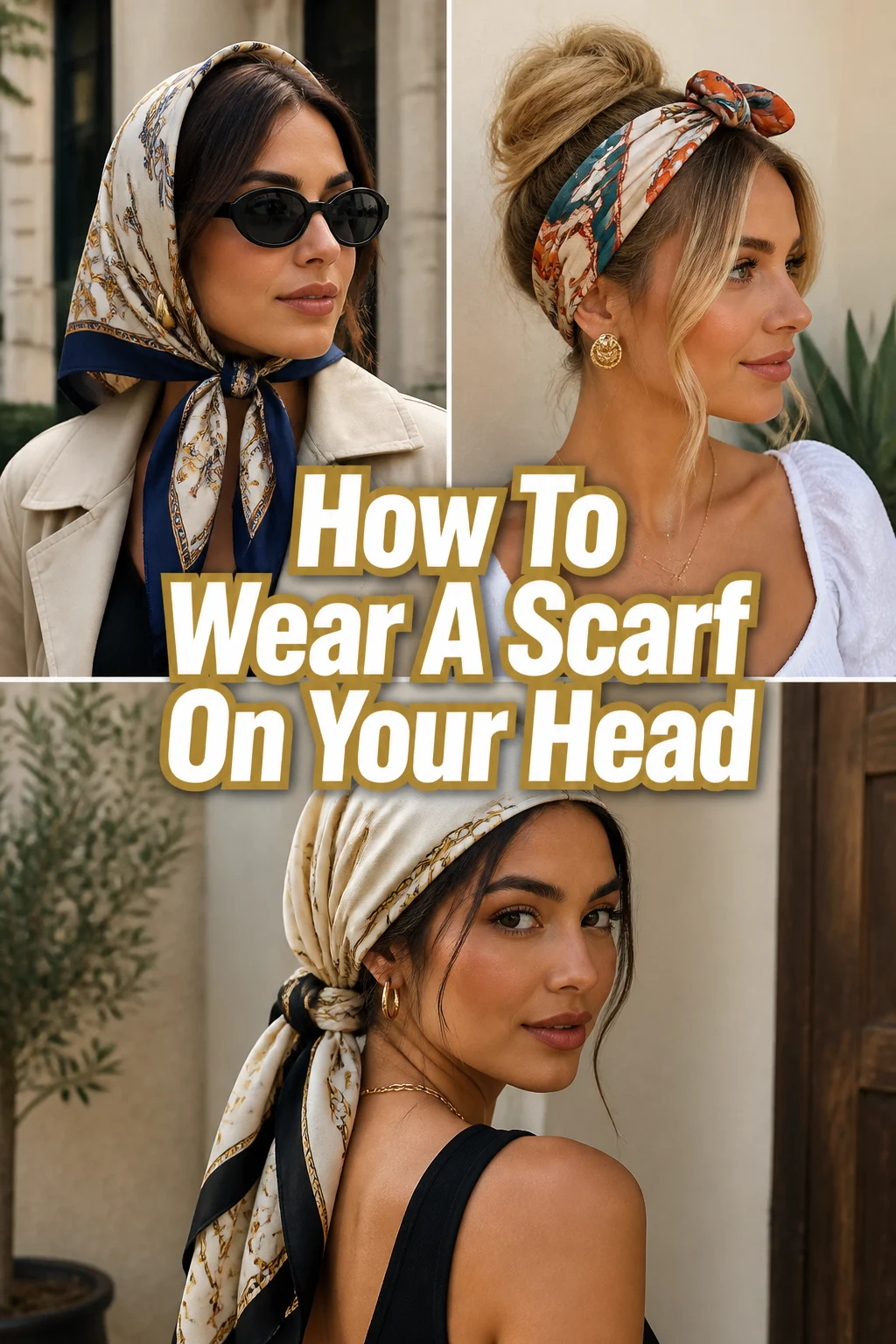
🧣 How To Wear A Scarf On Your Head
Learning to wear a scarf on your head can transform your look and offer practical benefits.
I remember my first attempt, feeling clumsy, but seeing the elegance it added to others inspired me to keep trying.
This guide draws from years of personal experimentation and styling to help you master various headscarf looks with confidence.
Quick Overview
You’re about to discover how simple and stylish it can be to incorporate headscarves into your daily wardrobe. This guide will walk you through several popular methods, ensuring you find a look that suits your personal flair.
- Time needed: 10-15 minutes (for initial learning, quicker with practice)
- Difficulty: Beginner
- What you’ll need: A square or rectangular scarf, optional bobby pins, mirror
Step-by-Step Instructions
Step 1: Select Your Scarf and Prepare Your Hair
Choose the right scarf for the style you want. Silk or satin scarves offer a luxurious feel and are kind to hair, ideal for elegant wraps.
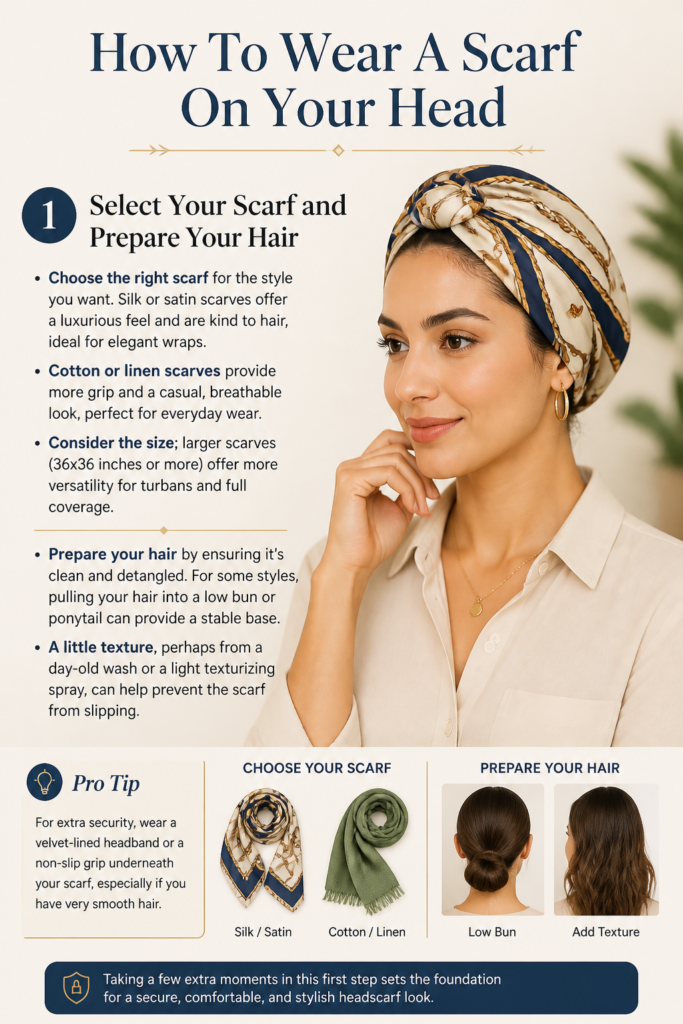
Cotton or linen scarves provide more grip and a casual, breathable look, perfect for everyday wear. Consider the size; larger scarves (36×36 inches or more) offer more versatility for turbans and full coverage.
Prepare your hair by ensuring it’s clean and detangled. For some styles, pulling your hair into a low bun or ponytail can provide a stable base.
A little texture, perhaps from a day-old wash or a light texturizing spray, can help prevent the scarf from slipping.
Pro Tip: For extra security, wear a velvet-lined headband or a non-slip grip underneath your scarf, especially if you have very smooth hair.
Step 2: Master the Classic Headband Fold
Lay your scarf flat on a clean surface. For a square scarf, fold it diagonally in half to create a large triangle.
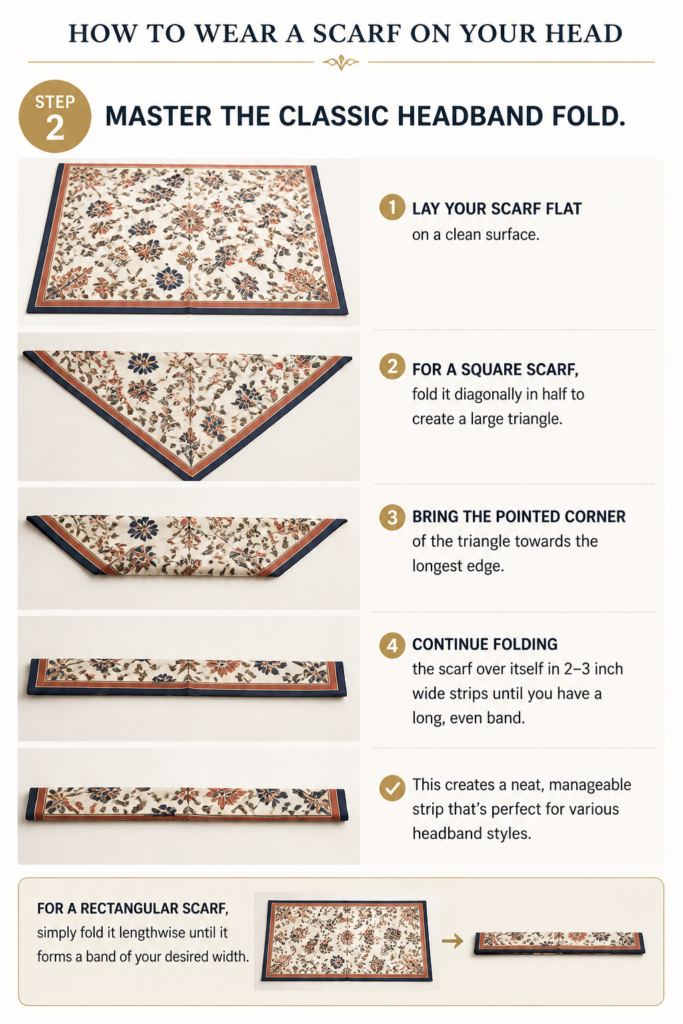
Bring the pointed corner of the triangle towards the longest edge. Continue folding the scarf over itself in 2-3 inch wide strips until you have a long, even band.
This creates a neat, manageable strip that’s perfect for various headband styles. For a rectangular scarf, simply fold it lengthwise until it forms a band of your desired width.
Step 3: The Simple Nape Tie Headband
Position the folded scarf band at your hairline, ensuring it’s centered. Gently pull both ends of the scarf towards the nape of your neck.
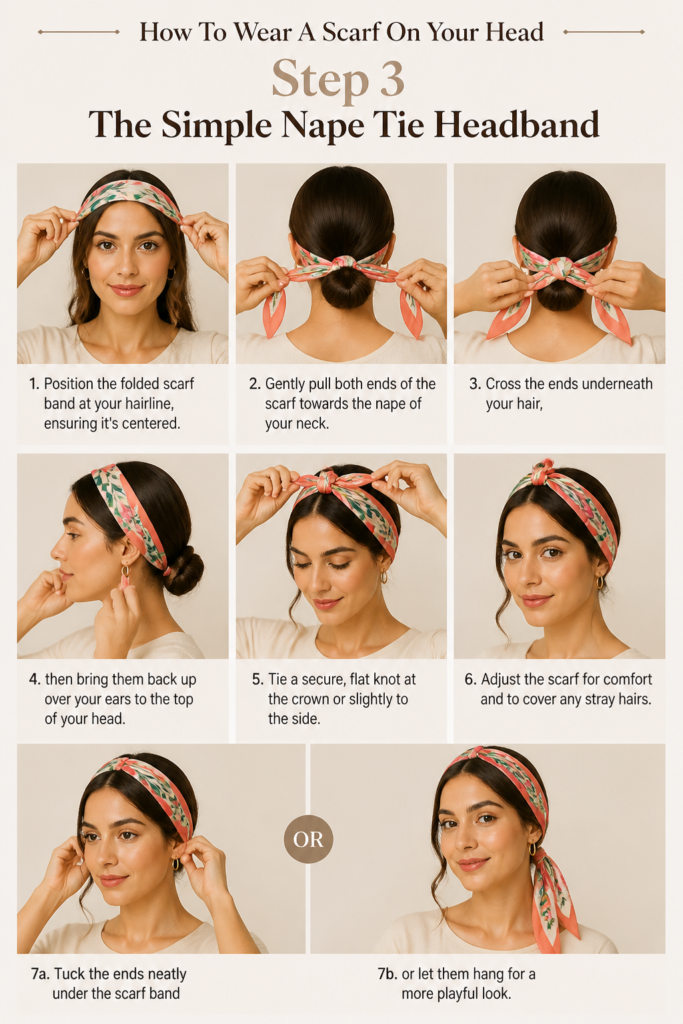
Cross the ends underneath your hair, then bring them back up over your ears to the top of your head. Tie a secure, flat knot at the crown or slightly to the side.
Adjust the scarf for comfort and to cover any stray hairs. Tuck the ends neatly under the scarf band or let them hang for a more playful look.
Step 4: Craft the Elegant Front-Knot Turban
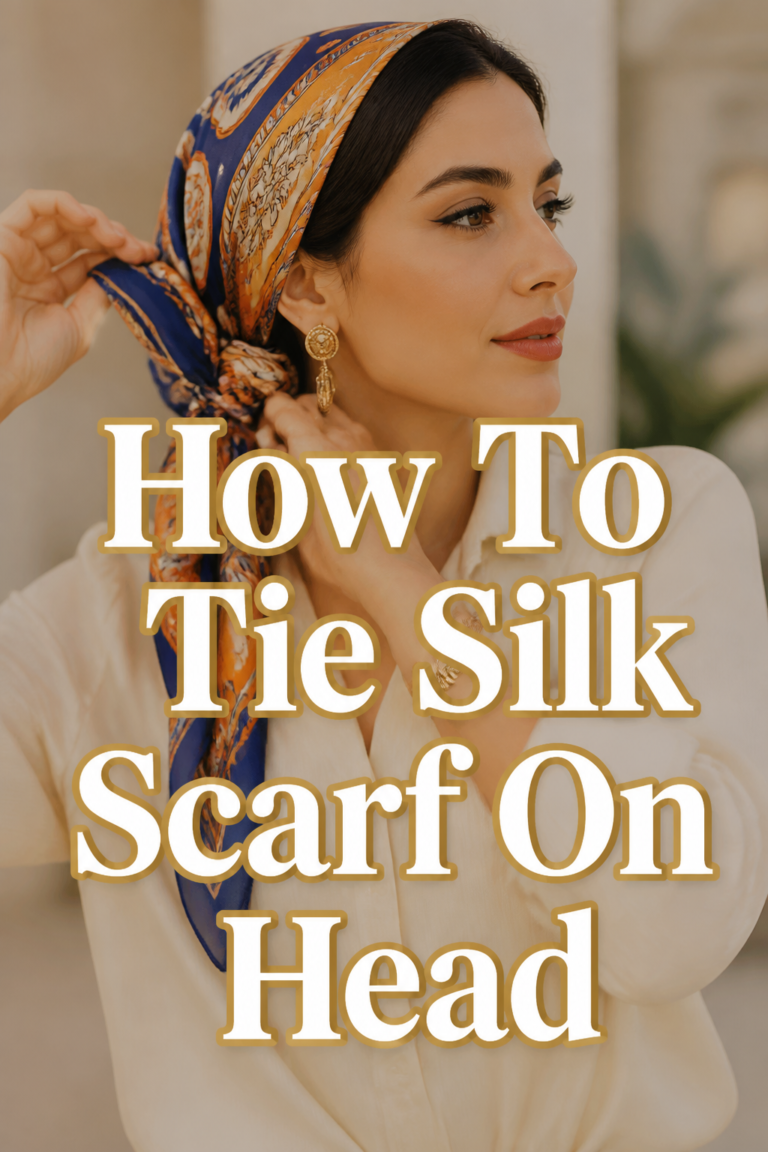
Drape a large square scarf over your head, ensuring the middle of the longest edge rests on your forehead. Allow the two ends to fall evenly over your shoulders.
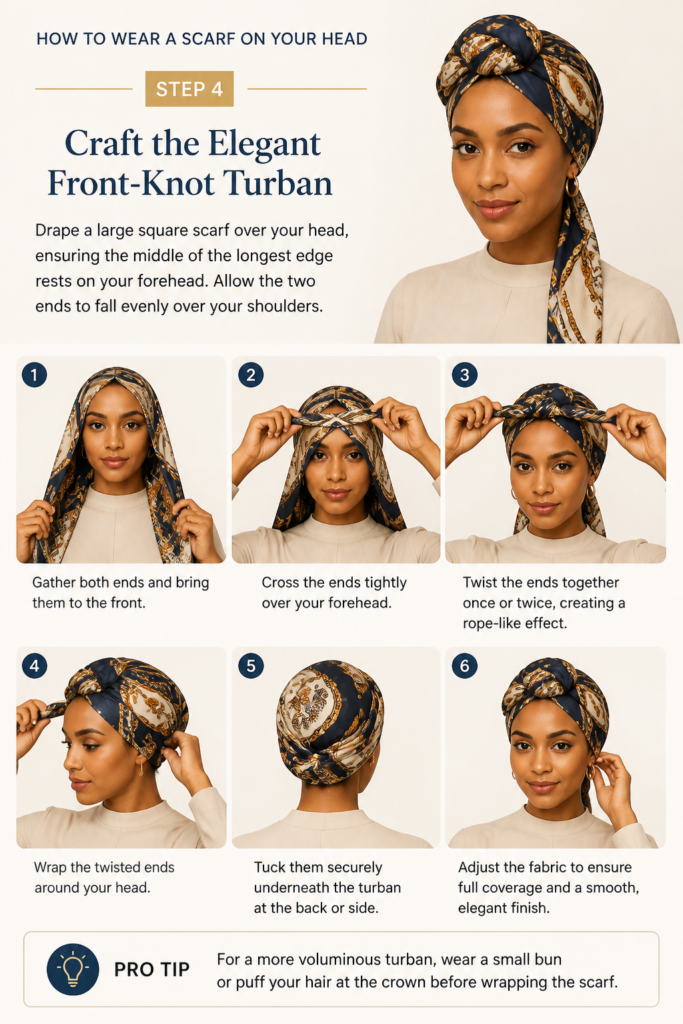
Gather both ends and bring them to the front, crossing them tightly over your forehead. Twist the ends together once or twice, creating a rope-like effect.
Wrap the twisted ends around your head, tucking them securely underneath the turban at the back or side. Adjust the fabric to ensure full coverage and a smooth, elegant finish.
Pro Tip: For a more voluminous turban, wear a small bun or puff your hair at the crown before wrapping the scarf.
Step 5: Achieve the Boho Side-Knot Look
Place the center of your folded scarf band (from Step 2) at the nape of your neck. Bring both ends forward, over your ears, towards your forehead.
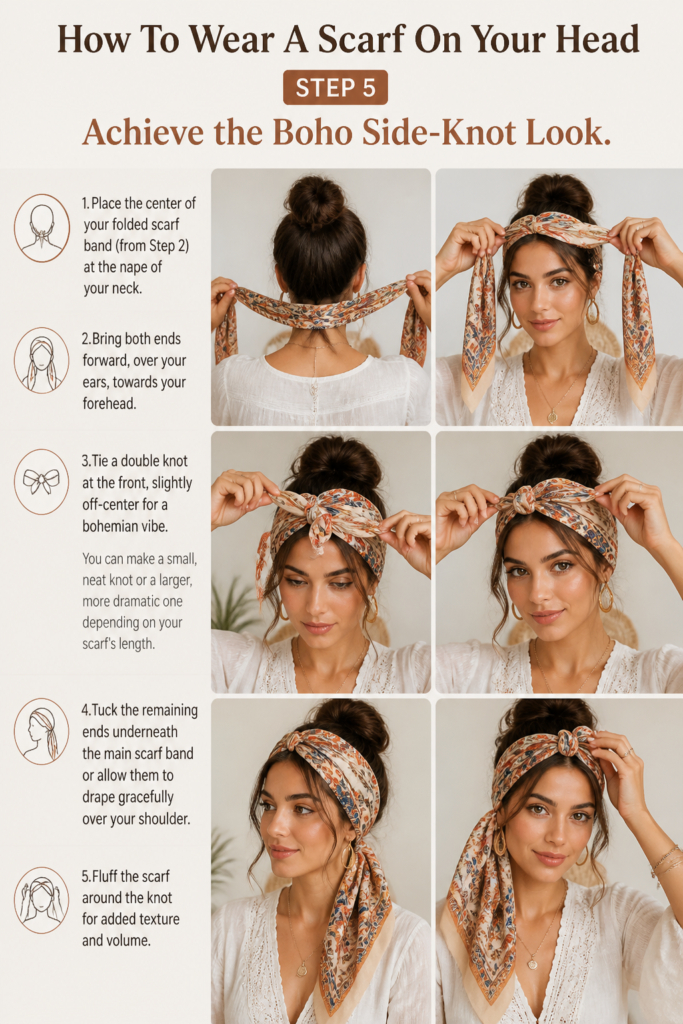
Tie a double knot at the front, slightly off-center for a bohemian vibe. You can make a small, neat knot or a larger, more dramatic one depending on your scarf’s length.
Tuck the remaining ends underneath the main scarf band or allow them to drape gracefully over your shoulder. Fluff the scarf around the knot for added texture and volume.
Step 6: Secure the Chic Bun Cover
Gather your hair into a neat bun, positioned either at the nape of your neck or higher on your crown. Ensure it’s firm and secure with an elastic band.
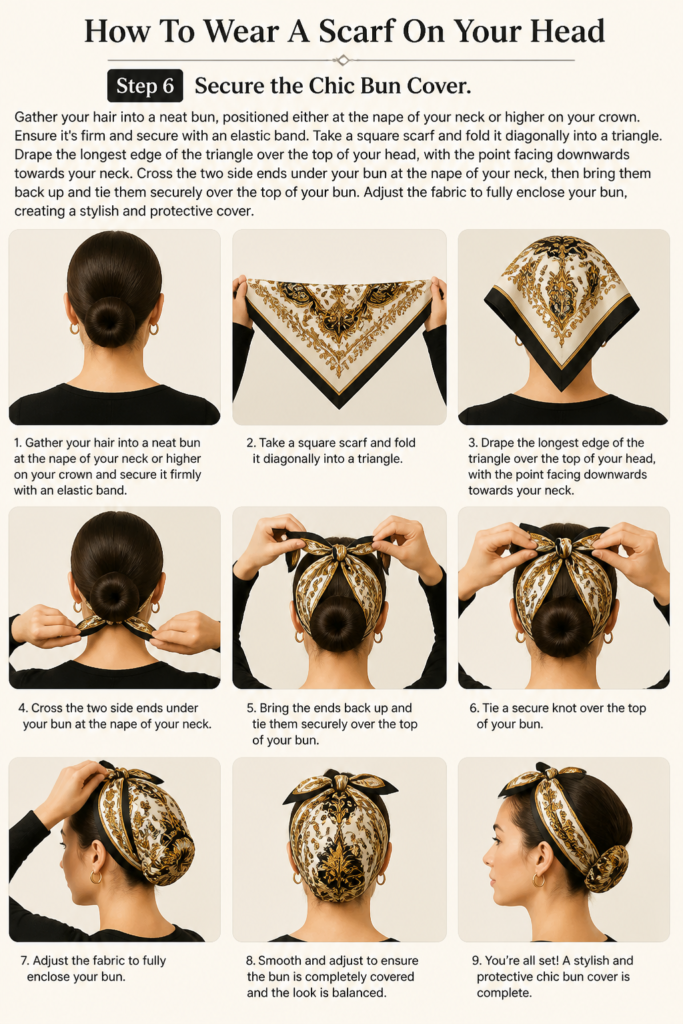
Take a square scarf and fold it diagonally into a triangle. Drape the longest edge of the triangle over the top of your head, with the point facing downwards towards your neck.
Cross the two side ends under your bun at the nape of your neck, then bring them back up and tie them securely over the top of your bun. Adjust the fabric to fully enclose your bun, creating a stylish and protective cover.
Step 7: Refine and Secure Your Style
Check your reflection from all angles to ensure the scarf is even and secure. Gently pull on the edges to tighten or loosen as needed.
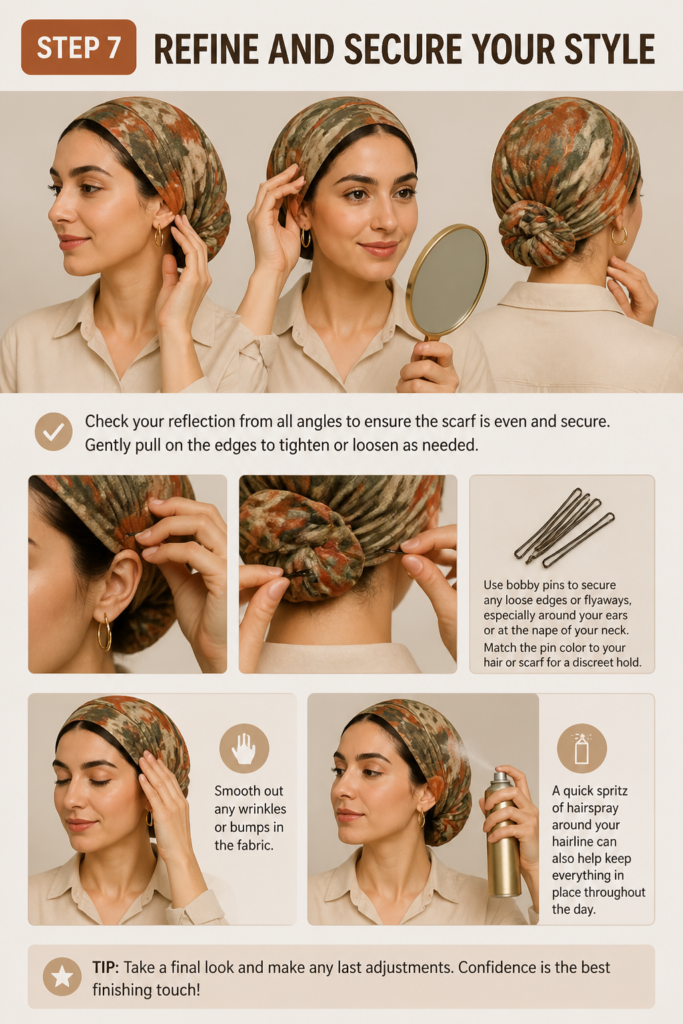
Use bobby pins to secure any loose edges or flyaways, especially around your ears or at the nape of your neck. Match the pin color to your hair or scarf for a discreet hold.
Smooth out any wrinkles or bumps in the fabric. A quick spritz of hairspray around your hairline can also help keep everything in place throughout the day.
Common Mistakes to Avoid
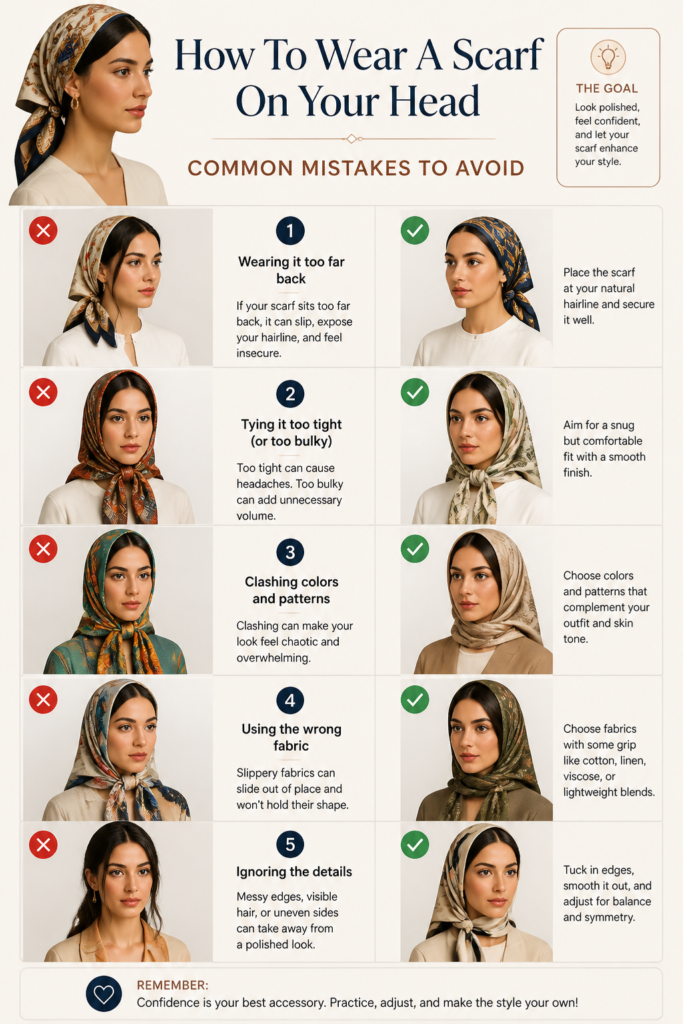
Choosing the Wrong Fabric
Using a scarf made from a slippery material like pure silk without proper hair preparation can lead to constant readjusting. Silk is beautiful, but it needs a good base, like a textured hairstyle or a non-slip headband, to stay put.
Opt for cotton or linen for better grip if you’re a beginner. If you love silk, ensure your hair has some grip or use strategic pinning.
Tying Too Loosely or Too Tightly
A scarf that’s too loose will slip and unravel, becoming a distraction. Conversely, one that’s too tight can cause headaches and discomfort, leaving unsightly marks on your skin.
Aim for a snug but comfortable fit. You should feel secure without any pulling or pressure points. Experiment with different knot strengths until it feels just right.
Ignoring Hair Preparation
Trying to wrap a scarf over freshly washed, super-smooth hair often results in the scarf sliding off. Hair with a little natural texture or a day-old wash provides better grip.
Consider a light texturizing spray or even a quick braid underneath to give your scarf something to hold onto. A low bun can also act as an anchor point for many styles.
Troubleshooting
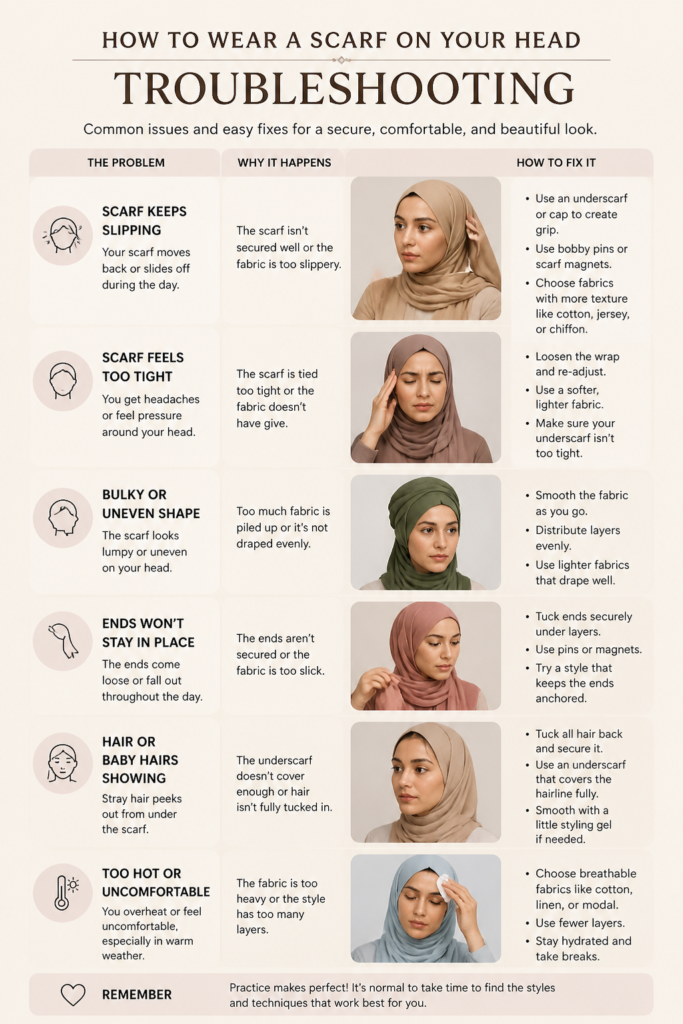
Scarf Keeps Slipping Off
This is a common issue, often due to hair texture or scarf material. Your hair might be too smooth, or the scarf fabric too slick.
Try roughing up your hair slightly with a texturizing spray before wrapping. Alternatively, use a velvet-lined headband or a silicone grip band underneath the scarf to provide crucial friction and prevent movement.
Scarf Feels Too Bulky or Uncomfortable
If your scarf feels heavy or creates an awkward shape, it might be too thick, too large, or folded incorrectly. Certain fabrics naturally have more volume.
Experiment with thinner fabrics like lightweight cotton or rayon. When folding, ensure your strips are even and not excessively wide. For turbans, avoid over-layering the fabric in one spot; distribute the bulk evenly around your head.
Ends Look Messy or Won’t Stay Tucked
Loose ends can detract from an otherwise polished look. This often happens if the scarf isn’t long enough to tuck securely or if the knot isn’t tight enough.
For shorter scarves, consider styles where the ends are meant to hang freely. For tucking, ensure your knots are firm. Use bobby pins that match your scarf or hair color to discreetly secure any stubborn ends in place.
Key Takeaways
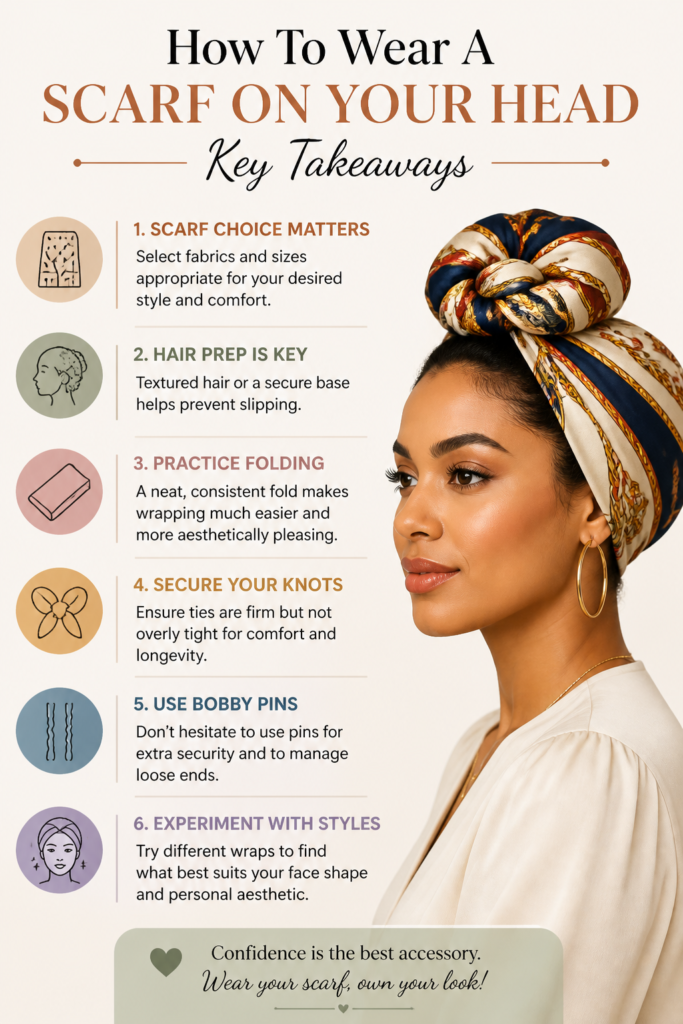
- Scarf Choice Matters: Select fabrics and sizes appropriate for your desired style and comfort.
- Hair Prep is Key: Textured hair or a secure base helps prevent slipping.
- Practice Folding: A neat, consistent fold makes wrapping much easier and more aesthetically pleasing.
- Secure Your Knots: Ensure ties are firm but not overly tight for comfort and longevity.
- Use Bobby Pins: Don’t hesitate to use pins for extra security and to manage loose ends.
- Experiment with Styles: Try different wraps to find what best suits your face shape and personal aesthetic.
Frequently Asked Questions
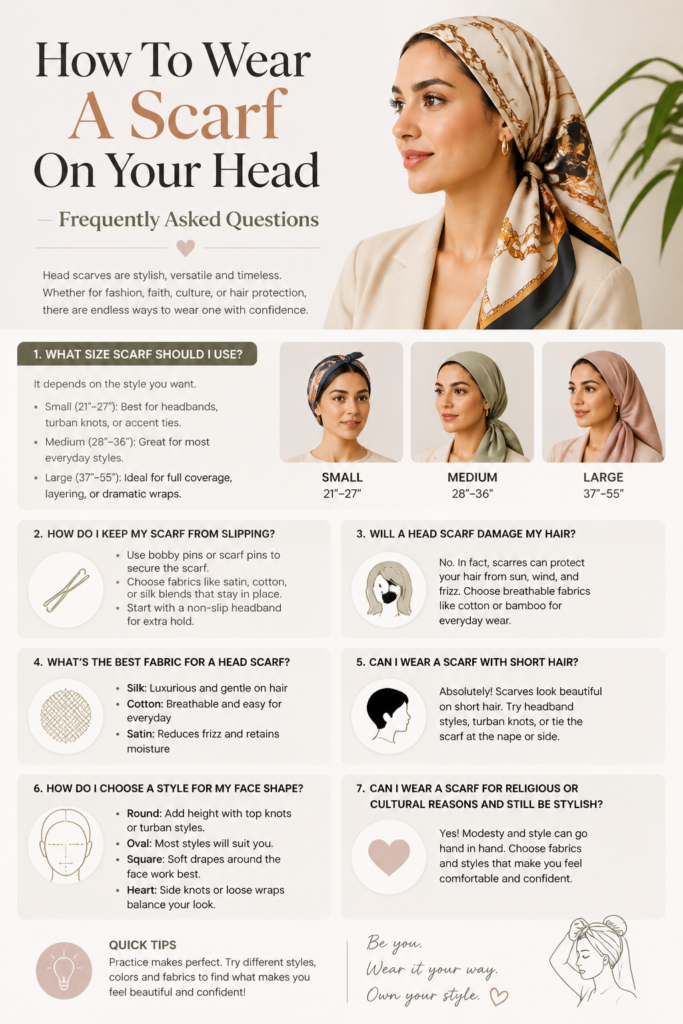
Can I wear a headscarf with short hair?
Absolutely! Short hair can be a fantastic base for headscarves. Styles like the classic headband or a top-knot turban work beautifully, adding a touch of flair without requiring long locks to manage. You might find smaller scarves or narrower folds easier to work with.
What are the best fabrics for headscarves?
Cotton and linen are excellent for breathability and grip, ideal for casual wear. Silk and satin offer elegance and protect your hair from friction, perfect for dressier occasions or hair health. Rayon and chiffon are great for lightweight, flowy styles.
How do I prevent my scarf from damaging my hair?
Choose smooth fabrics like silk or satin, as they create less friction than rougher materials. Avoid tying your scarf too tightly, which can cause breakage. Wearing a satin-lined cap or bonnet underneath can also provide an extra layer of protection.
Our Top Recommended Finds
- Silk or Satin Scarf: Essential for elegant styles and hair protection, reducing frizz and breakage.
- Velvet-Lined Headband: Provides excellent grip under your scarf, preventing slipping on smooth hair.
- Hair Texturizing Spray: Adds subtle grip and volume to fine or smooth hair, making scarves easier to secure.
Embrace Your Headscarf Style
You now have the tools and techniques to confidently wear a scarf on your head, transforming your look with ease.
Each wrap offers a unique expression, from casual chic to sophisticated elegance.
Don’t wait; grab your favorite scarf and start experimenting today. Discover the joy and versatility a simple piece of fabric can bring to your style.