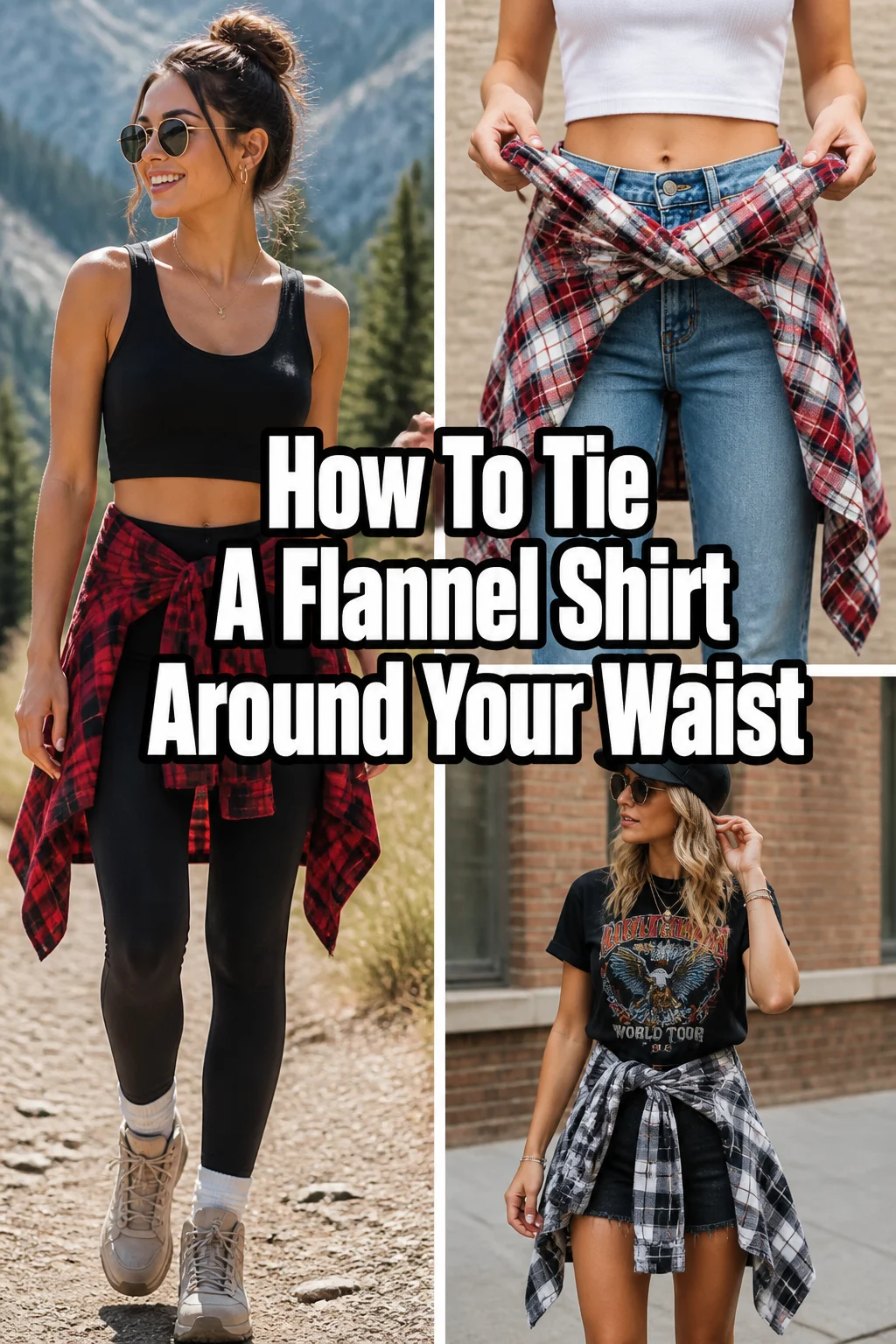
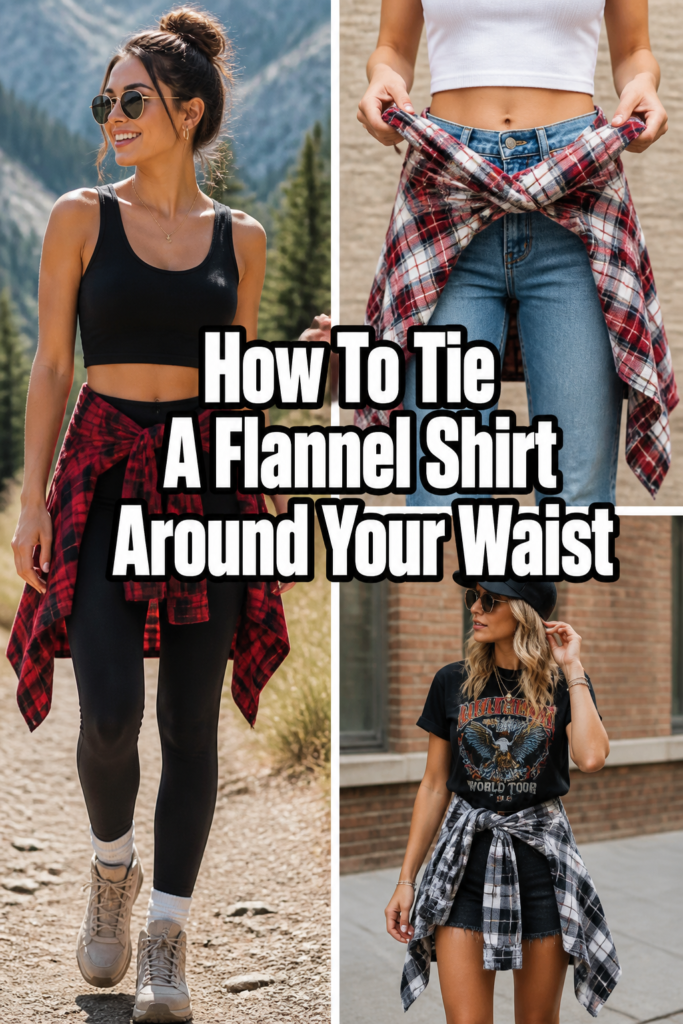
👕 How To Tie A Flannel Shirt Around Your Waist
Tying a flannel shirt around your waist is more than just a casual trend.
It’s a practical layering technique and a powerful style statement, offering both comfort and an effortlessly cool vibe.
Having perfected this art through countless outfits and shifting weather, I’m here to share the simple secrets to making your flannel work for you.
Quick Overview
This guide will equip you with the knowledge to perfectly tie a flannel shirt around your waist, enhancing your outfit with a touch of laid-back style.
You’ll learn various techniques and tips to ensure it looks great and stays put.
- Time needed: 5-10 minutes (initially), 1 minute (once mastered)
- Difficulty: Beginner
- What you’ll need: One flannel shirt, your chosen outfit
Step-by-Step Instructions
Step 1: Choose Your Flannel Wisely
Before you even think about tying, select the right flannel shirt. Not all flannels are created equal for this purpose.
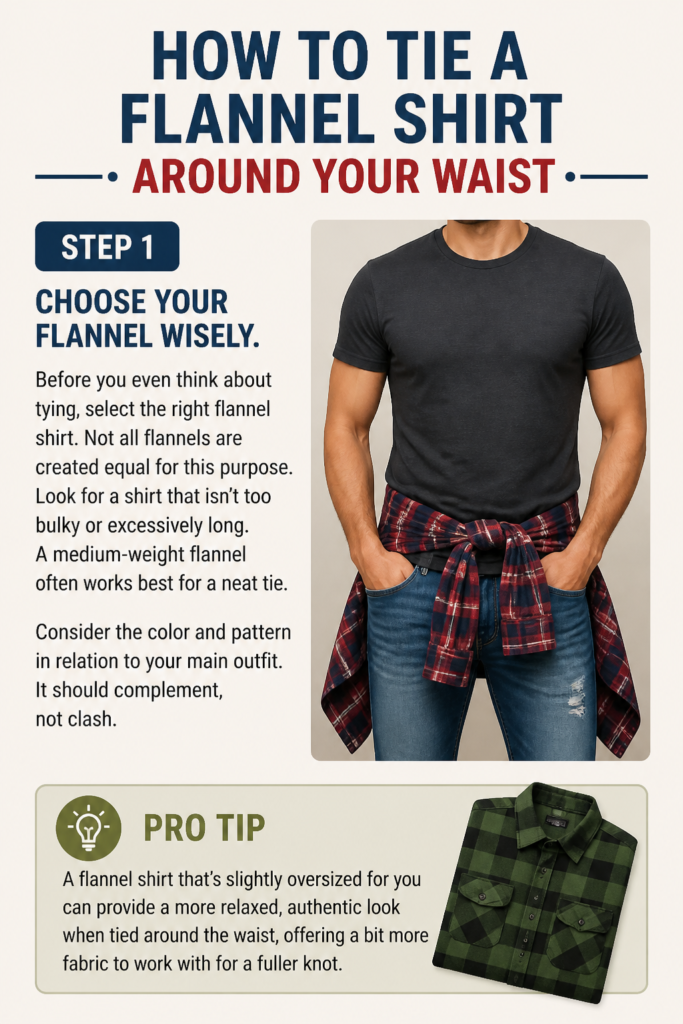
Look for a shirt that isn’t too bulky or excessively long. A medium-weight flannel often works best for a neat tie.
Consider the color and pattern in relation to your main outfit. It should complement, not clash.
Pro Tip: A flannel shirt that’s slightly oversized for you can provide a more relaxed, authentic look when tied around the waist, offering a bit more fabric to work with for a fuller knot.
Step 2: Prepare Your Outfit
Wear your base outfit first. This could be jeans and a t-shirt, shorts and a tank top, or even a dress.
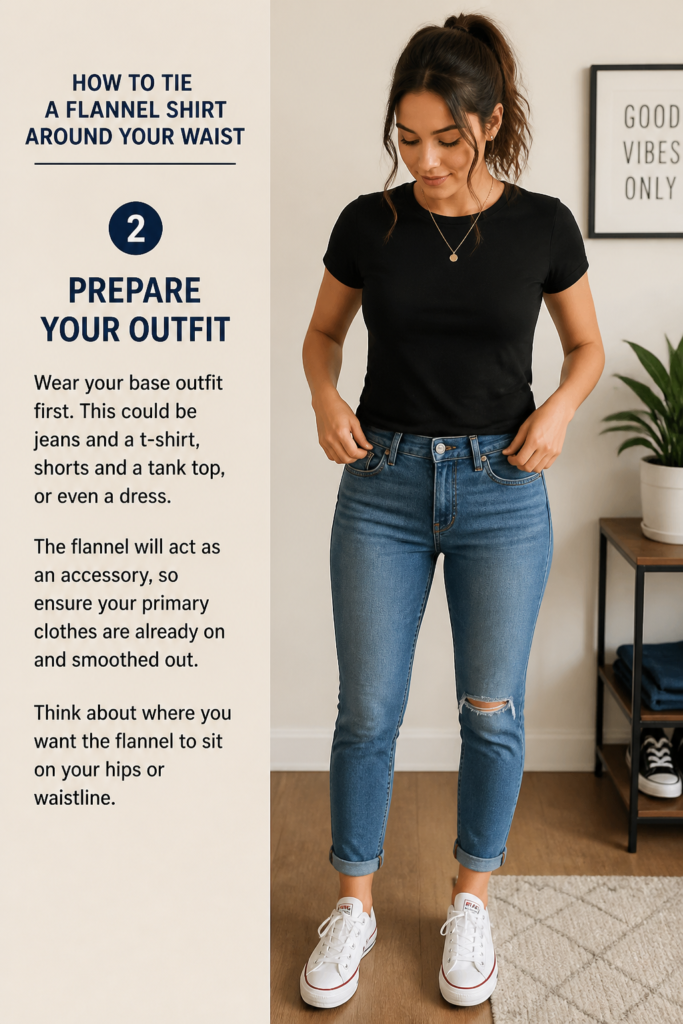
The flannel will act as an accessory, so ensure your primary clothes are already on and smoothed out.
Think about where you want the flannel to sit on your hips or waistline.
Step 3: Position the Shirt
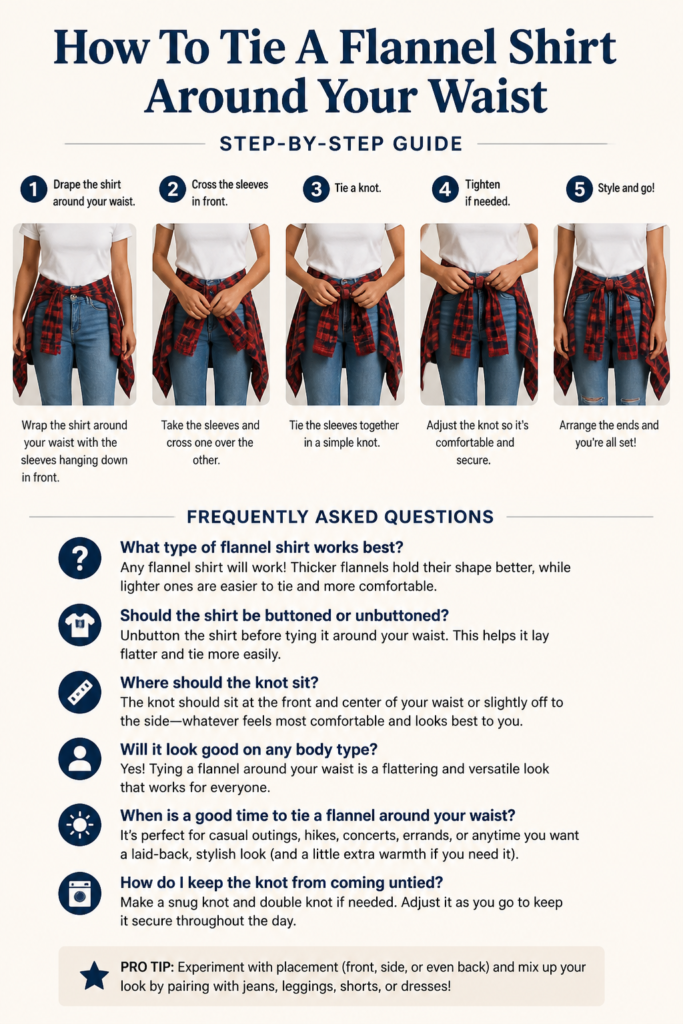
Hold the flannel shirt open and unbuttoned. Drape it around your waist or hips.
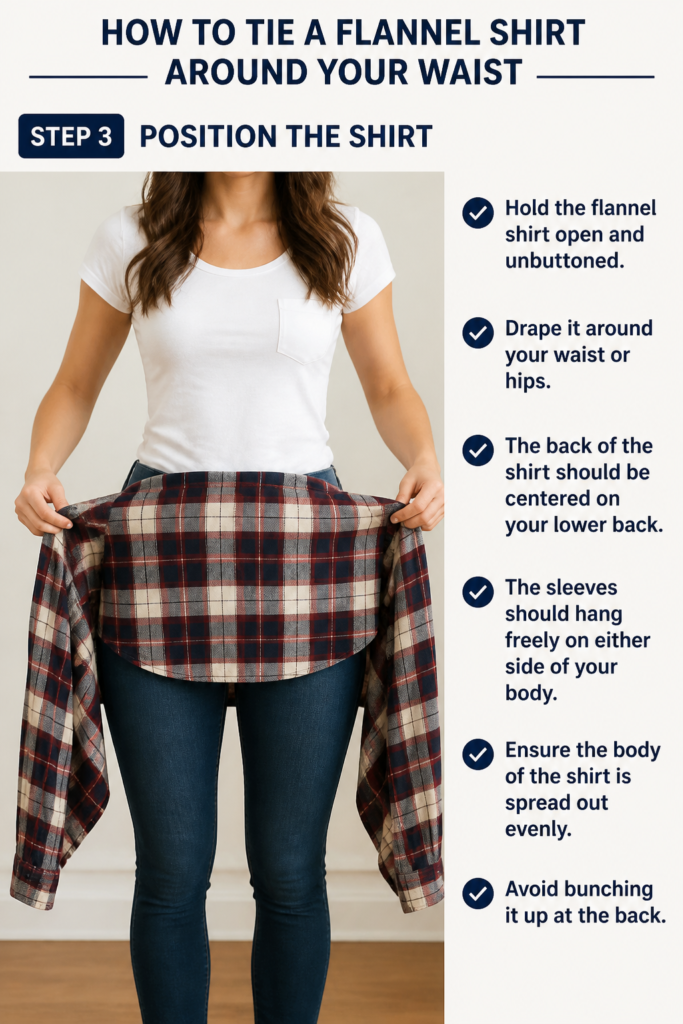
The back of the shirt should be centered on your lower back. The sleeves should hang freely on either side of your body.
Ensure the body of the shirt is spread out evenly. Avoid bunching it up at the back.
Step 4: The Classic Front Knot
This is the most common and versatile method. Gather the two sleeves in front of you.
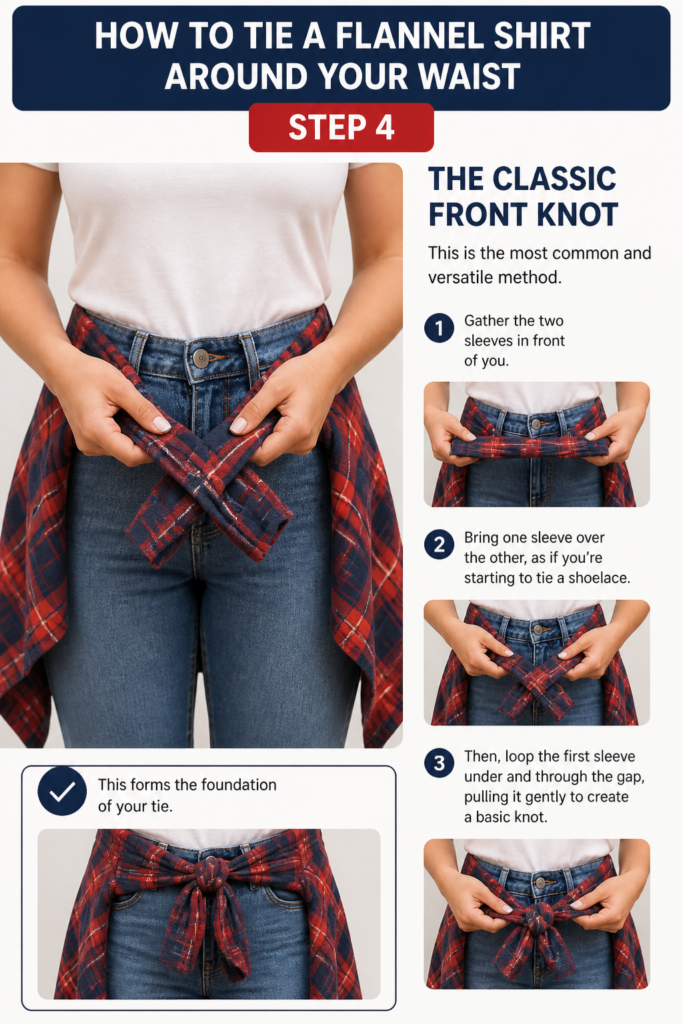
Bring one sleeve over the other, as if you’re starting to tie a shoelace.
Then, loop the first sleeve under and through the gap, pulling it gently to create a basic knot.
This forms the foundation of your tie.
Step 5: Secure the Knot
Take the two ends of the sleeves again. Perform a second knot directly on top of the first one.
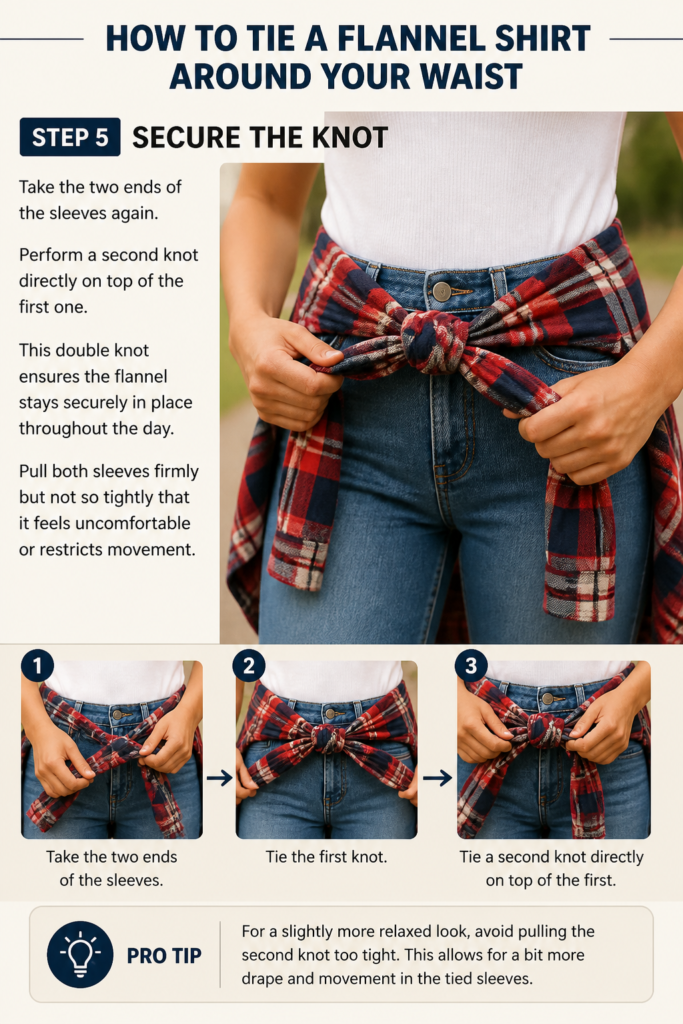
This double knot ensures the flannel stays securely in place throughout the day.
Pull both sleeves firmly but not so tightly that it feels uncomfortable or restricts movement.
Pro Tip: For a slightly more relaxed look, avoid pulling the second knot too tight. This allows for a bit more drape and movement in the tied sleeves.
Step 6: Adjust for Symmetry and Comfort
Examine the flannel from all angles. Are the sleeves hanging evenly?
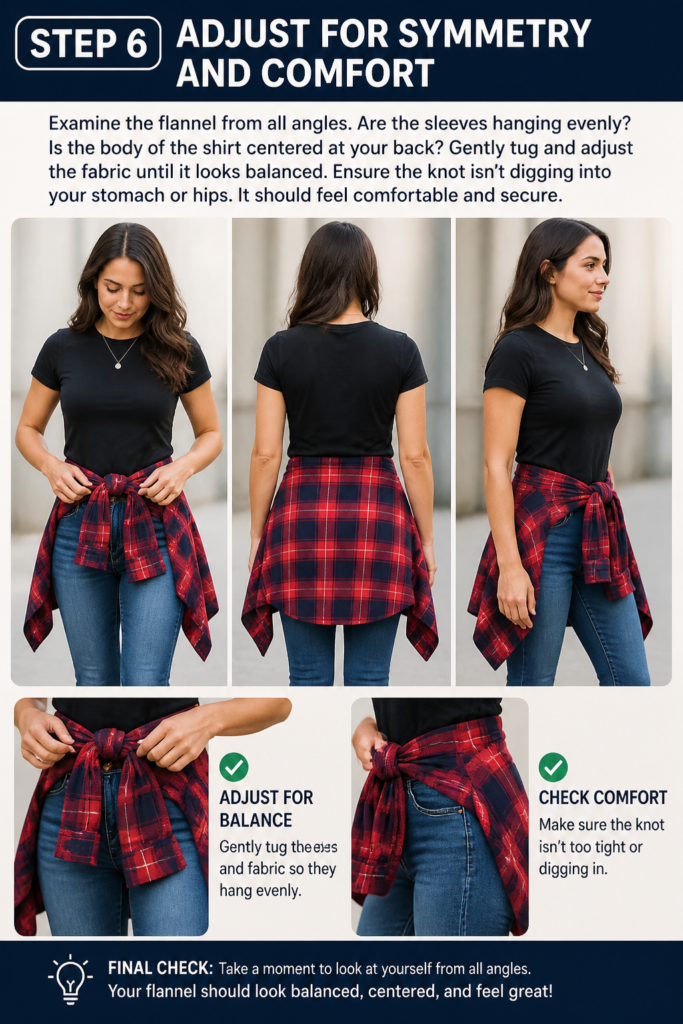
Is the body of the shirt centered at your back? Gently tug and adjust the fabric until it looks balanced.
Ensure the knot isn’t digging into your stomach or hips. It should feel comfortable and secure.
Step 7: The “Half-Tuck” Variation
For a slightly different look, loop the sleeves as in Step 4, but instead of a full double knot, tuck one sleeve end under the main body of the flannel.
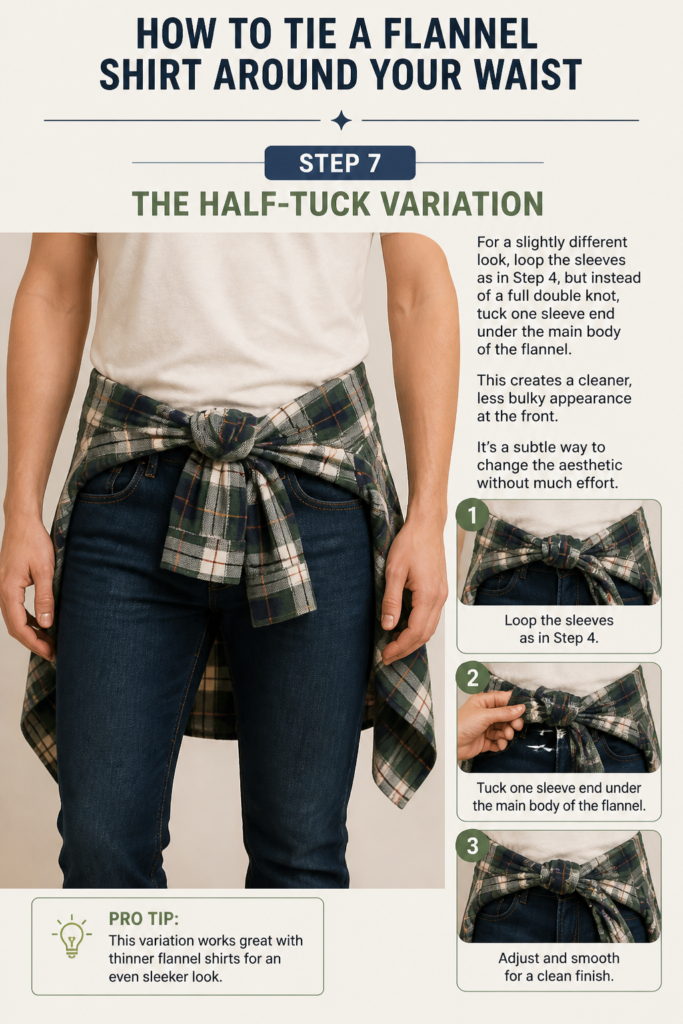
This creates a cleaner, less bulky appearance at the front.
It’s a subtle way to change the aesthetic without much effort.
Step 8: The “Single Loop” Drape
Wrap the flannel around your waist, but instead of tying a full knot, simply bring one sleeve over the other.
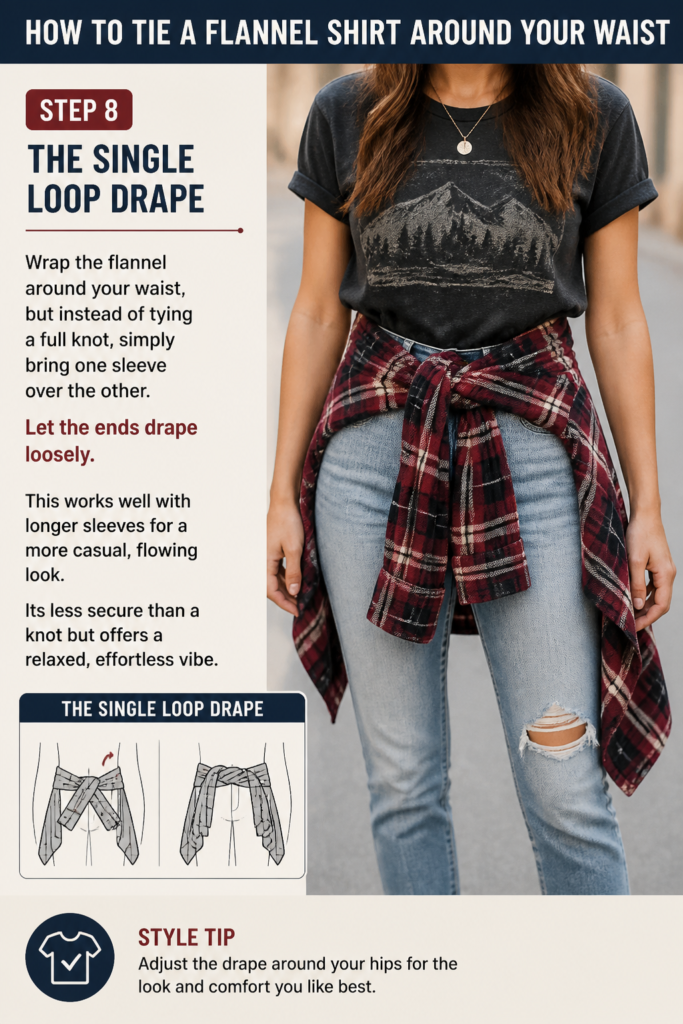
Let the ends drape loosely. This works well with longer sleeves for a more casual, flowing look.
It’s less secure than a knot but offers a relaxed, effortless vibe.
Step 9: Experiment with Placement
Try tying the flannel higher on your natural waist for a cinched effect, especially over a dress or a long top.
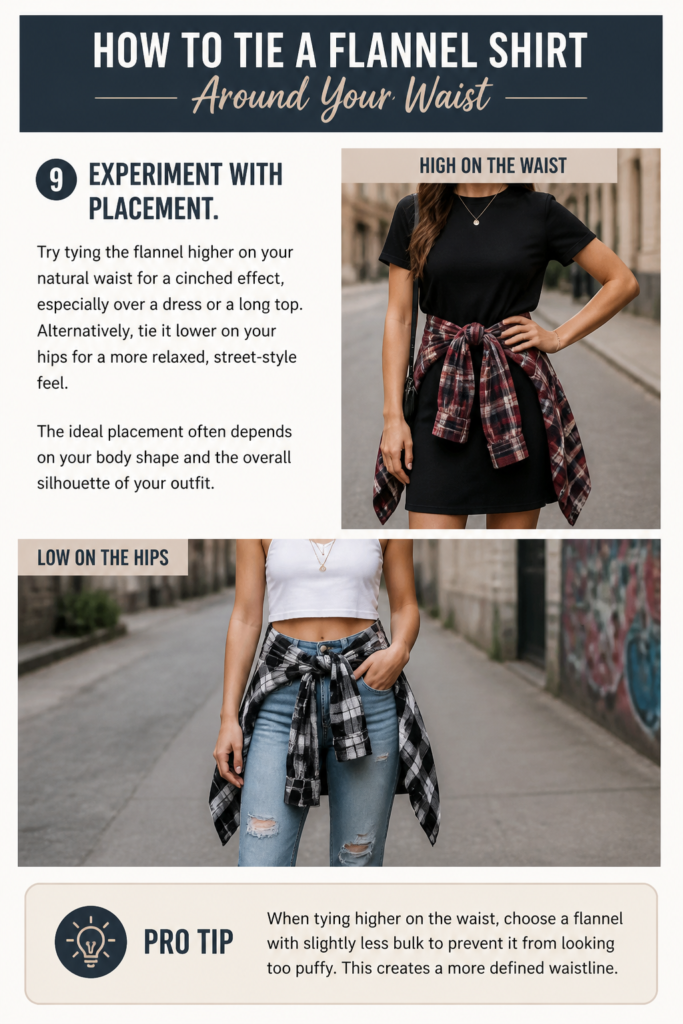
Alternatively, tie it lower on your hips for a more relaxed, street-style feel.
The ideal placement often depends on your body shape and the overall silhouette of your outfit.
Pro Tip: When tying higher on the waist, choose a flannel with slightly less bulk to prevent it from looking too puffy. This creates a more defined waistline.
Step 10: Final Styling Check
Take a moment to stand in front of a mirror. Check the overall outfit.
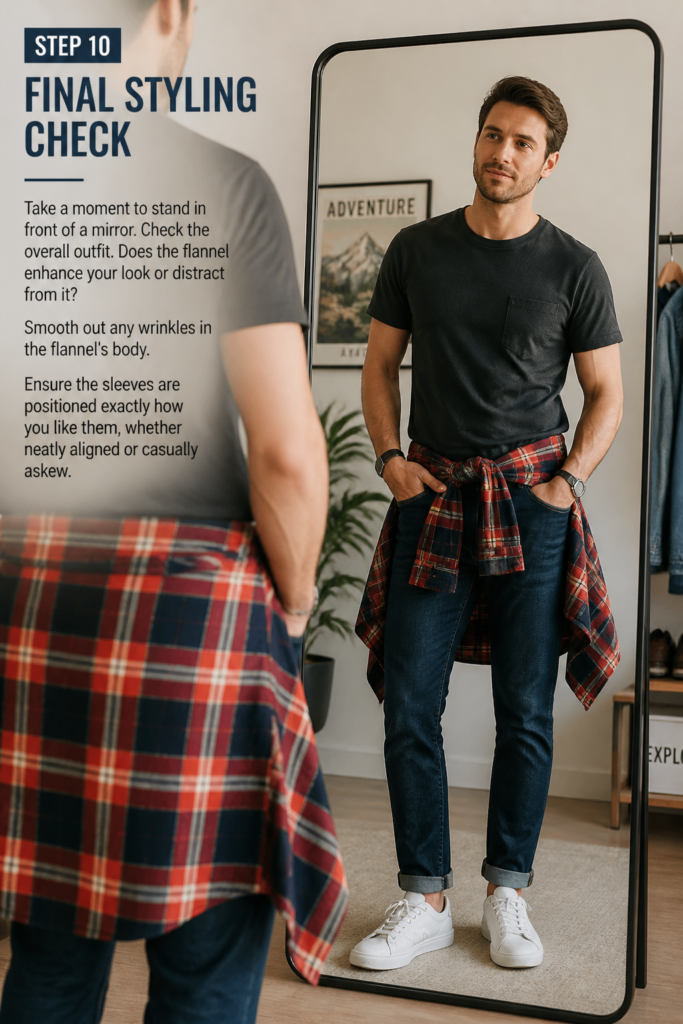
Does the flannel enhance your look or distract from it? Smooth out any wrinkles in the flannel’s body.
Ensure the sleeves are positioned exactly how you like them, whether neatly aligned or casually askew.
Common Mistakes to Avoid
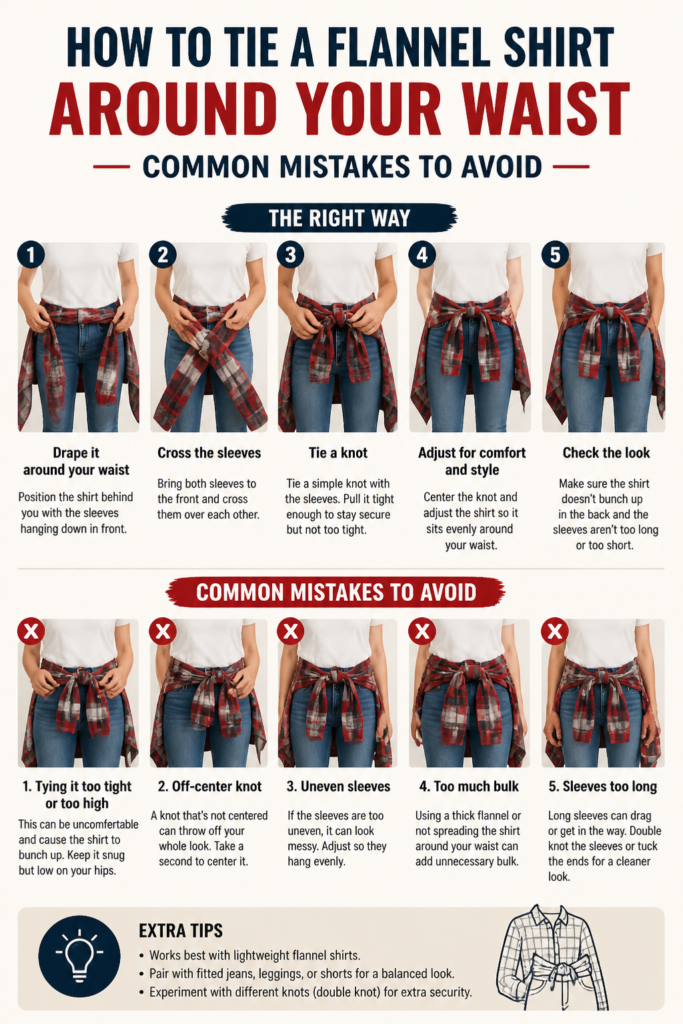
Tying Too Tightly or Too Loosely
One common pitfall is securing the knot either too tightly or too loosely. A knot that’s too tight can be uncomfortable, restrict movement, and create an unnatural cinch in your outfit.
Conversely, a knot that’s too loose will constantly slip, unravel, and require frequent adjustments, making your look appear messy and unkempt.
Aim for a snug but comfortable fit. The flannel should stay in place without feeling restrictive or creating deep creases in your clothing underneath.
Choosing the Wrong Flannel Size or Material
Using a flannel that’s too small can result in a tiny, awkward knot and insufficient fabric to drape properly around your waist. On the other hand, an excessively large or thick flannel can create a bulky, overwhelming knot that adds unwanted volume.
Heavy-duty work flannels might be too stiff to tie elegantly. Opt for a medium-weight flannel, ideally one that allows for some flexibility in the fabric. A slightly oversized shirt (relative to your usual fit) is often ideal, providing ample fabric for a good knot and drape without being too cumbersome.
Ignoring Outfit Coordination
Simply tying any flannel with any outfit can lead to a disjointed look. A bright red and black flannel might clash with a pastel top, or a dark, muted flannel could get lost against a busy pattern.
Think of your flannel as an integral part of your ensemble. Consider the color palette, patterns, and overall style of your base outfit. The flannel should either complement existing colors, introduce a harmonious contrast, or serve as a neutral texture. It’s an accessory, so it should elevate, not detract.
Uneven Sleeve Lengths or Body Placement
After tying, it’s easy to overlook the symmetry of the flannel. Having one sleeve significantly longer than the other, or the main body of the shirt pulled too far to one side, can make the entire look appear haphazard.
Always take a moment to adjust the flannel once it’s tied. Ensure the knot is centered (unless you’re intentionally going for an asymmetrical look), and the sleeves hang with similar lengths. Smooth out the fabric at the back to prevent it from bunching up, ensuring a clean line around your waist.
Troubleshooting
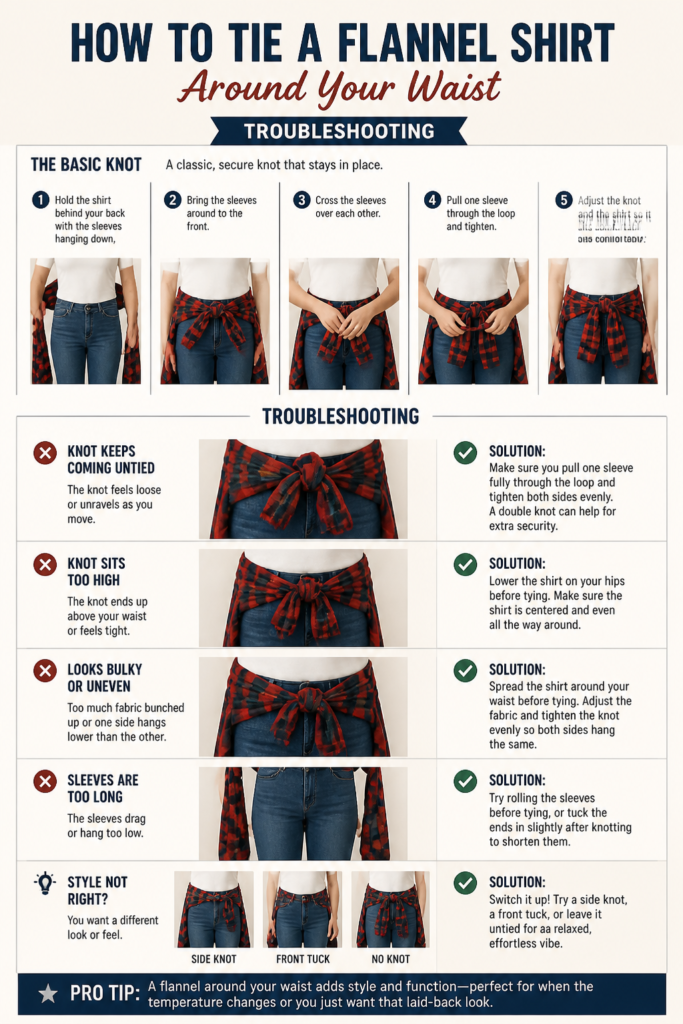
Flannel Keeps Slipping Down
If your flannel consistently slides down your hips, the knot is likely not secure enough. Tighten your double knot more firmly, ensuring both loops are snug.
You can also try tying the flannel slightly higher on your natural waist, where your body narrows, providing a better anchor point. If the shirt itself is very silky or lightweight, consider a slightly thicker flannel.
Knot Looks Too Bulky
A bulky knot often results from using a flannel that’s too thick or tying too many loops. Simplify your knot to a basic double knot, avoiding extra twists.
Ensure the fabric of the shirt’s body is spread out thinly under the knot, not folded over itself. If the issue persists, try a lighter-weight flannel or the “half-tuck” variation to reduce front volume.
Sleeves Hang Unevenly
Uneven sleeves are usually a matter of initial positioning. Before making the first knot, ensure both sleeves are hanging equally on either side of your body.
After the first knot, gently pull each sleeve end to adjust their lengths before making the second knot. Once the second knot is tied, you can still make minor adjustments by carefully tugging the fabric through the knot.
Key Takeaways
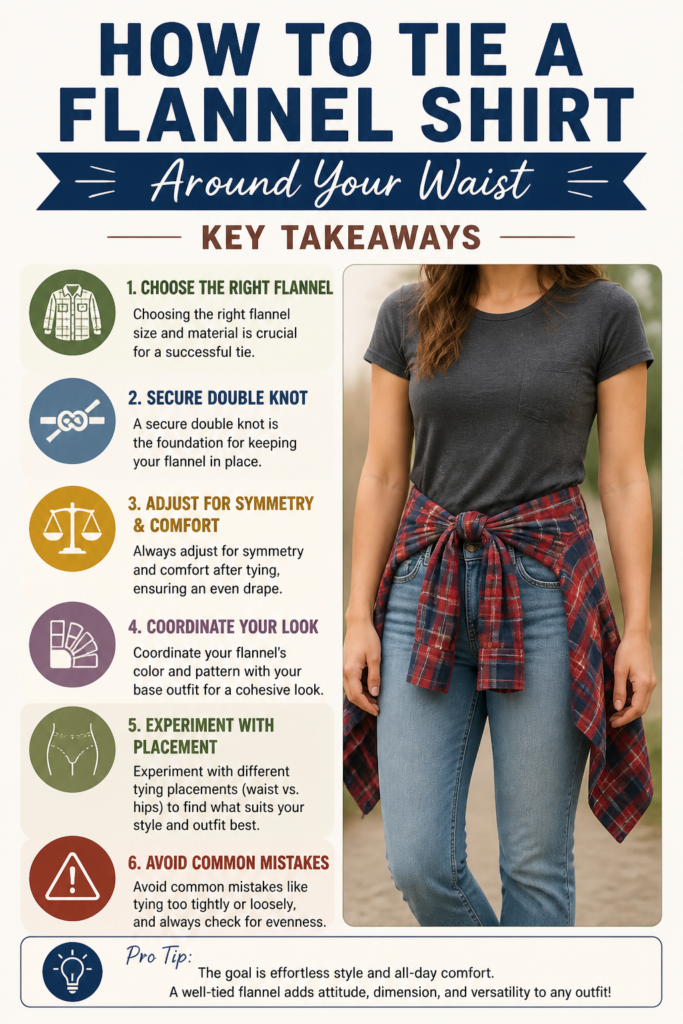
- Choosing the right flannel size and material is crucial for a successful tie.
- A secure double knot is the foundation for keeping your flannel in place.
- Always adjust for symmetry and comfort after tying, ensuring an even drape.
- Coordinate your flannel’s color and pattern with your base outfit for a cohesive look.
- Experiment with different tying placements (waist vs. hips) to find what suits your style and outfit best.
- Avoid common mistakes like tying too tightly or loosely, and always check for evenness.
Frequently Asked Questions
Can I tie a flannel around my waist with a dress?
Absolutely! Tying a flannel around your waist with a dress can add a fantastic casual and edgy touch. It works particularly well with simple, solid-colored dresses, giving them a relaxed vibe. Consider tying it higher on your natural waist to create a flattering silhouette.
What’s the best way to prevent wrinkles in the tied flannel?
To minimize wrinkles, ensure the body of the flannel shirt is spread out as smoothly as possible across your back and sides before you tie the knot. Avoid bunching the fabric. Choose a flannel made of a blend that’s less prone to creasing, or one that has a slight stretch.
Should I button the flannel before tying it?
No, it’s generally best to keep the flannel completely unbuttoned when tying it around your waist. This allows the fabric to lay flat and smoothly across your body. Buttoning it can create unnecessary bulk and make it harder to achieve a neat tie.
Does the flannel have to match my shoes or other accessories?
Not necessarily. While coordinating elements can create a polished look, the beauty of tying a flannel around your waist is its inherently casual and effortless nature. Focus more on ensuring the flannel’s colors complement your main outfit rather than matching specific accessories. Often, a contrasting flannel creates a more interesting visual.
Our Top Recommended Finds
- Soft Cotton Flannel Shirt: Look for 100% cotton or a cotton blend for breathability and comfort. Softer fabrics drape better.
- Mid-Weight Denim Jeans: The perfect companion for a tied flannel, offering a classic, durable base for your outfit.
- Plain Crew Neck T-Shirt: A simple, solid-colored tee provides an ideal canvas for the flannel to stand out as an accessory.
Embrace Your Style: Tie It Up Today
You now have all the tools to master the art of tying a flannel shirt around your waist.
It’s a simple yet effective way to add personality, texture, and a touch of rugged charm to almost any casual outfit.
Don’t just read about it; grab your favorite flannel and give these techniques a try right now.
Experiment with different knots, placements, and outfits to discover your signature look.