✨ How To Style A Scarf In Your Hair
A simple scarf can transform your look, adding a touch of elegance, whimsy, or bohemian flair to any outfit.
I’ve personally experimented with countless ways to incorporate scarves into my hairstyles, discovering how a single piece of fabric can elevate even the most basic ponytail.
This guide will walk you through practical, beautiful styles, ensuring you can confidently rock a scarf in your hair.
Quick Overview
You’re about to master several beautiful and practical ways to style a scarf in your hair.
From casual headbands to intricate bun wraps, you’ll learn techniques that add personality and polish to your look.
- Time needed: 10-20 minutes (depending on the style)
- Difficulty: Beginner
- What you’ll need: A scarf (various sizes recommended), hair ties, bobby pins, a comb or brush
Step-by-Step Instructions
Step 1: Choose Your Scarf Wisely
Select a scarf that complements your hair and outfit. Consider the fabric, size, and pattern.
Silk or satin scarves offer a luxurious feel and are gentle on hair, reducing friction and breakage.
Cotton or linen scarves provide a more casual, bohemian vibe and offer good grip.
Pro Tip: For most styles, a square scarf (20×20 inches to 35×35 inches) or a rectangular scarf (around 60×20 inches) will be most versatile. Start with a medium-sized square for easy manipulation.
Step 2: Prepare Your Hair
Brush your hair thoroughly to remove any tangles. This creates a smooth base for your scarf style.
Decide if you want a sleek look or a more voluminous, textured finish. A little dry shampoo can add grip and volume.
You might want to add some light holding spray if your hair is very fine or prone to slipping.
Step 3: The Classic Headband Style
Fold your chosen square scarf diagonally into a triangle. Then, starting from the longest edge, roll or fold the scarf into a narrow band, about 2-3 inches wide.
Place the center of the folded scarf at the nape of your neck, underneath your hair.
Bring both ends of the scarf up over your ears and towards the top of your head.
Tie the ends in a double knot at the top or slightly to the side of your head. You can leave the ends hanging or tuck them underneath for a neater finish.
Adjust the scarf to sit comfortably, ensuring it’s not too tight but secure enough to stay in place.
Pro Tip: For extra security, use a couple of bobby pins to anchor the scarf to your hair, especially near the ears or at the knot. This prevents slipping throughout the day.
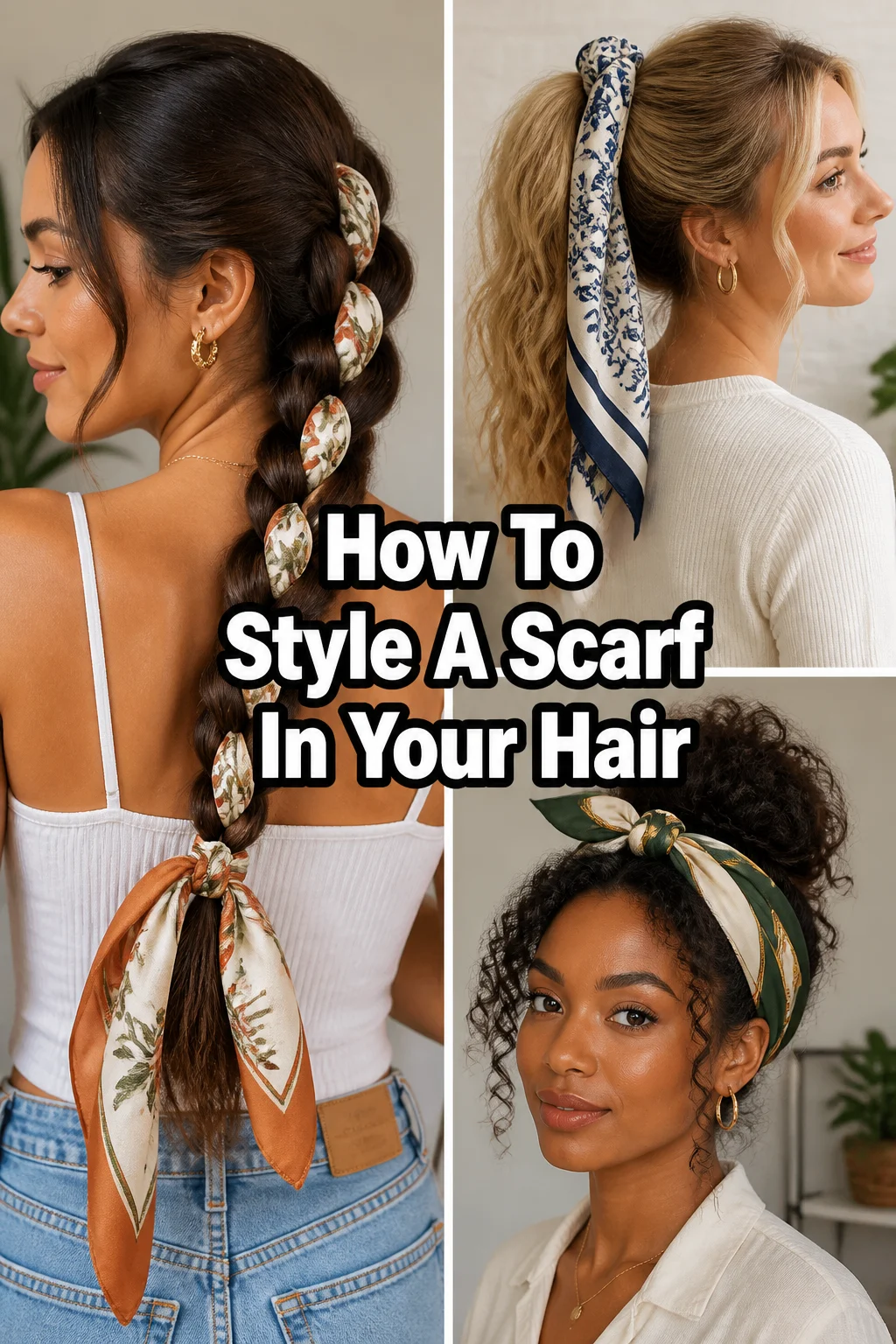
Step 4: The Elegant Ponytail Wrap
Gather your hair into a ponytail at your desired height – high, medium, or low.
Secure the ponytail with a hair tie. Make sure it’s firm but not overly tight.
Take your scarf (a rectangular or medium square folded into a band works well here).
Tie the scarf around the base of your ponytail, positioning the knot at the top or bottom.
Wrap the longer ends of the scarf around the ponytail itself, covering the hair tie and part of your ponytail.
Secure the ends by tying them again underneath the ponytail or tucking them into the wrapped section with a bobby pin.
Fluff out your ponytail slightly to blend with the scarf, creating a polished and sophisticated look.
Step 5: The Chic Bun Accent
Create your desired bun style – a top knot, a low chignon, or a messy bun.
Secure your bun firmly with a hair tie and bobby pins. Ensure it feels stable.
Take a narrow folded scarf (rectangular or square folded into a thin strip).
Wrap the scarf around the base of your bun, covering the hair tie.
Tie the ends of the scarf in a bow or a double knot, allowing them to hang decoratively or tucking them in for a cleaner look.
Adjust the scarf to sit symmetrically or off-center, depending on your preference.
Pro Tip: For a more integrated look, you can weave the scarf into your bun. Start by tying the scarf around the base of your ponytail before twisting it into a bun, incorporating the fabric as you go.
Step 6: The Playful Braid Weave
Brush your hair and decide where you want your braid – a single side braid, pigtails, or a French braid.
Fold a rectangular scarf or a square scarf into a long, thin strip.
Secure the scarf to the base of the section of hair you plan to braid. You can tie it around a small section of hair or use a bobby pin to anchor it.
Divide your hair into two sections, using the scarf as your third strand for a three-strand braid.
Braid your hair as usual, ensuring the scarf is evenly incorporated into one of the strands.
Secure the end of the braid with a small hair tie, then tie the remaining scarf ends around the hair tie or in a small bow.
Step 7: The Vintage Full Head Wrap
Lay your large square scarf flat. For a rectangular scarf, fold it in half lengthwise.
Place the center of the scarf at your forehead, just above your hairline.
Bring the two ends of the scarf back around your head, crossing them at the nape of your neck.
Bring the ends forward again, over your ears, and up towards the top of your head.
Tie the ends in a double knot, either leaving them loose or tucking them neatly underneath the wrap.
Adjust the front of the scarf to create a flattering shape, ensuring all hair is covered if desired, or letting some bangs peek out.
Pro Tip: This style works wonderfully for bad hair days or for adding a touch of glamour. Ensure the scarf fabric is breathable, especially if you plan to wear it for extended periods.
Common Mistakes to Avoid
Choosing the Wrong Scarf Fabric or Size
Using a scarf that’s too slippery (like very thin silk without proper securing) can lead to it falling out. Conversely, a scarf that’s too thick or stiff might be difficult to tie and uncomfortable.
A scarf that’s too small won’t offer enough length to tie securely or create volume. One that’s too large can feel bulky and overwhelming.
Always consider the style you’re aiming for and select a scarf size and fabric that will best achieve that look and stay in place.
Not Securing Properly
One of the most common issues is a scarf that slips or unravels throughout the day. This usually happens when the scarf isn’t tied tightly enough or isn’t anchored to the hair with pins.
Always use a double knot, and don’t be shy about incorporating bobby pins, especially for active days or if you have very fine hair.
A secure base is key to a long-lasting scarf style.
Overcomplicating the Style
While some styles look intricate, the beauty of scarf styling often lies in its simplicity. Trying to do too much with one scarf can result in a messy, bulky, or uncomfortable look.
Start with simpler styles and master the basic tying techniques. As you gain confidence, you can experiment with more elaborate wraps and braids.
Sometimes, less is truly more when it comes to hair accessories.
Ignoring Hair Texture and Length
Not all scarf styles work equally well for every hair type and length. A very short pixie cut won’t accommodate a ponytail wrap, and very fine hair might need extra grip.
Consider your hair’s natural texture, length, and thickness when choosing a style. Adapt the techniques as needed, perhaps using more pins for fine hair or a larger scarf for very thick hair.
Experiment to find what complements your unique hair best.
Troubleshooting
Scarf Slipping Out
If your scarf keeps sliding, try roughing up your hair texture slightly with some dry shampoo or texturizing spray before styling. This provides more grip.
Ensure you’re tying double knots firmly. For extra security, use a few bobby pins to anchor the scarf to your hair at strategic points, such as behind the ears or where the knot is.
Choosing a scarf with a little more natural friction, like cotton or linen, can also help compared to very slick silk.
Hair Feeling Too Tight
If your scalp feels uncomfortable or tense, the scarf or underlying hair tie is likely too tight. Gently loosen the knot or re-tie it with less tension.
Always ensure you can comfortably move your head and that there’s no pulling sensation. A little adjustment can make a big difference in comfort.
Sometimes, the issue is with the initial ponytail or bun; ensure that foundation is also comfortable before adding the scarf.
Style Not Looking Polished
If your scarf style looks messy or unfinished, revisit the initial hair preparation. Ensure your hair is brushed smooth (unless a messy look is intended).
Take your time with the folding and tying. Precise folds create cleaner lines. Use a mirror to check the back and sides.
Tuck in any stray ends of the scarf or hair with bobby pins to achieve a more refined finish.
Key Takeaways
- Choosing the right scarf fabric and size is crucial for comfort and style longevity.
- Always prepare your hair by brushing and adding texture if needed for better grip.
- Secure your scarf firmly with double knots and bobby pins to prevent slipping.
- Experiment with different styles to find what complements your hair length, texture, and personal aesthetic.
- Don’t be afraid to adapt techniques to suit your hair and the specific scarf you’re using.
Frequently Asked Questions
What scarf size is best for hair styling?
For headbands and ponytail wraps, a medium square (20-27 inches) or a rectangular scarf (around 60×20 inches) is ideal. For full head wraps or voluminous buns, a large square (35 inches or more) works best.
Can I use any fabric for a hair scarf?
While you can technically use any fabric, softer, breathable fabrics like silk, satin, cotton, or rayon are generally best. They are gentler on hair, easier to tie, and more comfortable to wear.
How do I make my scarf stay in my hair all day?
The key is a combination of firm tying (double knots), using bobby pins to anchor the scarf to your hair, and ensuring your hair has some texture (dry shampoo helps). A good base ponytail or bun is also essential.
What hair types work best with scarf styles?
Scarf styles are incredibly versatile and work for almost all hair types and lengths, from short bobs to long, thick curls. The trick is to choose the right style and scarf size to complement your specific hair. Fine hair might need more pins, while thick hair might need a larger scarf.
Our Top Recommended Finds
- Silk or Satin Square Scarves: Gentle on hair, prevents breakage, adds a luxurious sheen.
- Clear Elastic Hair Ties: Provide a strong, invisible hold for ponytails and braids before adding the scarf.
- Waved Bobby Pins: Offer extra grip and security, helping to keep your scarf firmly in place.
Unleash Your Inner Hair Artist
Styling a scarf in your hair is more than just a trend; it’s an expression of personal style and creativity.
You now have the tools and techniques to transform your look with this simple yet powerful accessory.
Don’t wait! Grab a scarf, look in the mirror, and start experimenting with these styles today. Discover how a little fabric can make a big impact on your confidence and daily flair.