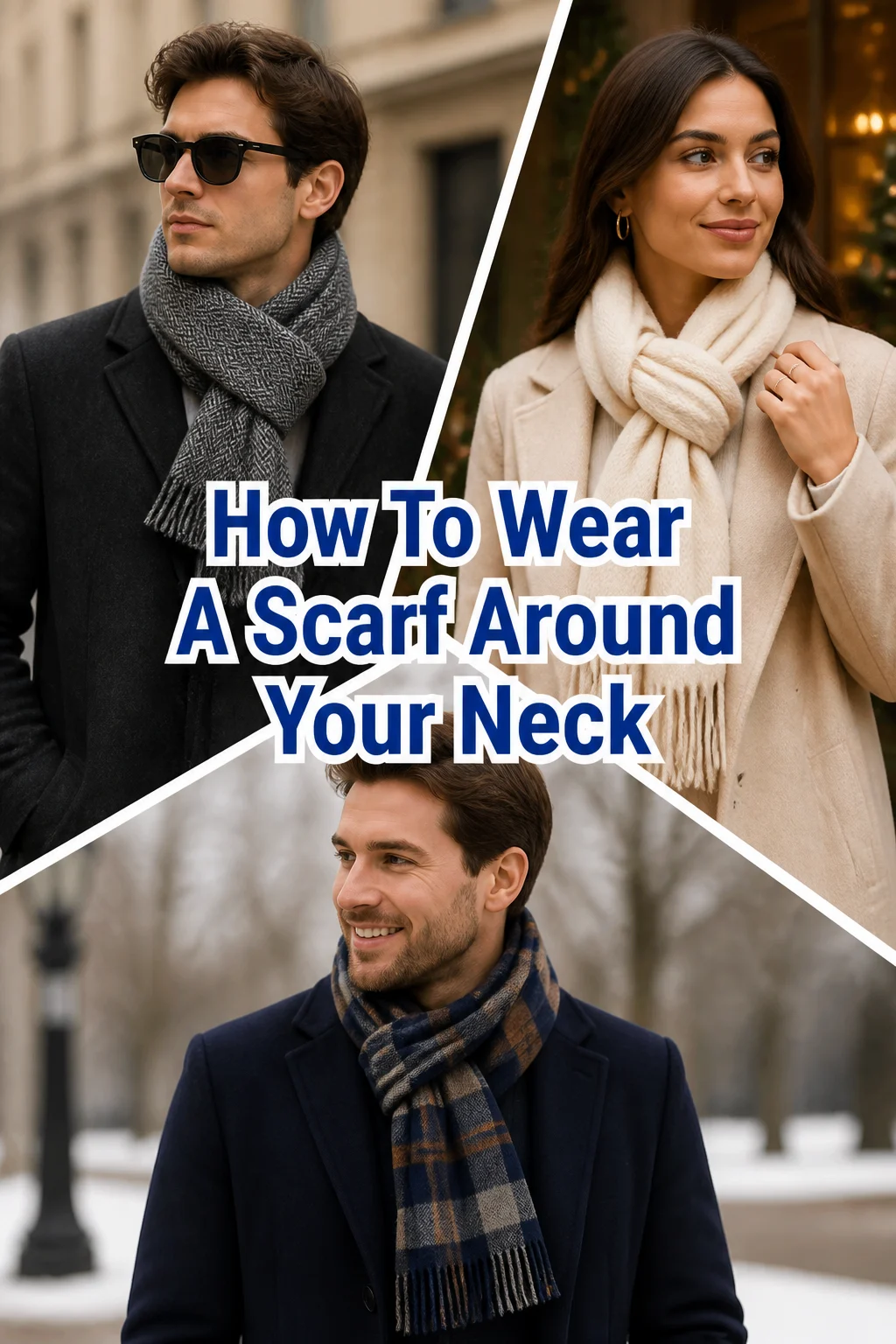
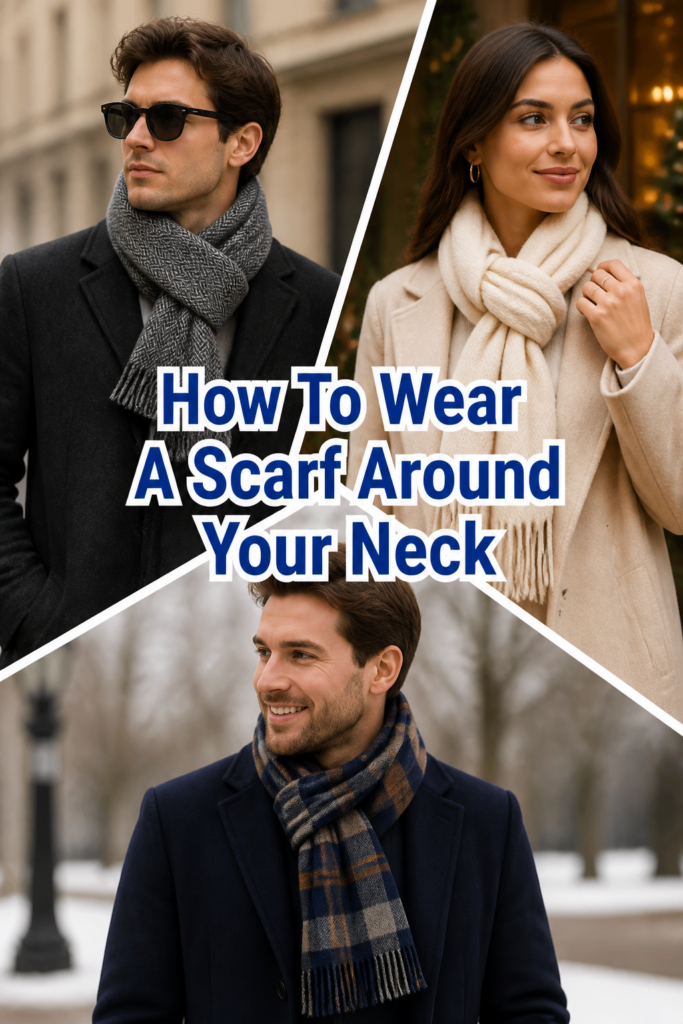
🧣 How To Wear A Scarf Around Your Neck
Learning to wear a scarf can transform your entire wardrobe. It’s a simple accessory that adds layers, color, and personality to any outfit. I remember struggling to make scarves look chic, often ending up with a lumpy, uncomfortable mess.
Over time, I discovered that a few key techniques make all the difference, turning a simple piece of fabric into a statement. This guide shares those practical methods, refined through years of personal experimentation and observation. You’ll soon wear scarves with confidence and flair.
Quick Overview
This guide will walk you through several popular and versatile ways to wear a scarf around your neck, enhancing your style and comfort. You’ll discover how to choose the right scarf and master various knots and drapes for different occasions.
- Time needed: 10-15 minutes (to learn and practice each style)
- Difficulty: Beginner
- What you’ll need: A selection of scarves (various sizes and fabrics are helpful), a mirror
Step-by-Step Instructions
Step 1: Drape It Effortlessly
The simple drape is the most straightforward and elegant way to wear a scarf, perfect for adding a touch of color or warmth without bulk. It works beautifully with longer scarves made from lighter fabrics like silk or thin wool. This style is ideal for layering over blazers or coats.
To achieve this look, fold your scarf in half lengthwise if it’s very wide. Place the center of the scarf over the back of your neck. Let both ends hang evenly down your front.
Adjust the scarf so it sits comfortably and symmetrically on your shoulders. You can leave the ends loose or tuck them inside your coat for a cleaner line. This minimalist approach highlights the scarf’s pattern and texture.
Pro Tip: For a slightly more secure drape that won’t slip, try draping one side slightly longer, then throwing the longer end over your opposite shoulder. This creates a casual, asymmetrical flow.
Step 2: Master the Parisian Knot
The Parisian knot is a timeless and incredibly popular style, known for its neat, polished appearance and excellent warmth. It’s particularly well-suited for medium to long scarves, especially those with a bit of body like cashmere or thicker wool blends. This knot is perfect for colder weather.
To create this classic look, fold your scarf in half lengthwise, bringing the two ends together. Drape the folded scarf over your neck, ensuring the loop end is on one side and the two loose ends are on the other.
Now, take the two loose ends and thread them through the loop. Pull them through until the knot feels snug against your neck, but not too tight. Adjust the knot to sit centrally and smoothly.
Pro Tip: Experiment with how tight or loose you pull the ends through the loop. A looser knot offers a more relaxed, casual vibe, while a tighter knot provides maximum warmth and a sharper look.
Step 3: Loop for Warmth and Style
The simple loop, often called “once around,” is incredibly versatile and provides excellent warmth while keeping your scarf secure. It works well with almost any scarf length or fabric, from lightweight cotton to chunky knits. This style is practical for everyday wear.
To begin, drape the scarf over your neck, ensuring one end is significantly longer than the other. Typically, one end should reach your waist, while the other is just past your chest. Take the longer end of the scarf.
Wrap the longer end once around your neck, bringing it back to the front. Adjust both ends so they hang evenly or slightly unevenly in front. You can leave them hanging freely or tuck them inside your jacket.
Pro Tip: For extra warmth, especially with a thinner scarf, wrap the longer end twice around your neck. This creates a cozier, more voluminous look, perfect for chilly days.
Step 4: Create the Modern Fake Knot
The fake knot offers a chic, effortless look that appears more complex than it is. It’s fantastic for medium to long scarves, especially those with a soft drape, like silk blends or fine wool. This style adds a touch of sophisticated nonchalance.
First, drape the scarf around your neck, making sure one end is much longer than the other. Take the longer end and tie a loose, single knot about a third of the way up from its tip. Do not tighten this knot fully yet.
Now, take the shorter end of the scarf. Thread this shorter end through the loose knot you just created on the longer side. Pull both ends gently to tighten the knot around the shorter end. Adjust the entire arrangement to sit comfortably.
Pro Tip: Position the knot slightly off-center for a more relaxed, modern aesthetic. This avoids a perfectly symmetrical look and adds to the “effortlessly chic” vibe.
Step 5: Wrap Like a Shawl
Larger, square or rectangular scarves can be elegantly worn as a shawl or wrap, adding a layer of sophistication and warmth. This style is perfect for cooler evenings or as a stylish alternative to a light jacket. It works best with generous-sized scarves.
To wear your scarf as a shawl, open the scarf completely and drape it over both shoulders, letting the fabric fall down your back and chest. Ensure it covers your shoulders evenly. You can leave it open for a flowing look.
Alternatively, take one corner of the scarf and throw it over the opposite shoulder, creating an asymmetrical drape. This secures the scarf and adds visual interest. You can also belt the scarf at your waist over a top for a different silhouette.
Pro Tip: When using a very large square scarf, fold it diagonally into a triangle first. Then, place the longest edge of the triangle across your chest, with the point hanging down your back, and tie the two ends behind your neck.
Step 6: Tuck for a Neat Turtleneck Look
This method is perfect for adding warmth and a streamlined appearance, especially with bulkier scarves. It creates the illusion of a cozy turtleneck and keeps your scarf neatly tucked away. It’s ideal for medium to long scarves and colder weather.
Begin by draping the scarf around your neck, ensuring both ends hang down in front. Wrap the scarf around your neck once or twice, depending on its length and thickness, until it feels snug but not restrictive.
Now, tuck both ends of the scarf underneath the wrapped layers around your neck. Smooth out any lumps or bumps, ensuring the fabric lies flat against your skin. This creates a clean, continuous line around your neck.
Pro Tip: Choose a scarf with a slightly contrasting texture or subtle pattern for this style. This adds visual interest even though the ends are hidden, making the “turtleneck” look more intentional.
Step 7: Tie a Chic Neckerchief
Smaller square scarves, often called neckerchiefs, are perfect for adding a pop of color or pattern to an outfit. This style is more about accessory than warmth, offering a touch of vintage charm or modern flair. It works best with silk or thin cotton squares.
Fold your square scarf diagonally in half to form a triangle. Roll the triangle from the longest edge towards the point, creating a long, narrow strip. Place the center of this strip at the front of your neck.
Bring the two ends around to the back of your neck, then cross them over. Bring the ends back to the front. Tie a neat double knot, either centrally or slightly off to the side. Adjust the knot and the scarf’s position for comfort and style.
Pro Tip: For a more relaxed neckerchief look, leave the knot a little looser and let the ends fall naturally. For a polished, vintage feel, tie the knot snugly and tuck the ends slightly under your collar.
Common Mistakes to Avoid
Over-stuffing Your Scarf
A common pitfall is trying to force too much scarf into a small space, or using a very thick scarf with a tight knot. This results in a bulky, uncomfortable look that can feel restrictive and unflattering. Instead, choose a scarf appropriate for the knot you want to achieve. Lighter fabrics work best for intricate knots, while chunky scarves are better for simple drapes or loops.
Ignoring Scarf-to-Outfit Balance
Wearing a huge, voluminous scarf with a delicate top or a tiny neckerchief with a heavy winter coat can throw off your entire outfit’s balance. Consider the proportion of your scarf to your clothing. A large, dramatic scarf complements a minimalist outfit, while a smaller scarf adds a subtle accent to a more complex ensemble. Aim for visual harmony.
Tying Too Tightly
While a snug scarf provides warmth, tying it too tightly can be uncomfortable and unflattering, making your neck look shorter. Always ensure there’s enough room to breathe and move comfortably. A good rule of thumb is to be able to slip a finger or two between your neck and the scarf. This allows for comfort and a more relaxed appearance.
Forgetting About Fabric
Different fabrics drape and knot differently. A stiff, heavy fabric won’t create a soft, flowing knot, and a slippery silk might not hold a complex tie. Pay attention to the scarf’s material when choosing a style. Soft, pliable fabrics like cashmere or modal are forgiving, while crisp cottons or stiff wools require simpler, more structured styles.
Troubleshooting
My Scarf Keeps Slipping Off
If your scarf constantly slips, it might be due to the fabric’s slipperiness or the knot being too loose for the material. Try a knot with more friction, like the Parisian knot or a double loop. For very silky scarves, consider using a small safety pin discreetly placed on the underside to anchor it to your clothing or to itself. A slightly heavier fabric also helps.
My Scarf Looks Too Bulky
Excessive bulk usually comes from either the scarf being too thick for the chosen style, or wrapping it too many times. Opt for thinner scarves when aiming for a neat, less bulky look. If you love a chunky scarf, stick to simpler styles like the drape or a single loop, letting its natural volume be the star without over-wrapping.
I Can’t Get the Ends Even
Achieving perfectly even ends can be tricky with some styles. For the Parisian knot, ensure you start with the scarf folded precisely in half. For other styles, don’t worry about perfect symmetry. Often, a slightly uneven hang looks more natural and less “done.” Embrace the asymmetry for a more relaxed, effortless vibe.
Key Takeaways
- Experiment with various scarf sizes and fabrics to discover what works best for different styles.
- Prioritize comfort; your scarf should feel good around your neck, not restrictive.
- Match your scarf style to your outfit’s proportion and the occasion’s formality.
- Don’t be afraid to embrace asymmetry for a more modern, effortless look.
- Practice each knot a few times in front of a mirror to build confidence.
- A scarf is a versatile accessory that can add warmth, color, and personality to any ensemble.
Frequently Asked Questions
What scarf length is most versatile?
A medium-length scarf, typically around 60-70 inches (150-180 cm), is often considered the most versatile. It’s long enough for most knots like the Parisian or the simple loop, but not so long that it becomes cumbersome. It works for both casual and dressier looks.
Can men wear scarves?
Absolutely! Scarves are a fantastic accessory for men, adding warmth, texture, and sophistication to any outfit. Classic styles like the Parisian knot, the simple drape, or a single loop are particularly popular and stylish for men. They can elevate a simple coat or blazer.
How do I choose the right scarf for my outfit?
Consider the outfit’s color palette, occasion, and the desired level of formality. For a pop of color, choose a scarf in a complementary or contrasting hue. For warmth, opt for wool or cashmere. For elegance, silk is ideal. Think about the overall balance and how the scarf enhances the look.
Should I wear a scarf indoors or only outdoors?
You can wear a scarf both indoors and outdoors! Lighter scarves like silk squares or thin cotton can be worn indoors as a stylish accessory to complement an blouse or dress. Heavier scarves are typically reserved for outdoor warmth, but a chic drape can also elevate an indoor ensemble.
Our Top Recommended Finds
- Cashmere Blend Scarf: Incredibly soft and warm, perfect for luxurious drapes and cozy knots in cooler weather.
- Large Silk Square Scarf: Versatile for neckerchief styles, elegant drapes, or even as a headscarf, adding a sophisticated touch.
- Classic Wool Scarf: A durable and timeless choice for everyday warmth, suitable for most practical knots and loops.
Embrace Your Scarf Style Today
You now have a toolkit of techniques to confidently wear a scarf around your neck, transforming your everyday outfits. From simple elegance to cozy warmth, each method offers a unique way to express your personal style. Don’t let your scarves sit unused in a drawer.
Take a moment to grab a scarf from your collection right now. Stand in front of a mirror and try out a new style. You might be surprised at how effortlessly chic you can look. Your wardrobe is ready for this simple, yet powerful, upgrade.