🧺 How To Store Kids Clothes Without A Dresser
I spent years tripping over piles of toddler leggings and mismatched socks before realizing a bulky dresser was actually making my life harder.
After helping dozens of families reclaim their floor space, I found that “dresser-free” living is often the secret to a stress-free morning routine.
This guide is built from real-world trials in tiny nurseries and shared bedrooms where traditional furniture simply wouldn’t fit.
Quick Overview
You are about to transform a chaotic pile of laundry into a streamlined, accessible system that even a preschooler can navigate.
- Time needed: 2 to 4 hours depending on the volume of clothes
- Difficulty: Beginner
- What you’ll need: Hanging organizers, fabric or plastic bins, wall hooks, and a labeling system
Step-by-Step Instructions
Step 1: Purge and Categorize Every Item
Empty the entire current storage area so you can see exactly what you are working with.
Sort clothes into four distinct piles: keep, donate, store for later, and trash.
Check for stains, holes, or missing buttons that make an item unwearable before it goes back into the rotation.
Group the “keep” items by type, such as short-sleeve shirts, long-sleeve shirts, pants, and pajamas.
Pro Tip: If your child hasn’t worn an item in the last three months and it isn’t for a specific upcoming season, it likely doesn’t need to take up prime real estate in their room.
Step 2: Install Hanging Closet Organizers
Select a heavy-duty hanging shelf unit that attaches directly to the closet rod.
Assign each shelf a specific category, placing the most frequently used items at the child’s eye level.
Use the top shelves for items that require adult supervision, like heavy sweaters or formal wear.
Measure your closet height before buying to ensure the organizer doesn’t drag on the floor or leave too much wasted space at the bottom.
Step 3: Implement a Cube Storage System
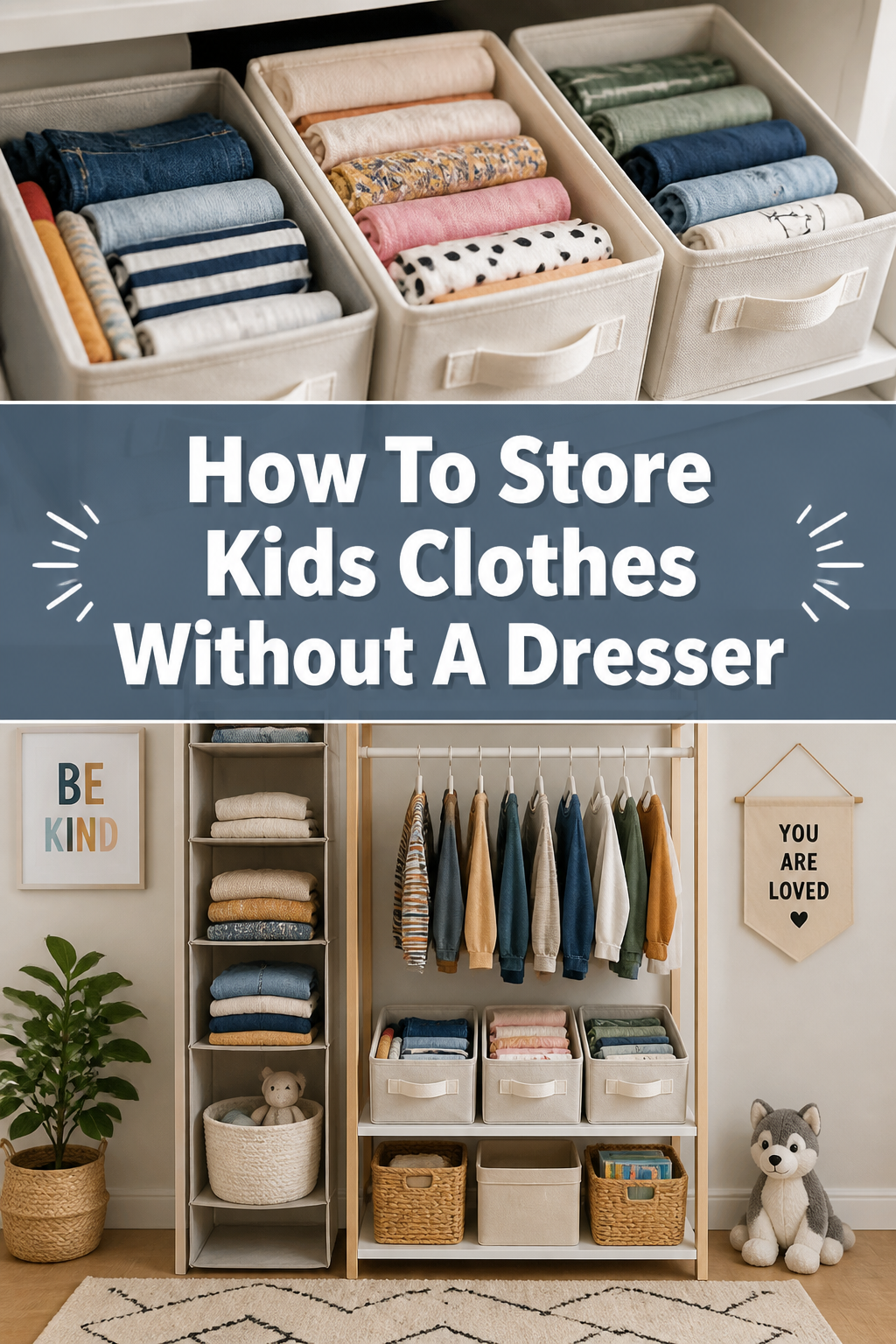
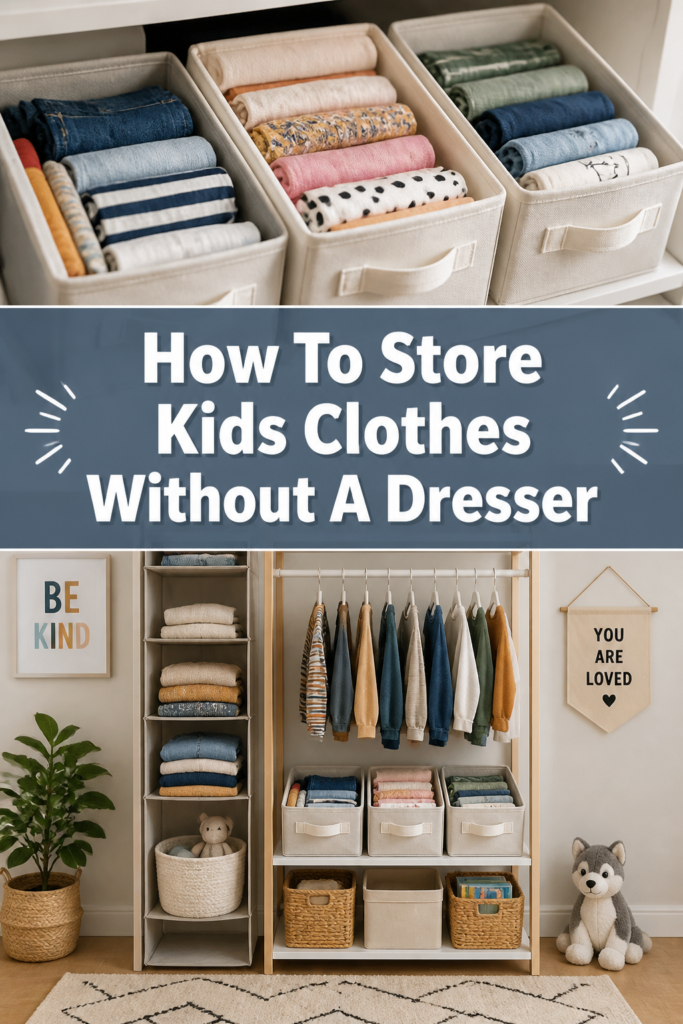
Place a low-profile cube shelf along a wall or inside the bottom of a closet to act as a modular dresser.
Insert fabric or plastic bins into the cubes to keep small items like socks and underwear contained.
Choose open-top bins so that kids can easily toss clean clothes inside without struggling with lids or drawers.
Limit each bin to one category of clothing to prevent the “digging” effect that leads to messy piles.
Pro Tip: Use clear plastic bins if your child is a visual learner, as seeing the clothes inside helps them identify what they want to wear.
Step 4: Master the Art of File Folding
Fold shirts and pants into small, tight rectangles that can stand upright on their own.
Line the folded items up horizontally in your bins rather than stacking them on top of each other.
Pull one item out at a time without disturbing the rest of the row, which is the primary benefit of “file folding.”
Teach older children this method so they can help maintain the system when putting away their own laundry.
Step 5: Maximize Under-Bed Real Estate
Slide long, shallow bins under the bed to hold out-of-season clothing or items the child hasn’t grown into yet.
Label the outside of these bins clearly so you don’t have to pull them all out to find a specific size.
Opt for bins with wheels if the floor is carpeted to make access easier for you during seasonal swaps.
Vacuum-seal bulky winter coats or blankets before placing them in under-bed bins to save a massive amount of space.
Step 6: Utilize Over-the-Door Organizers
Hang a pocket-style organizer on the back of the bedroom or closet door.
Dedicate pockets to small accessories like hair bows, belts, hats, or even rolled-up leggings.
Map out a “Monday through Friday” outfit system by placing a full outfit in each of the bottom five rows of pockets.
Ensure the hooks at the top of the door are thin enough to allow the door to close completely without damaging the frame.
Step 7: Install Low-Level Wall Hooks
Mount a row of sturdy hooks at a height your child can easily reach.
Hang everyday essentials like sweatshirts, pajamas, or the next day’s school outfit on these hooks.
Reduce the amount of clothing that ends up on the floor by providing an “easy win” for tidying up.
Space the hooks at least six inches apart so that bulky items don’t overlap and create a cluttered appearance.
Pro Tip: Use decorative hooks that match the room’s theme to make the storage feel like a part of the decor rather than just a utility.
Step 8: Apply a Visual Labeling System
Create labels that use both words and pictures for younger children who are not yet reading fluently.
Attach these labels to the front of every bin, shelf, and basket in the room.
Use adhesive vinyl or luggage tags tied to bin handles for a durable solution that won’t peel off easily.
Update the labels as your child’s wardrobe changes, ensuring the system remains relevant to their current needs.
Common Mistakes to Avoid
Buying Containers Before Measuring
Many parents rush to the store and buy a dozen cute bins only to find they don’t fit the closet shelves or the cube unit. This leads to wasted money and a disorganized look that feels cluttered rather than curated. Always measure the height, width, and depth of your storage spaces twice before making any purchases.
Ignoring the Child’s Perspective
If the storage system is built for an adult’s height, the child will never be able to help with chores or get dressed independently. This results in the parent doing all the work and the child constantly pulling things down to reach what they need. Keep the most-used items in the “bottom third” of the room to encourage autonomy.
Overstuffing the Bins
It is tempting to cram every single shirt into a bin to get them off the floor, but overstuffing leads to wrinkles and frustration. When a bin is too full, pulling one item out causes three others to fall out or become unraveled. Aim for bins that are about 80% full to allow for easy browsing and quick retrieval.
Troubleshooting
Items Falling Out of Hanging Shelves
Soft-sided hanging shelves can sometimes sag in the middle, causing clothes to slide forward and fall out. To fix this, place a piece of stiff cardboard or a thin plastic sheet at the bottom of each fabric shelf to create a flat, stable base. You can also use small drawer dividers inside the hanging shelves to keep stacks of clothes from toppling over.
Clothes Getting Wrinkled in Bins
If you find that clothes are coming out of the bins looking like crumpled paper, you are likely either folding them too loosely or stuffing them too tightly. Try the rolling method for cotton t-shirts and leggings, as this creates fewer hard creases than traditional folding. For items that wrinkle easily, like button-down shirts or dresses, prioritize hanging them on a lower rod rather than placing them in a bin.
The System Falls Apart After One Week
This usually happens because the categories are too specific or the folding method is too complex for daily life. Simplify your categories—for example, combine “shorts” and “pants” into one “bottoms” bin if separate bins are too hard to maintain. The best system is the one you and your child can actually stick to, even on a busy Tuesday night.
Key Takeaways
- Vertical space is your best friend when you don’t have a dresser, so use the full height of the closet and walls.
- Bins and baskets replace drawers effectively and are much easier for children to use independently.
- Labeling with pictures empowers kids to participate in the laundry process and find their own clothes.
- Seasonal rotation is mandatory in small spaces to keep the current wardrobe manageable and clutter-free.
- Folding techniques like the file fold or rolling maximize the capacity of every container you use.
- Hooks provide the fastest way to keep frequently used items off the floor and within reach.
Frequently Asked Questions
Is it better to use clear bins or fabric bins for kids clothes?
Clear bins are superior for functionality because they allow you to see exactly what is inside without opening them. However, fabric bins are often preferred for their aesthetic appeal and ability to hide a slightly messy fold. If you choose fabric bins, high-quality labels are essential to prevent the “mystery bin” problem where clothes go in and never come out.
How do I handle socks and underwear without drawers?
Small, divided organizers that fit inside a larger bin or sit on a shelf are perfect for these tiny items. You can also use a hanging shoe organizer on the back of the door, dedicating one row to socks and another to underwear. This keeps them separated and prevents them from getting lost at the bottom of a larger clothing bin.
What should I do with clothes that are too big for my child?
Keep a “Growth Bin” at the very top of the closet or under the bed for clothes that are the next size up. As your child outgrows their current wardrobe, you can easily swap items out. This prevents the current storage area from being cluttered with clothes that cannot be worn yet, making it easier for the child to choose an outfit.
Can I use a bookshelf instead of a cube organizer?
Yes, a standard bookshelf works well as long as you add bins or baskets to the shelves. Without bins, stacks of kids’ clothes on a bookshelf will quickly become a messy heap because the items are so small. Ensure the bookshelf is securely anchored to the wall for safety, as children may try to pull on the shelves to reach items.
Our Top Recommended Finds
- Hanging 6-Shelf Closet Organizer: Look for one with reinforced shelves to prevent sagging and side pockets for extra storage of small accessories.
- Collapsible Fabric Storage Cubes: Choose a set with sturdy handles and a window pocket for labels to make identification easy.
- Over-the-Door Clear Pocket Organizer: This is the most versatile tool for storing everything from shoes and socks to rolled-up t-shirts and hair accessories.
Transform Your Child’s Space Today
Moving away from a traditional dresser opens up floor space for play and simplifies the way your family handles laundry.
You can start small by installing just one row of hooks or adding a single hanging organizer to the closet this afternoon.
Once you see how much easier it is for your child to manage their own clothes, you might find yourself removing bulky dressers from every room in the house.
Take a look at our guides on closet lighting and toy organization to further enhance your child’s newly streamlined bedroom.