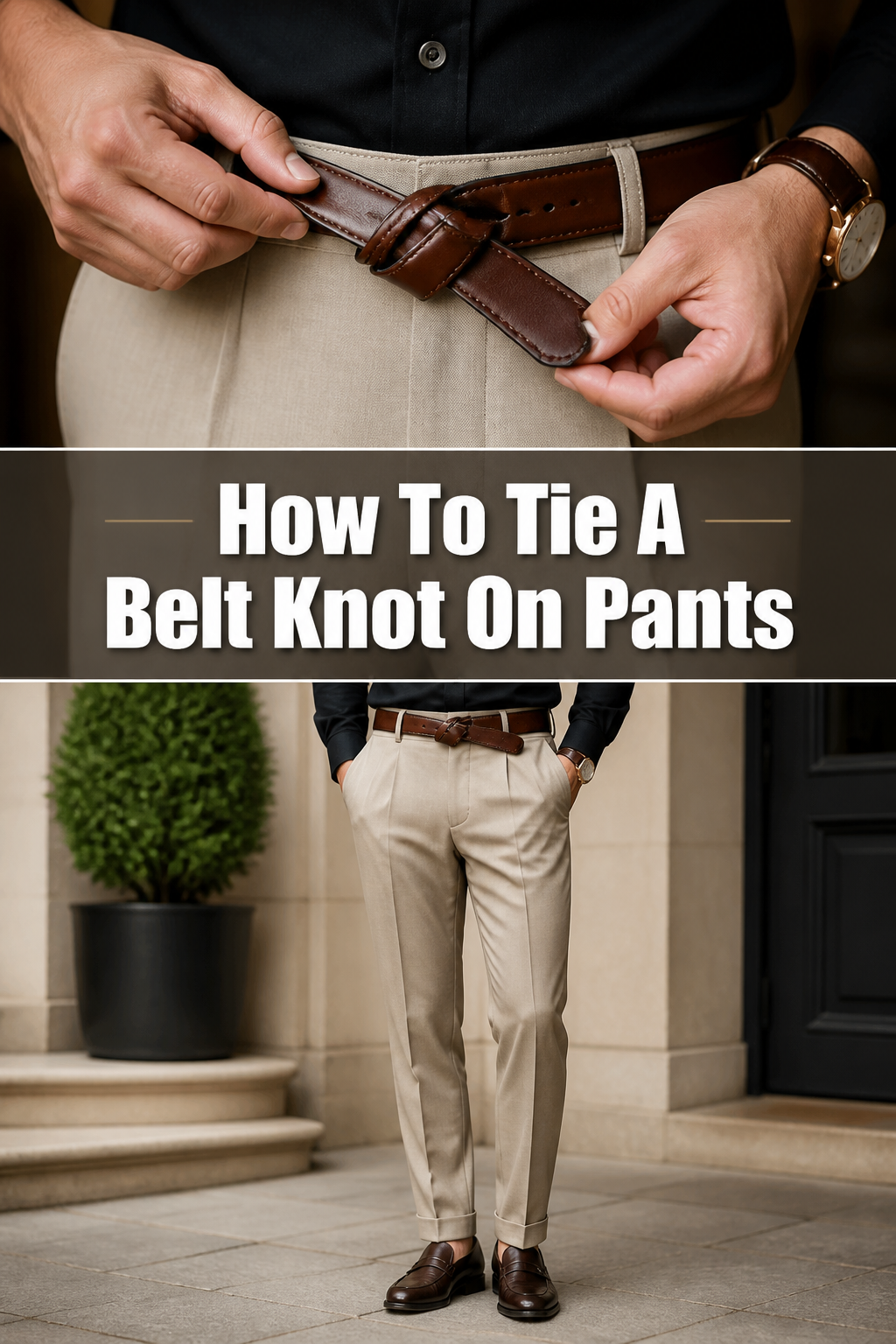
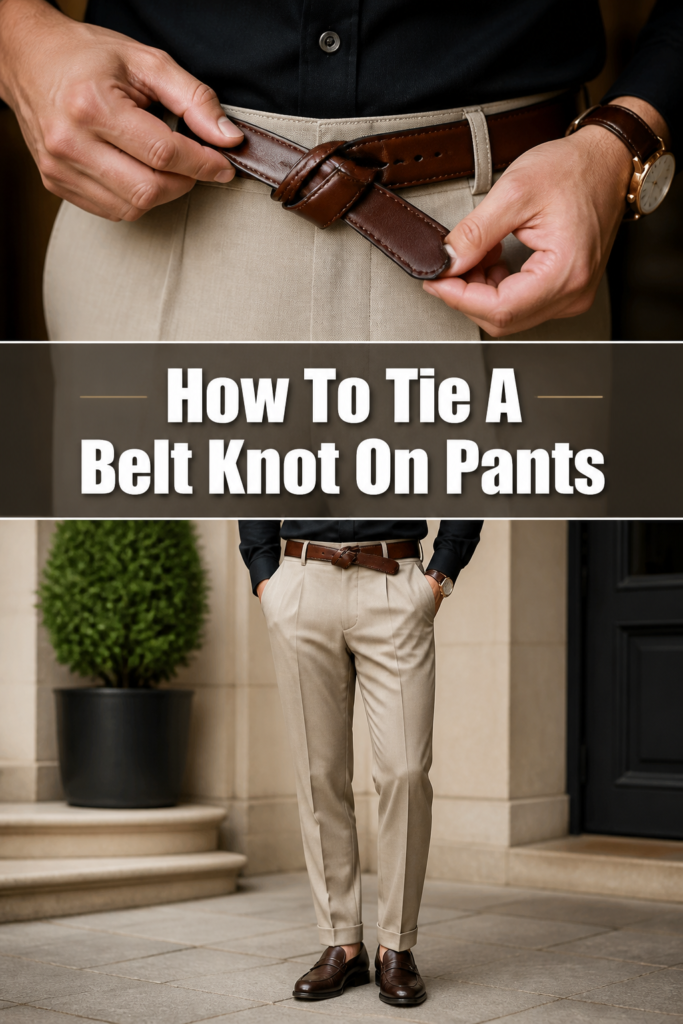
👖 How To Tie A Belt Knot On Pants
Learning to tie a belt might seem basic, but doing it right makes a huge difference to your comfort and appearance. I remember years ago struggling with belts that felt either too loose or painfully tight, never quite sitting right. This guide comes from years of experience, ensuring your belt stays perfectly in place, looking sharp every time.
It’s about more than just keeping your pants up; it’s about confidence and a polished look.
You’ll soon master the simple art of securing your belt with ease and style.
Quick Overview
This guide will walk you through the essential steps to properly tie a belt knot on your pants. You’ll learn how to thread it correctly, create a secure initial knot, and ensure a comfortable, neat finish.
- Time needed: 3-7 minutes
- Difficulty: Beginner
- What you’ll need: Pants with belt loops, a belt with a buckle
Step-by-Step Instructions
Step 1: Prepare Your Pants and Belt
Before you begin, make sure your pants are on and properly buttoned and zipped.
Take your belt and ensure it’s not twisted or tangled. Have it ready to go through the loops.
Step 2: Start Threading Through the First Loop
Begin by inserting the pointed end of your belt through the very first belt loop on your pants, usually to the right of your button and zipper.
Push it through from the outside towards the inside. This is the foundation for a smooth wrap.
Step 3: Continue Threading Around Your Waist
Guide the belt all the way around your waist, passing it through each subsequent belt loop.
Keep the belt flat as you thread it to prevent twisting later. Consistency here ensures a neat finish.
Step 4: Bring the Belt End Through the Buckle
Once you’ve threaded the belt through all the loops, the pointed end will be back at the front of your pants.
Insert the pointed end through the buckle. For traditional buckles, this means pushing it through the frame.
Pro Tip: For most standard buckles, the belt should go into the buckle from the outside, meaning the belt’s leather side faces out.
Step 5: Pull and Adjust for Initial Tightness
Now, pull the belt end through the buckle to your desired tightness.
The “knot” in “belt knot” refers to the secure fastening created by the buckle and how the belt is tightened, not a literal tie-off knot like a shoelace.
Step 6: Secure the Buckle Pin
With the belt at a comfortable tightness, insert the buckle’s pin into the nearest hole on the belt strap.
This is the primary way your belt stays fastened. Ensure the pin is fully seated in the hole.
Step 7: Pass the Belt End Through the Keeper Loop
After securing the buckle pin, you’ll have a loose end of the belt strap hanging free.
Feed this loose end through the small keeper loop, which is usually attached to the buckle itself or the first belt loop on your pants.
Pro Tip: The keeper loop is essential for a tidy appearance. It prevents the belt end from flapping or hanging loosely. If your belt has a second keeper loop on the strap itself, use that too.
Step 8: Final Adjustments for Comfort and Appearance
Check your belt’s tightness. It should be snug enough to hold your pants up without digging into your waist.
Make sure the belt lies flat against your body with no twists. A quick glance in the mirror confirms a neat look.
Common Mistakes to Avoid
Over-tightening Your Belt
Pulling your belt too tight can be very uncomfortable and even restrict your breathing.
It also creates an unflattering “cinched” look, causing your pants to wrinkle excessively around the waist. Aim for a snug fit where you can comfortably fit two fingers between your waist and the belt.
Under-tightening Your Belt
A belt that’s too loose won’t serve its purpose of holding your pants up.
It can also look sloppy and cause your pants to sag. Ensure the buckle pin is in a hole that provides a firm, supportive fit without being restrictive.
Twisted Belt Strap
Threading the belt through loops while it’s twisted is a common oversight.
This creates an uneven, uncomfortable, and unprofessional look. Always ensure the belt strap remains flat as you thread it through each loop and when you secure the buckle.
Incorrect Side Overlap
For most men’s belts, the strap should go through the buckle from left to right when viewed from the front, with the loose end pointing to your left.
While not a strict rule, adhering to this standard often provides a cleaner look and is the customary way to wear a belt.
Troubleshooting
Belt Feels Uncomfortable
If your belt feels too tight or too loose, the solution is simple adjustment. Remove the buckle pin from its current hole.
Then, either loosen or tighten the belt slightly and re-insert the pin into a different hole. Experiment until you find the perfect balance of comfort and security.
Belt Keeps Loosening
A belt that repeatedly loosens often indicates that the buckle pin isn’t fully seated in the hole, or the belt material itself might be stretched or worn.
Ensure the pin clicks firmly into place. If the belt is old, consider replacing it with a new one that offers better grip and stability.
Belt Looks Bulky at the Waist
Bulkiness can occur if the belt is too wide for your loops, or if the buckle is overly large for your frame.
Make sure the loose end is properly tucked into the keeper loop(s). Sometimes, using a slightly narrower belt or one with a flatter buckle can resolve this issue for a smoother silhouette.
Key Takeaways
- Proper threading through all belt loops is crucial for a flat, neat appearance.
- The “knot” refers to the secure fastening achieved by the buckle and its pin, not a literal tied knot.
- Always prioritize comfort and a snug, supportive fit over extreme tightness or looseness.
- Utilize the keeper loop(s) to tuck away the loose end for a polished finish.
- Regularly check for twists in the belt strap to maintain a clean look.
- Practice makes perfect; adjusting your belt will become second nature with time.
Frequently Asked Questions
Should the belt be tight or loose?
Your belt should be snug enough to comfortably hold your pants up without needing constant adjustment. You should be able to move and breathe easily. It shouldn’t dig into your waist or feel like it’s slipping down.
Which side should the belt end point?
For most traditional men’s belts, the loose end of the belt typically points to your left (when you’re looking down at your waist). This is a common convention and contributes to a balanced look. However, personal preference can also play a role.
What if my belt doesn’t have a keeper loop?
Some minimalist belts or certain styles might lack a dedicated keeper loop near the buckle. In such cases, you can often tuck the loose end into the first belt loop of your pants to keep it secure and tidy. If that’s not possible, consider a belt with a keeper for a neater finish.
Can I tie a belt without a buckle?
While the term “belt knot” in this context refers to securing a traditional buckle belt, some fabric or rope-style belts are designed to be tied with actual knots. For standard leather belts, the buckle is the essential fastening mechanism; a literal knot would likely damage the belt and not provide proper support.
Our Top Recommended Finds
- High-Quality Leather Belt: A durable leather belt offers longevity and a classic look, improving with age.
- Automatic Ratchet Belt: These belts provide micro-adjustments for a perfect fit every time, enhancing comfort.
- Belt Hanger/Organizer: Keeping your belts neatly organized prevents damage and makes choosing the right one easy.
Your Path to Effortless Style Starts Now
You’ve now got the full breakdown on how to tie a belt knot on your pants, ensuring a comfortable and stylish fit. This simple skill elevates your daily appearance and adds to your overall confidence.
Don’t just read about it; put these steps into action today.
Practice with different pants and belts to find what works best for you, and enjoy the feeling of a perfectly secured outfit.