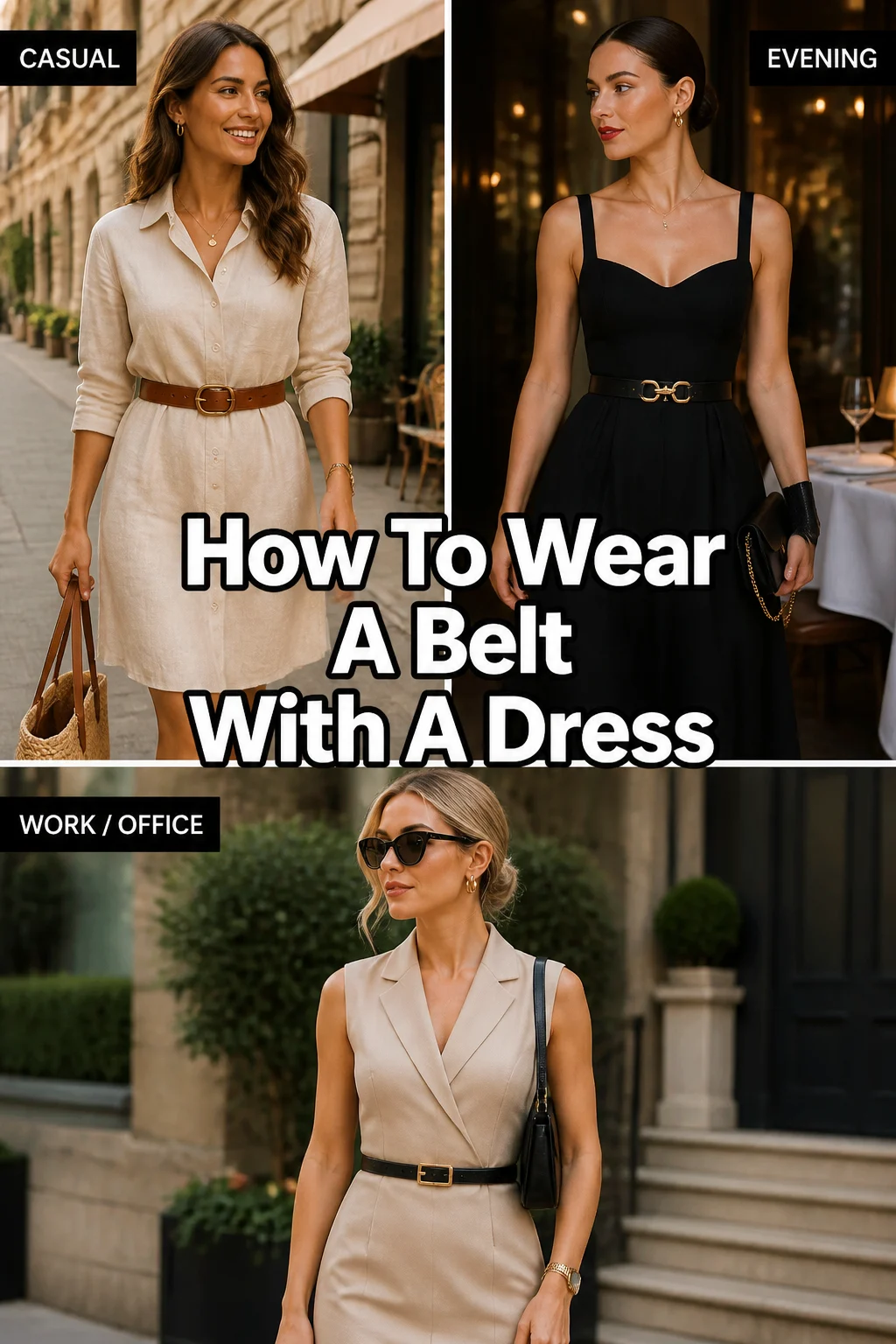
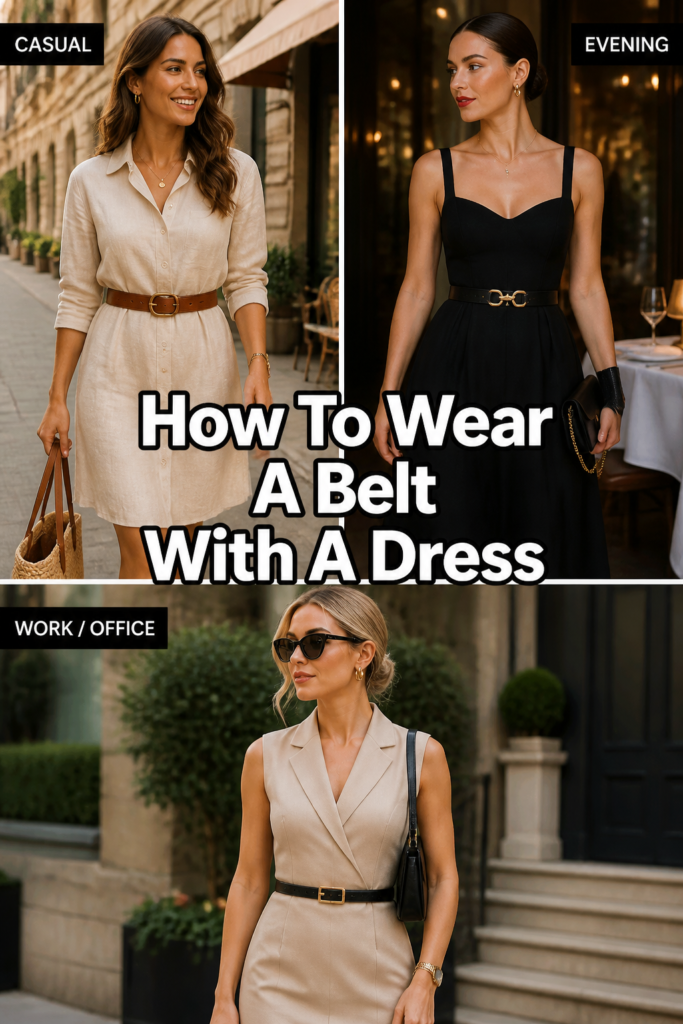
How To Wear A Belt With A Dress
👘 How To Wear A Belt With A Dress
Belts can completely change the look and feel of a dress, transforming an outfit from simple to striking.
I remember years ago struggling with how to make my dresses feel more “me,” and a well-placed belt was the game changer.
This guide will share all the practical steps I learned through countless styling experiments, helping you master this versatile accessory.
Quick Overview
You’re about to learn how to expertly choose and place a belt with any dress, enhancing your silhouette and adding a polished touch to your wardrobe.
- Time needed: 15-30 minutes (for initial understanding and first try)
- Difficulty: Beginner
- What you’ll need: A dress, a selection of belts, a mirror, and an open mind
Step-by-Step Instructions
Step 1: Understand Your Dress Style
Before grabbing a belt, take a good look at your dress. Consider its fabric, cut, and overall vibe.
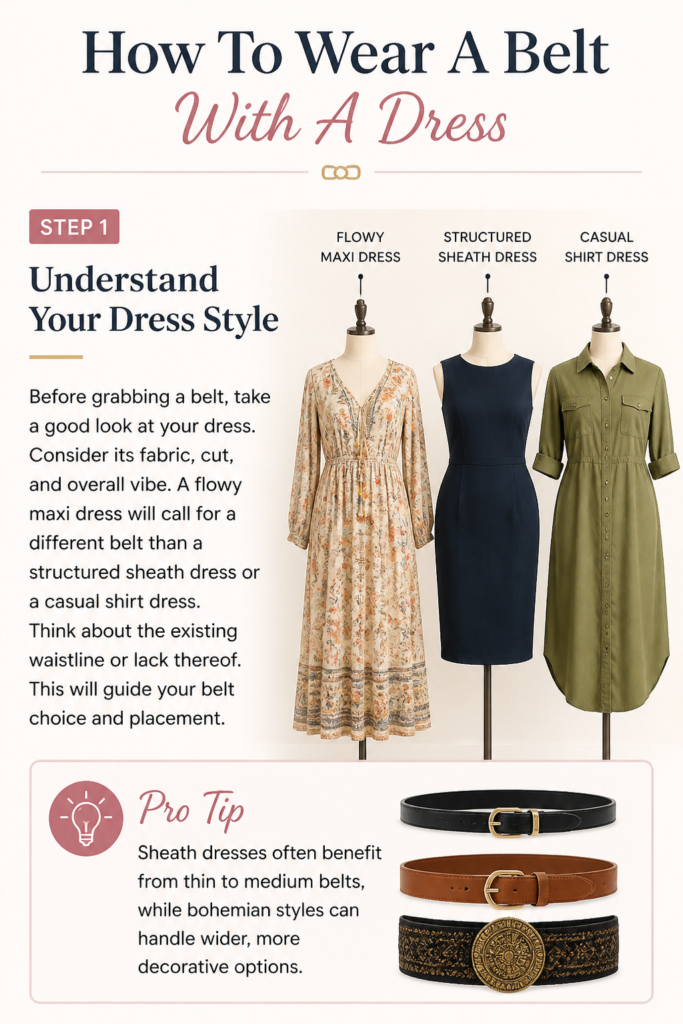
A flowy maxi dress will call for a different belt than a structured sheath dress or a casual shirt dress.
Think about the existing waistline or lack thereof. This will guide your belt choice and placement.
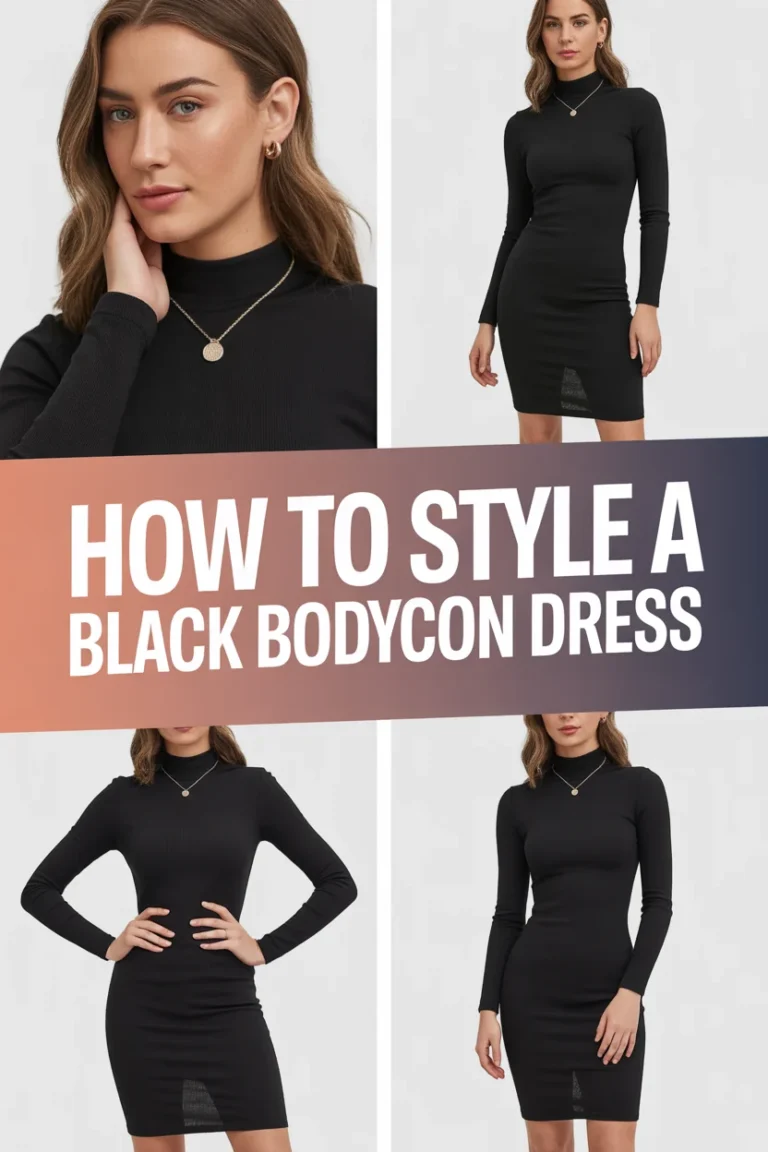
Pro Tip: Sheath dresses often benefit from thin to medium belts, while bohemian styles can handle wider, more decorative options.
Step 2: Know Your Body Shape
Belts are powerful tools for defining your waist and balancing proportions. Understanding your body shape helps you use them effectively.
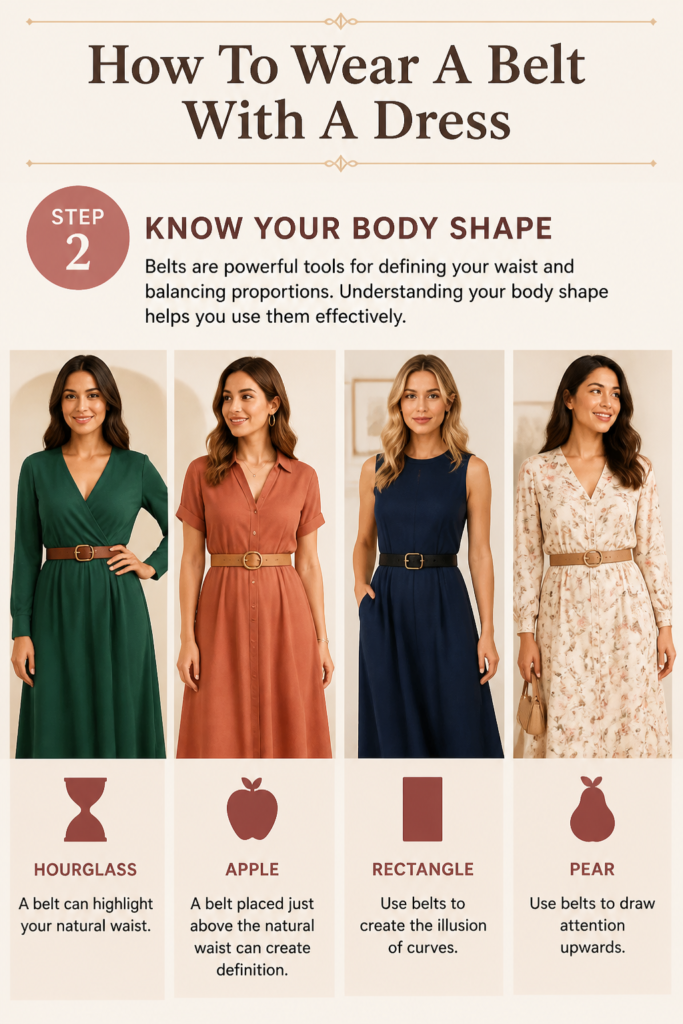
If you have an hourglass figure, a belt can highlight your natural waist. For apple shapes, a belt placed just above the natural waist can create definition.
Rectangle shapes can use belts to create the illusion of curves. Pear shapes might use belts to draw attention upwards.
Step 3: Choose the Right Belt Width
Belt width significantly impacts your final look. Thin belts (0.5-1 inch) offer subtle definition and are great for delicate fabrics or petite frames.
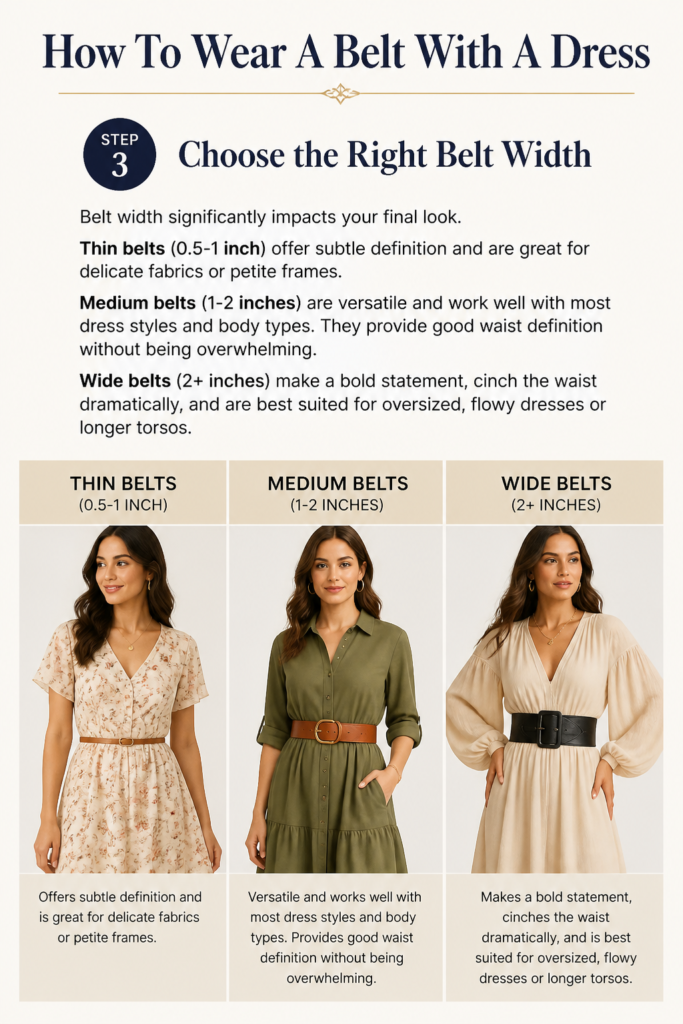
Medium belts (1-2 inches) are versatile and work well with most dress styles and body types. They provide good waist definition without being overwhelming.
Wide belts (2+ inches) make a bold statement, cinch the waist dramatically, and are best suited for oversized, flowy dresses or longer torsos.
Step 4: Select the Material and Style
The belt’s material and style should complement your dress and the occasion. Leather belts offer classic sophistication for work or formal events.
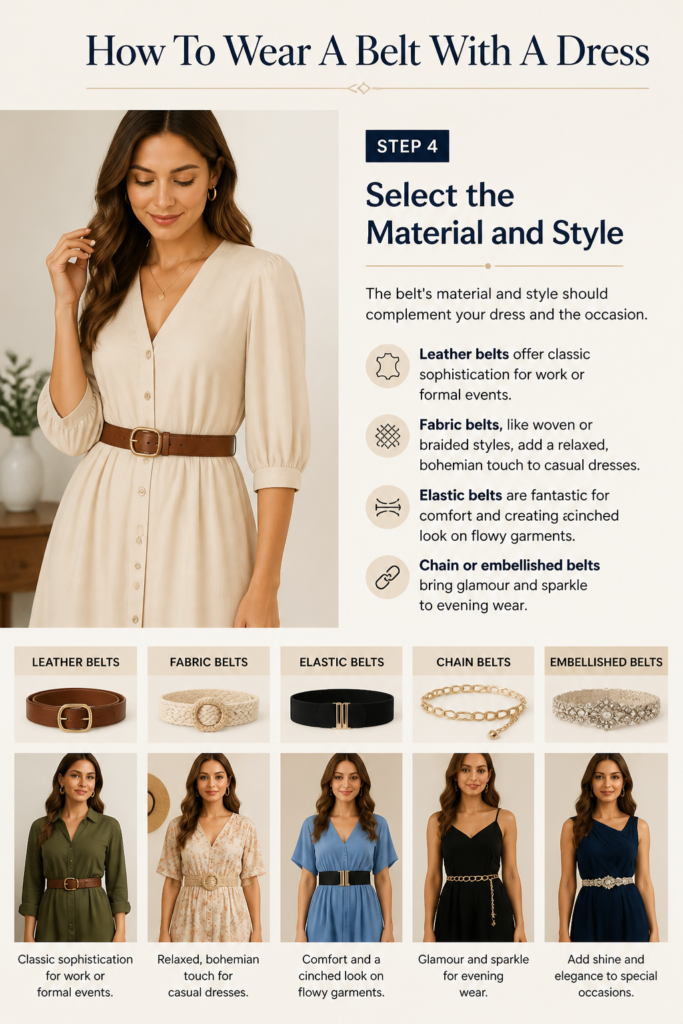
Fabric belts, like woven or braided styles, add a relaxed, bohemian touch to casual dresses.
Elastic belts are fantastic for comfort and creating a cinched look on flowy garments. Chain or embellished belts bring glamour and sparkle to evening wear.
Step 5: Determine Belt Placement
Where you place your belt is crucial for silhouette and comfort. The most common placement is at your natural waist, the narrowest part of your torso.
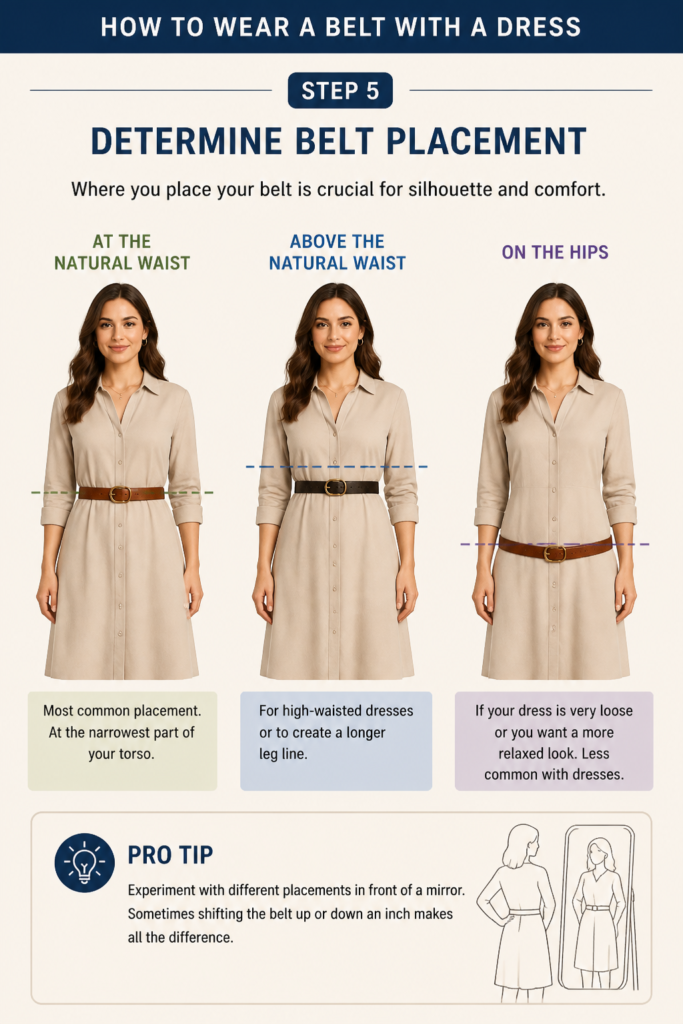
For high-waisted dresses or to create a longer leg line, place the belt slightly above your natural waist.
If your dress is very loose or you want a more relaxed look, a belt can be worn lower on the hips, though this is less common with dresses.
Pro Tip: Experiment with different placements in front of a mirror. Sometimes shifting the belt up or down an inch makes all the difference.
Step 6: Cinch and Adjust for Comfort
Once you’ve chosen your belt and placement, gently cinch the belt around your waist. It should be snug enough to define your waist but not so tight that it’s uncomfortable or creates bulges.
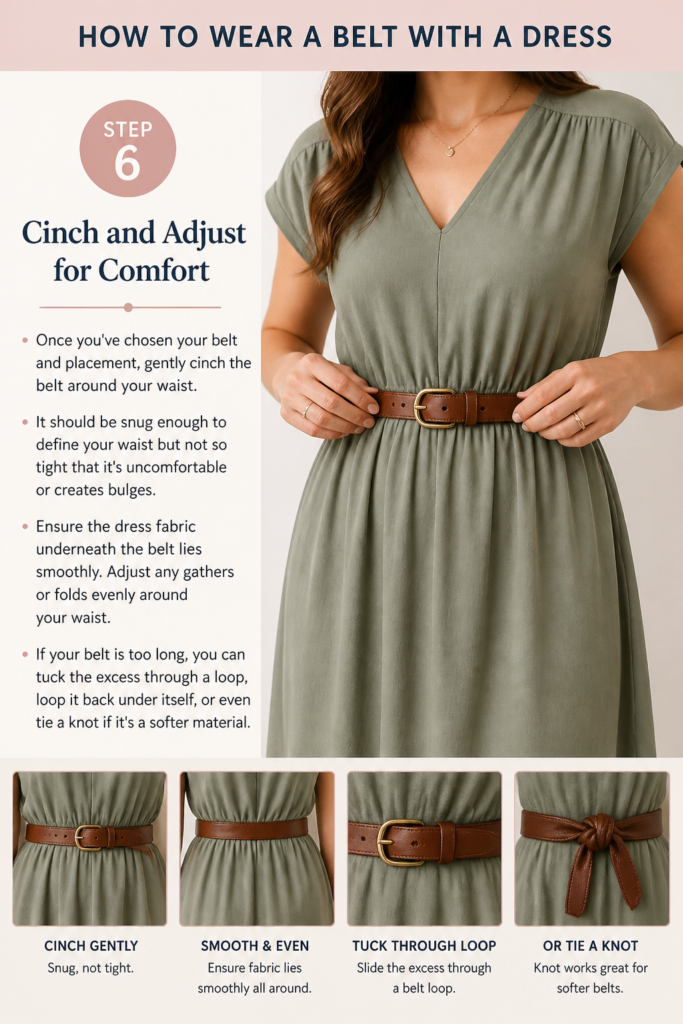
Ensure the dress fabric underneath the belt lies smoothly. Adjust any gathers or folds evenly around your waist.
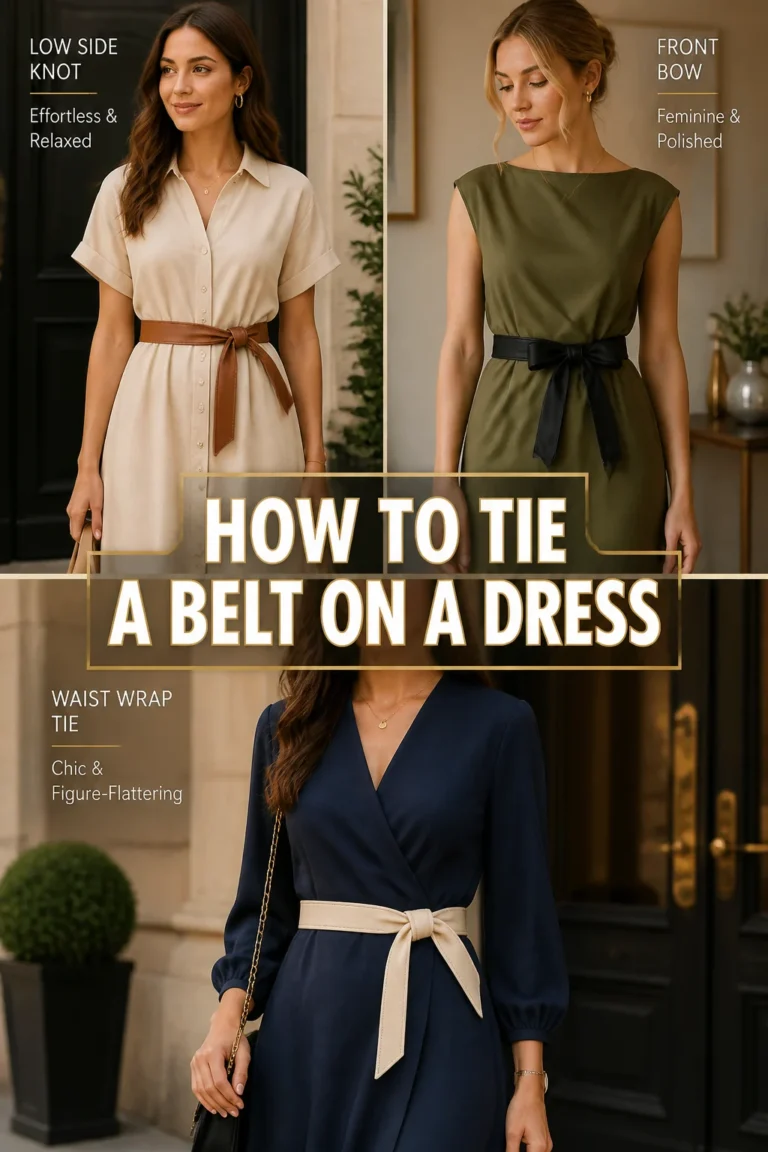
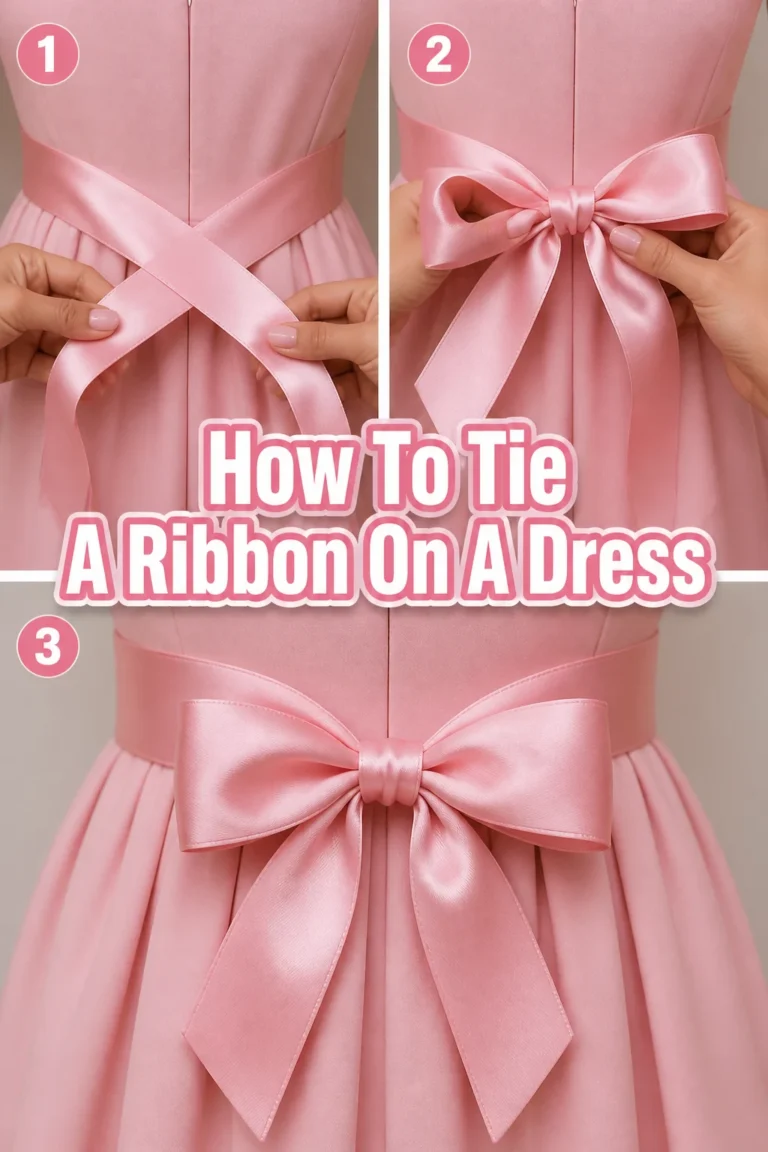
If your belt is too long, you can tuck the excess through a loop, loop it back under itself, or even tie a knot if it’s a softer material.
Step 7: Consider Color and Contrast
Belts can either blend in or stand out. A belt in a similar color to your dress creates a subtle, monochromatic look that elongates your figure.
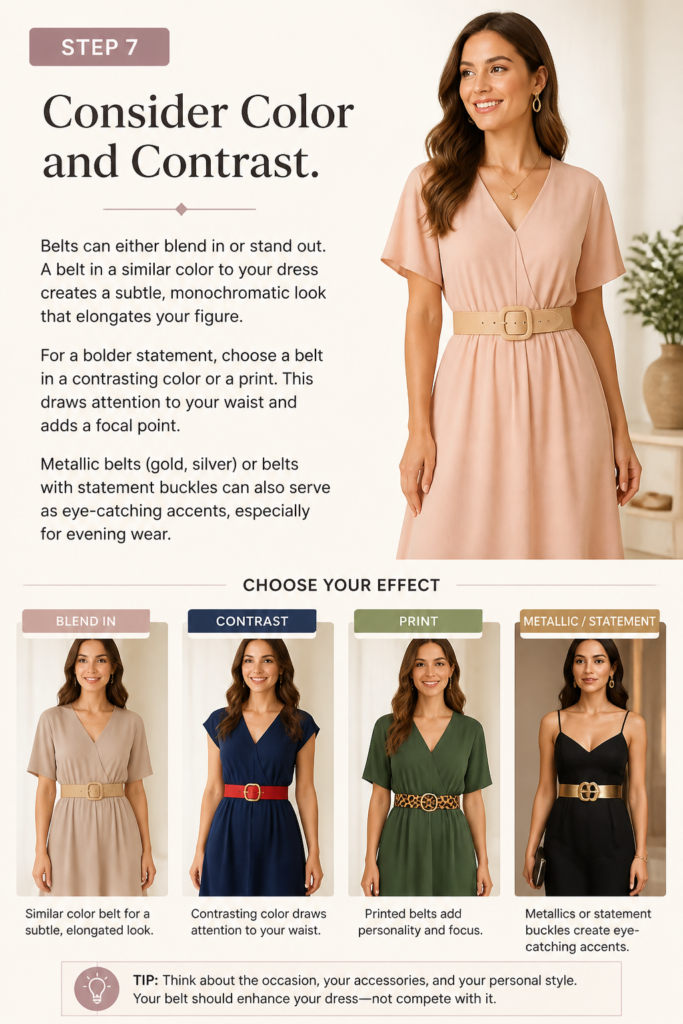
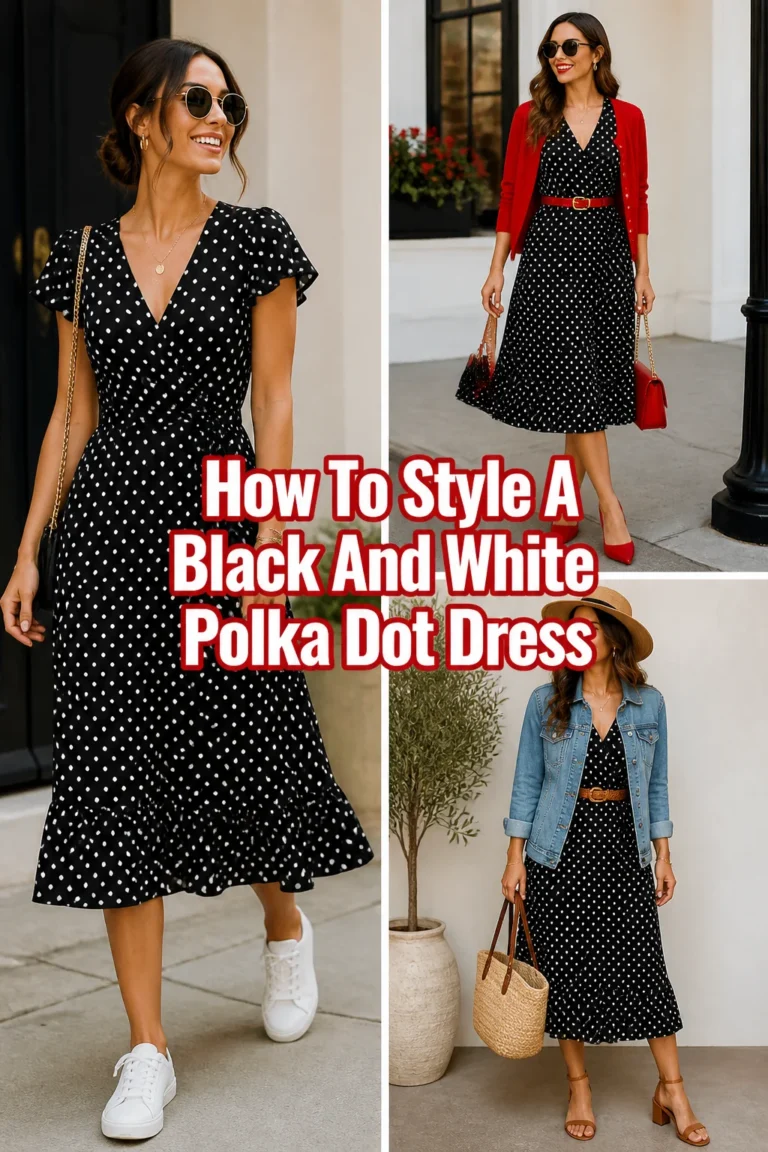
For a bolder statement, choose a belt in a contrasting color or a print. This draws attention to your waist and adds a focal point.
Metallic belts (gold, silver) or belts with statement buckles can also serve as eye-catching accents, especially for evening wear.
Step 8: Balance with Other Accessories
Think about your belt as part of your overall outfit. It should harmonize with your shoes, handbag, and jewelry.
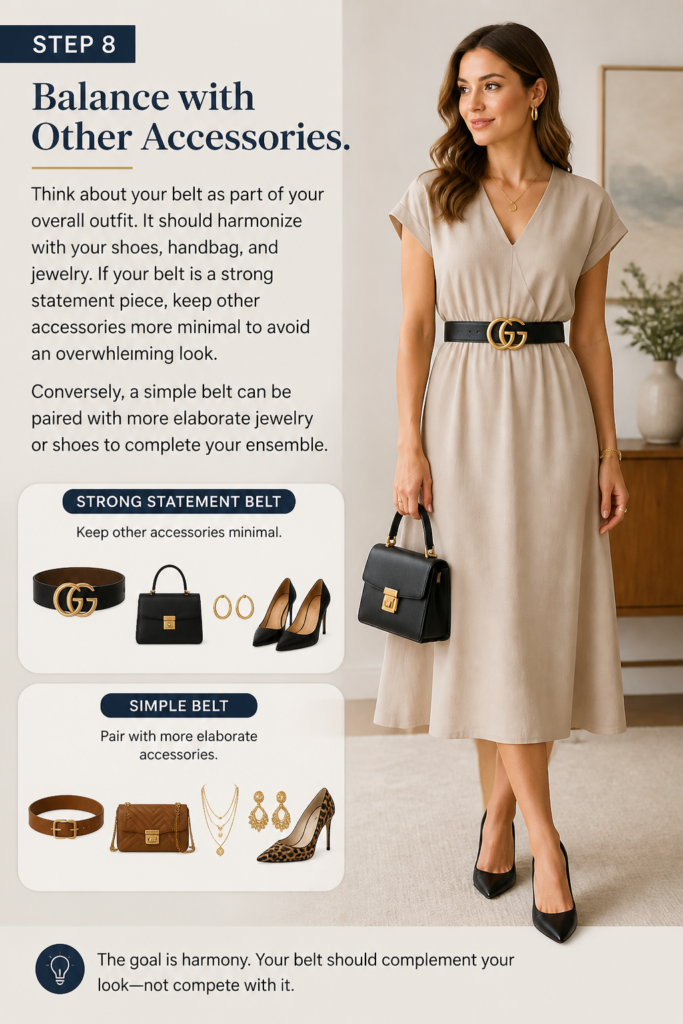
If your belt is a strong statement piece, keep other accessories more minimal to avoid an overwhelming look.
Conversely, a simple belt can be paired with more elaborate jewelry or shoes to complete your ensemble.
Common Mistakes to Avoid
Choosing the Wrong Width for Your Dress
A common pitfall is pairing a wide, heavy belt with a delicate, thin-fabric dress. This can overwhelm the dress, making it look unbalanced and causing the fabric to bunch awkwardly.
Similarly, a very thin belt might get lost on a voluminous, thick-fabric dress. Always match the belt’s presence to the dress’s weight and style for a cohesive look.
Belting Too Tightly or Too Loosely
A belt that’s too tight will create uncomfortable bulges and restrict movement, looking unnatural. It can also make you feel self-conscious.
A belt that’s too loose will slip and slide, failing to define your waist effectively. The goal is a comfortable snugness that enhances your shape without constricting it.
Ignoring Body Proportions
Some people belt at their natural waist regardless of their torso length or body shape, which can sometimes shorten the torso or create an unflattering line.
Experiment with placing the belt slightly higher or lower to find the most flattering point for your unique proportions. A belt should enhance, not distort, your figure.
Clashing Styles and Materials
Pairing a casual, braided straw belt with a formal silk gown, or a sleek patent leather belt with a rustic linen dress, can create a jarring effect.
Ensure the belt’s material, texture, and style align with the dress’s formality and aesthetic. Consistency in style creates a polished and intentional outfit.
Troubleshooting
My Belt Keeps Slipping Down
If your belt won’t stay in place, it might be too loose or the dress fabric is too slick. Try a belt with a slightly tighter fit or one with a grippier texture.
You can also use double-sided fashion tape on the inside of the belt to adhere it to the dress, keeping it perfectly positioned throughout the day.
The Dress Bunches Up Awkwardly Under the Belt
This often happens with very thin or voluminous fabrics. Ensure you’re not pulling the belt too tight. Smooth the fabric evenly around your waist before fastening the belt.
Sometimes, a wider belt can distribute the fabric more evenly, reducing bunching. For very flowy dresses, embracing a slight gather is part of the look.
My Outfit Feels Unbalanced with a Belt
If the belt feels “off,” reassess its width, color, and placement. Perhaps the belt is too dominant for a subtle dress, or too subtle for a statement dress.
Try a different belt width or color. Adjust the placement higher or lower by an inch or two. Sometimes, swapping out shoes or jewelry can also rebalance the overall look.
Key Takeaways
- Always consider the dress’s style and fabric before choosing a belt.
- Match the belt’s width to your body shape and the dress’s volume for optimal balance.
- Experiment with belt placement to find the most flattering point for your unique figure.
- Ensure the belt’s material and style complement the dress’s formality and aesthetic.
- Prioritize comfort; the belt should be snug enough to define but never restrictive.
- Use belts to create contrast or a monochromatic look, depending on your desired statement.
Frequently Asked Questions
Can I wear a belt with any type of dress?
Almost any dress can be belted, but some styles work better than others. Flowy, shapeless dresses benefit greatly from a belt to create definition. Structured dresses may need a more subtle belt that doesn’t compete with the existing tailoring. The key is finding the right belt for the specific dress.
What if my dress already has a tie or sash?
If your dress comes with a sash, you can often remove it and replace it with a different belt to customize the look. Alternatively, you can layer a thin, decorative belt over the existing sash for added texture and interest, as long as the styles complement each other.
How do I choose a belt color that goes with everything?
For maximum versatility, invest in belts in classic neutral colors. Black, brown, tan, and nude belts are excellent choices that pair well with a wide range of dress colors and styles. Metallic belts (gold or silver) also act as neutrals and can elevate an outfit for special occasions.
Should my belt match my shoes or bag?
While matching your belt to your shoes or bag was once a strict fashion rule, it’s now more of a suggestion. You can certainly match them for a polished, cohesive look. However, feel free to mix and match colors and textures to create more dynamic and modern outfits. The goal is overall harmony, not strict adherence.
Our Top Recommended Finds
- A Classic Leather Belt: Essential for its durability, versatility, and ability to elevate both casual and formal dresses.
- A Versatile Elastic Cinch Belt: Perfect for adding definition to flowy dresses, offering comfort and a customizable fit.
- A Stylish Chain or Embellished Belt: Ideal for transforming a simple dress into an evening-ready ensemble with a touch of sparkle.
Embrace Your Belted Style Today
Wearing a belt with a dress is more than just an accessory choice; it’s an opportunity to express your personal style and enhance your silhouette.
With these steps, you now have the confidence to experiment and discover how belts can truly elevate your wardrobe.
Don’t wait to try these techniques. Grab a dress and a belt, and start playing with your style right now. You might be surprised by the transformation.