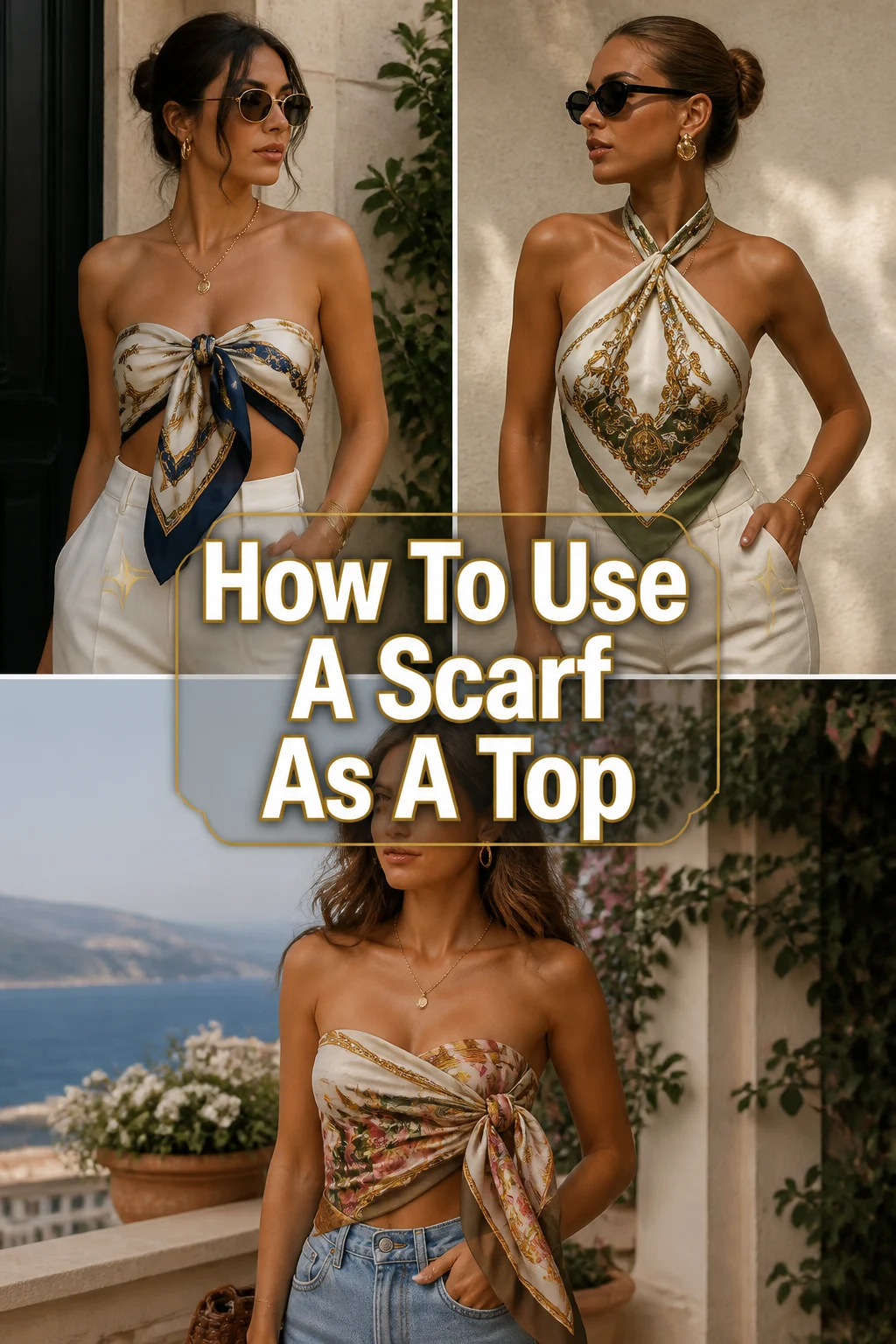
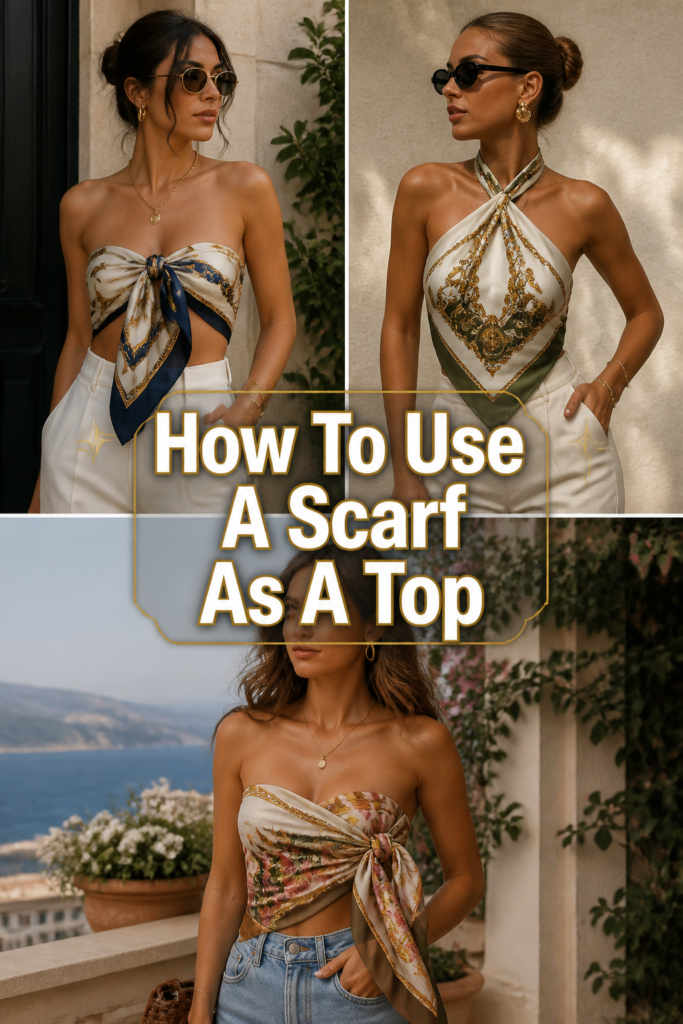
✨ How To Use A Scarf As A Top
I remember the first time I saw someone effortlessly turn a simple scarf into a chic top. It felt like discovering a secret style hack that instantly elevated my wardrobe. This guide shares all the practical tips I’ve learned from years of experimenting with this versatile trend.
You’ll soon be able to confidently transform your own scarves into unique, fashionable tops for any occasion.
Quick Overview
This guide will empower you to repurpose your scarves into stylish and secure tops. You’ll learn various tying techniques and essential tips for a polished look.
- Time needed: 10-25 minutes (depending on the style and your practice level)
- Difficulty: Beginner to Intermediate
- What you’ll need: Scarves (square, rectangular), safety pins, fashion tape, a bra (optional but recommended)
Step-by-Step Instructions
Step 1: Choose Your Scarf Wisely
The right scarf is the foundation of a successful scarf top. Consider the fabric, size, and shape before you begin. A large square or rectangular scarf offers the most versatility.
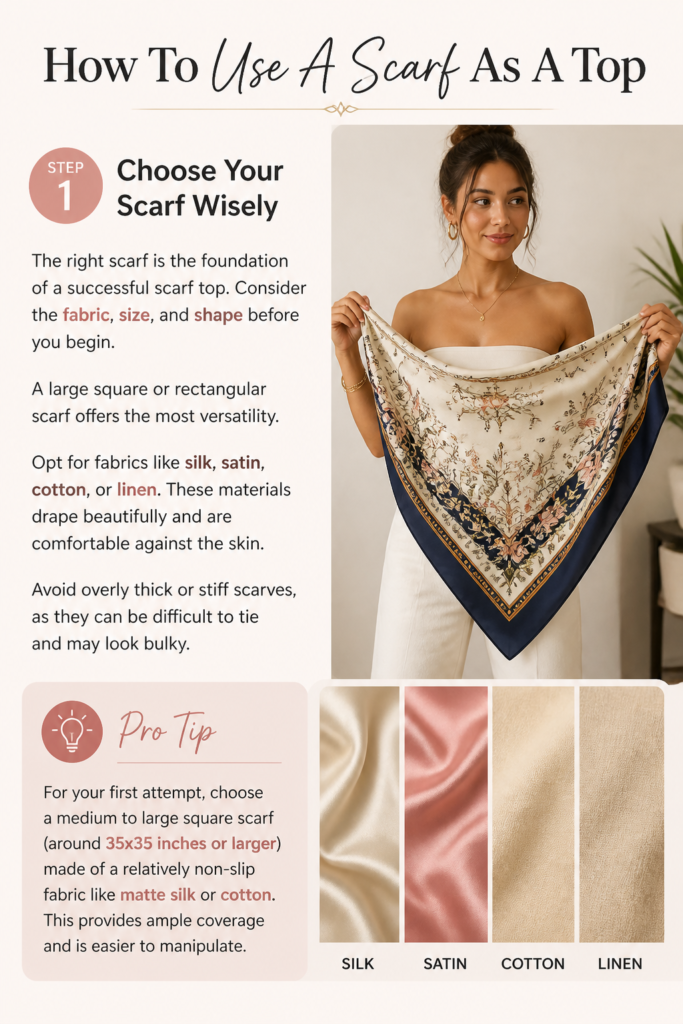
Opt for fabrics like silk, satin, cotton, or linen. These materials drape beautifully and are comfortable against the skin. Avoid overly thick or stiff scarves, as they can be difficult to tie and may look bulky.
Pro Tip: For your first attempt, choose a medium to large square scarf (around 35×35 inches or larger) made of a relatively non-slip fabric like matte silk or cotton. This provides ample coverage and is easier to manipulate.
Step 2: Prepare Your Base Layer
Decide on your undergarments first, as they provide essential support and coverage. A strapless bra, bandeau, or pasties are often ideal for many scarf top styles. If you need more support, consider a convertible bra.
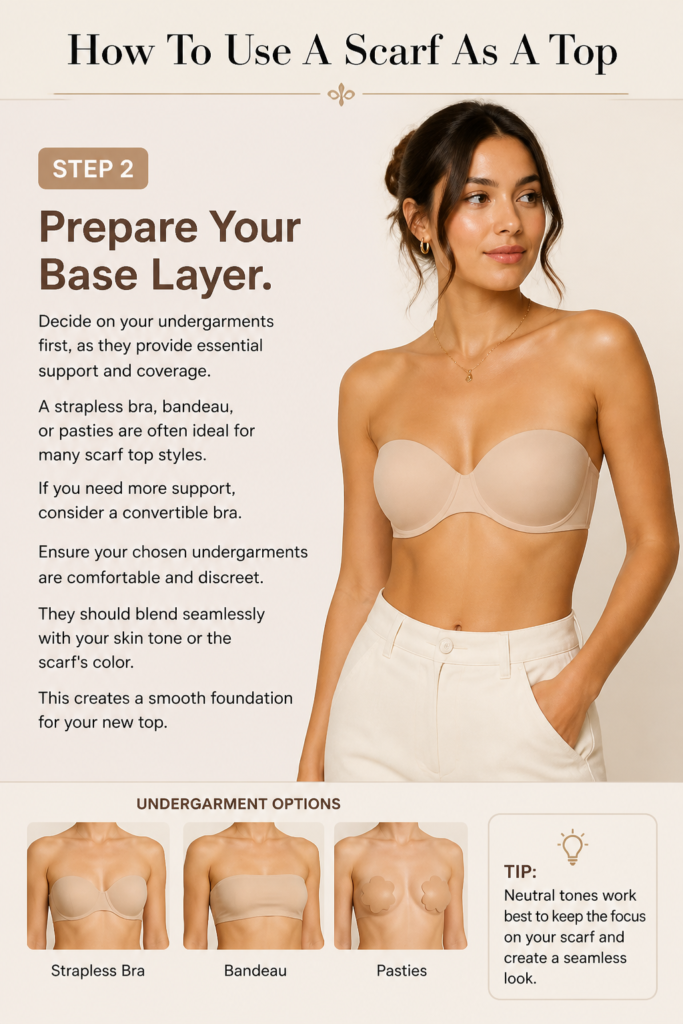
Ensure your chosen undergarments are comfortable and discreet. They should blend seamlessly with your skin tone or the scarf’s color. This creates a smooth foundation for your new top.
Step 3: Master the Classic Halter Top
This is one of the easiest and most popular styles to create. It offers good coverage and is relatively secure. You’ll need a large square scarf for this technique.
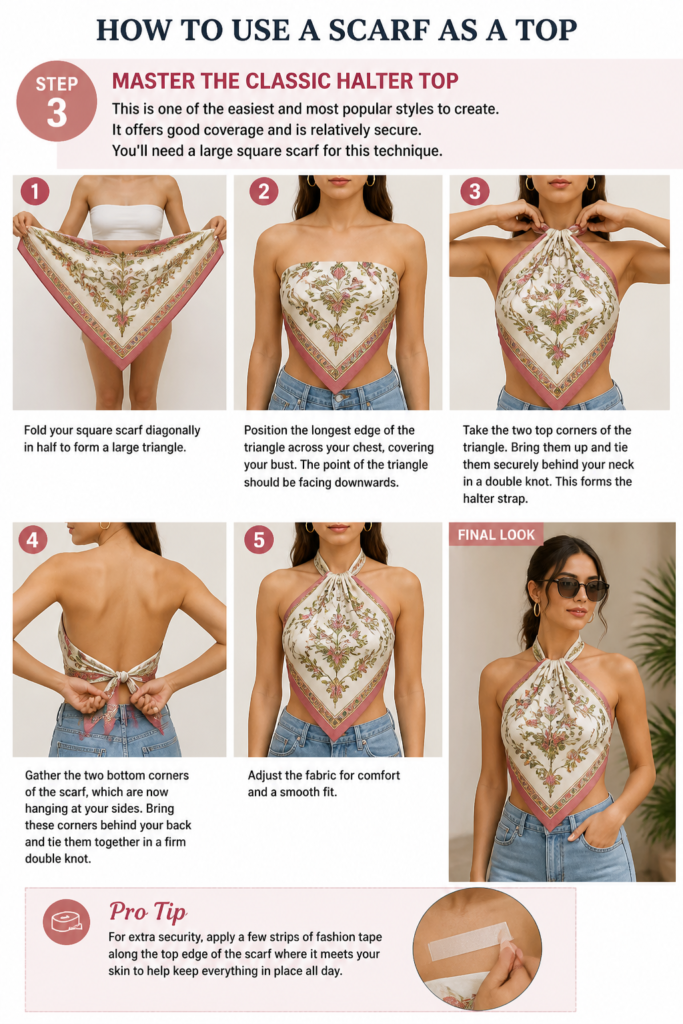
Fold your square scarf diagonally in half to form a large triangle. Position the longest edge of the triangle across your chest, covering your bust. The point of the triangle should be facing downwards.
Take the two top corners of the triangle. Bring them up and tie them securely behind your neck in a double knot. This forms the halter strap.
Gather the two bottom corners of the scarf, which are now hanging at your sides. Bring these corners behind your back and tie them together in a firm double knot. Adjust the fabric for comfort and a smooth fit.
Pro Tip: For extra security, apply a few strips of fashion tape along the top edge of the scarf where it meets your skin. This prevents gaping and keeps everything in place as you move.
Step 4: Create a Simple Bandeau Top
The bandeau style is perfect for a minimalist, strapless look. It works best with a rectangular scarf or a large square scarf folded appropriately. This style offers less support, so a good strapless bra is key.
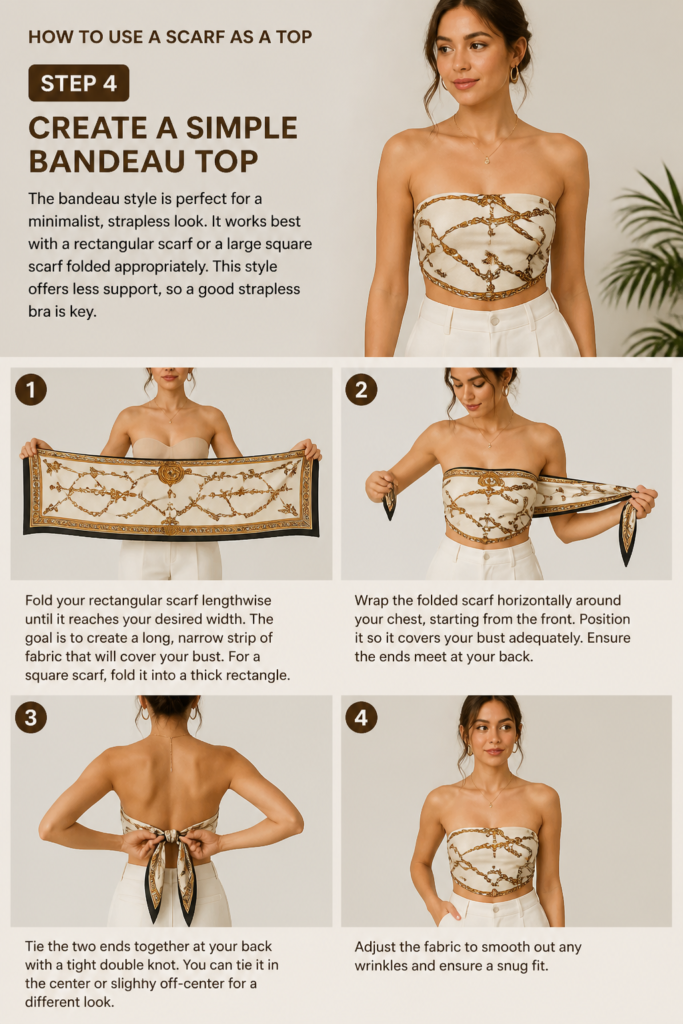
Fold your rectangular scarf lengthwise until it reaches your desired width. The goal is to create a long, narrow strip of fabric that will cover your bust. For a square scarf, fold it into a thick rectangle.
Wrap the folded scarf horizontally around your chest, starting from the front. Position it so it covers your bust adequately. Ensure the ends meet at your back.
Tie the two ends together at your back with a tight double knot. You can tie it in the center or slightly off-center for a different look. Adjust the fabric to smooth out any wrinkles and ensure a snug fit.
Step 5: Style the Elegant One-Shoulder Top
This asymmetrical style adds a touch of sophistication to your outfit. A large square scarf works beautifully for this technique. It offers a chic and unexpected silhouette.
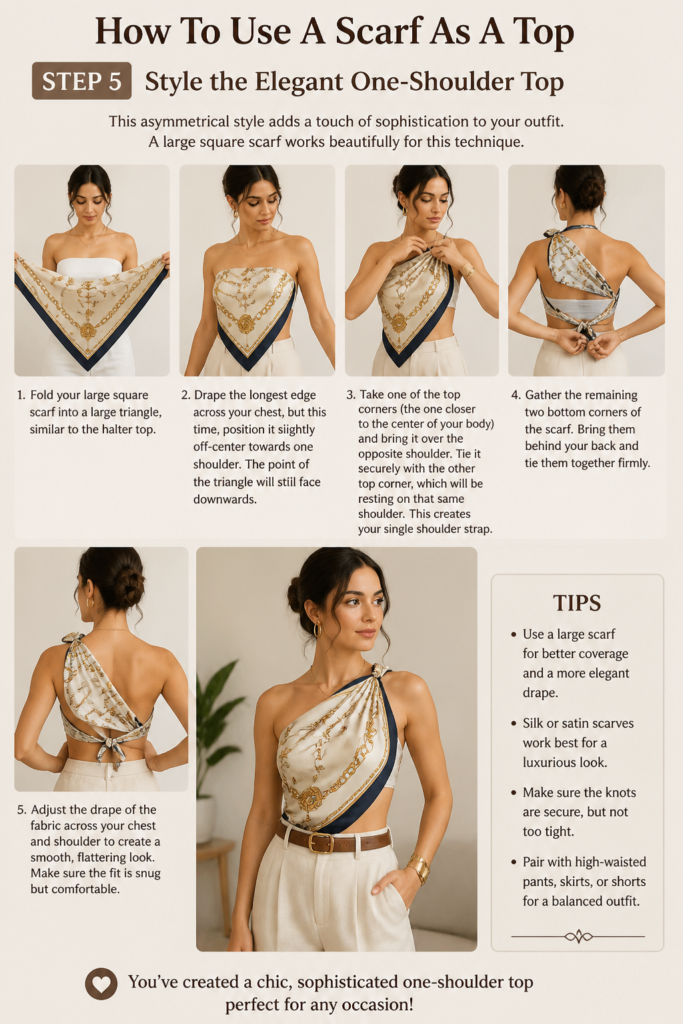
Fold your large square scarf into a large triangle, similar to the halter top. Drape the longest edge across your chest, but this time, position it slightly off-center towards one shoulder. The point of the triangle will still face downwards.
Take one of the top corners (the one closer to the center of your body) and bring it over the opposite shoulder. Tie it securely with the other top corner, which will be resting on that same shoulder. This creates your single shoulder strap.
Gather the remaining two bottom corners of the scarf. Bring them behind your back and tie them together firmly. Adjust the drape of the fabric to ensure comfortable coverage and a flattering fit.
Step 6: Experiment with the Wrap Top
The wrap top offers more coverage and a customizable fit, making it very comfortable. This style is best achieved with a large rectangular scarf or an extra-large square scarf. It creates a flattering V-neckline.
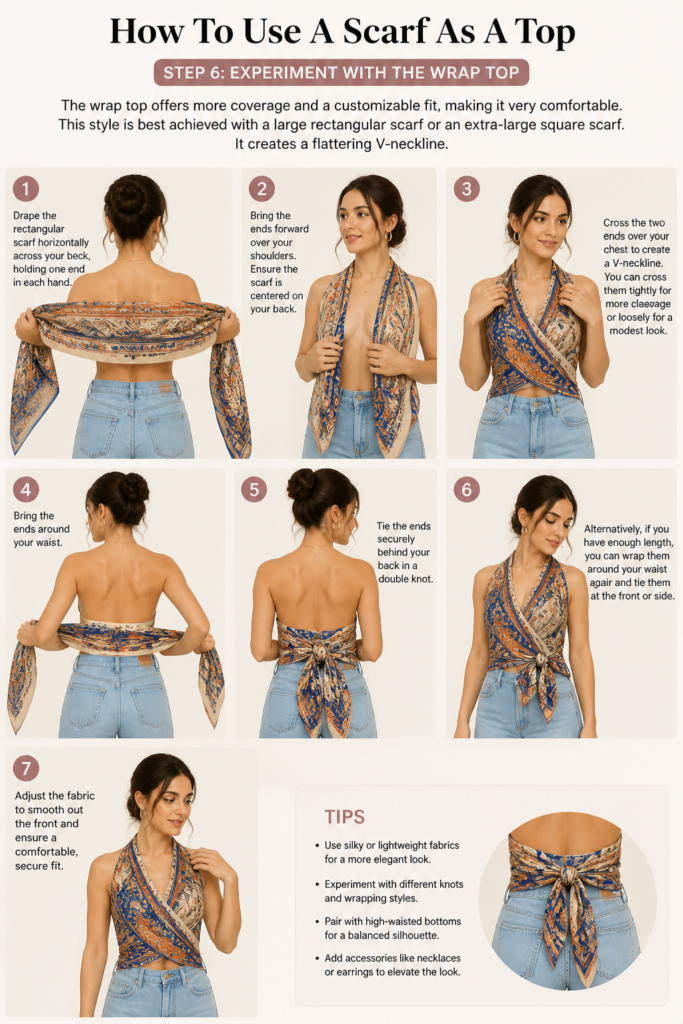
Drape the rectangular scarf horizontally across your back, holding one end in each hand. Bring the ends forward over your shoulders. Ensure the scarf is centered on your back.
Cross the two ends over your chest to create a V-neckline. You can cross them tightly for more cleavage or loosely for a modest look. Bring the ends around your waist.
Tie the ends securely behind your back in a double knot. Alternatively, if you have enough length, you can wrap them around your waist again and tie them at the front or side. Adjust the fabric to smooth out the front and ensure a comfortable, secure fit.
Step 7: Add a Playful Bow-Back Top
This style uses a rectangular scarf to create a sweet and charming look with a bow detail at the back. It’s perfect for adding a feminine touch. This works well with a slightly longer rectangular scarf.
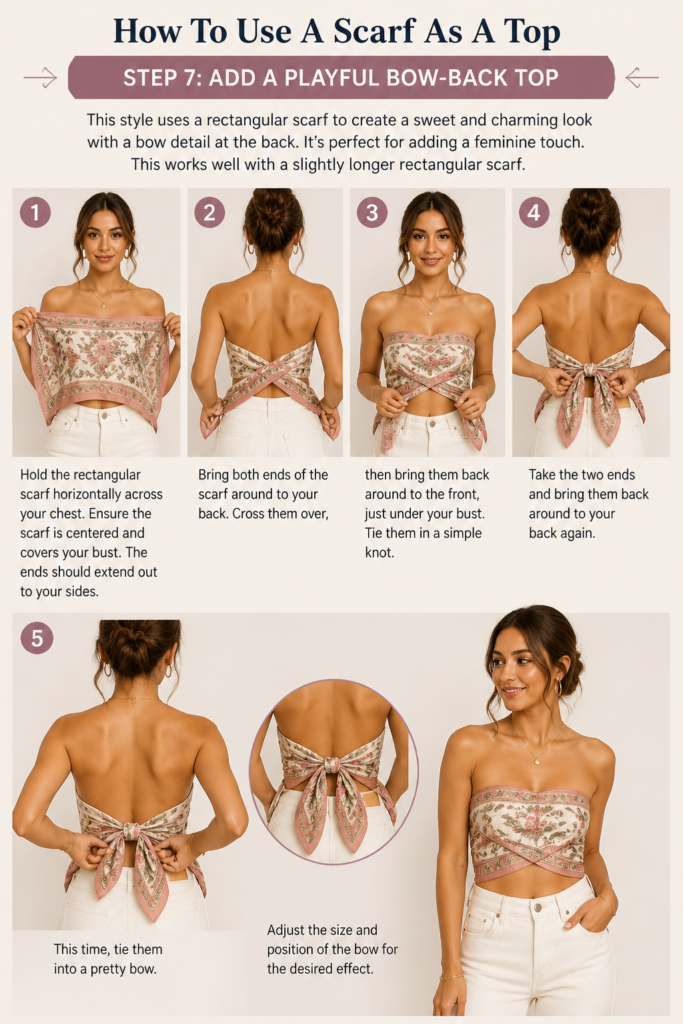
Hold the rectangular scarf horizontally across your chest. Ensure the scarf is centered and covers your bust. The ends should extend out to your sides.
Bring both ends of the scarf around to your back. Cross them over, then bring them back around to the front, just under your bust. Tie them in a simple knot.
Take the two ends and bring them back around to your back again. This time, tie them into a pretty bow. Adjust the size and position of the bow for the desired effect.
Step 8: Refine Your Look
Once your scarf top is tied, take a moment to adjust and secure it. Smooth out any wrinkles and ensure the knots are tight. Check for any gaps or areas that might slip.
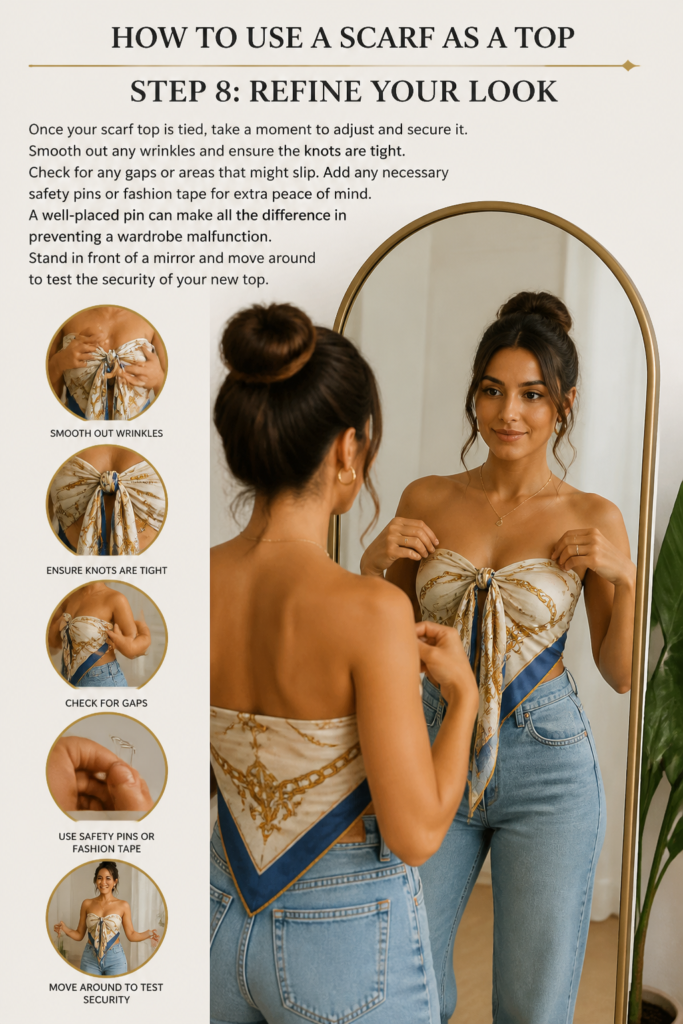
Add any necessary safety pins or fashion tape for extra peace of mind. A well-placed pin can make all the difference in preventing a wardrobe malfunction. Stand in front of a mirror and move around to test the security of your new top.
Common Mistakes to Avoid
Choosing the Wrong Scarf Fabric
Many people grab any scarf, only to find it slips or looks bulky. Silky, slippery fabrics like pure satin can be beautiful but are notoriously difficult to keep in place without ample security. Thick, stiff fabrics, like heavy wool, will not drape well and can add unwanted bulk, making the top appear shapeless. Always prioritize fabrics that have some grip and good drape.
Improper Sizing
A scarf that is too small will not provide adequate coverage, leading to constant adjustments and potential discomfort. Conversely, a scarf that is too large can create excessive bulk, especially around the knots, making the top look messy rather than chic. Always check the dimensions of your scarf against the desired style and your body measurements.
Neglecting Security
Assuming a simple knot will hold everything in place is a common oversight. Movement throughout the day can loosen even the tightest knots, leading to wardrobe malfunctions. Always incorporate additional security measures like fashion tape or discreet safety pins, especially for active days or events.
Skipping a Base Layer
While some styles might seem to work without a bra, neglecting a proper base layer can lead to discomfort, lack of support, or an unflattering silhouette. A good strapless bra, bandeau, or even pasties can provide essential shaping and confidence, ensuring the scarf top looks polished. Consider the support you need for each specific scarf top style.
Troubleshooting
“My scarf keeps slipping!”
This is a very common issue, often due to the fabric or an insecure knot. First, try reinforcing your knots with a double knot, ensuring it’s as tight as comfortable. If the fabric is particularly slippery, liberally apply fashion tape to the edges of the scarf where it touches your skin and to any overlapping layers. You might also consider a scarf made from cotton, linen, or a matte silk blend for better grip.
“It looks bulky/unflattering.”
Bulkiness usually comes from using a scarf that’s too thick or folding it incorrectly. Try a thinner fabric or experiment with different folding techniques to reduce the layers. Ensure your knots are flat against your body rather than protruding. Sometimes, a different scarf style (e.g., a bandeau instead of a wrap top) might simply be more flattering for your body shape and the scarf’s dimensions.
“I don’t feel secure.”
Feeling insecure can ruin the enjoyment of wearing a scarf top. Start by checking all your knots and ensuring they are as firm as possible without being uncomfortable. Add more safety pins in strategic, hidden locations, especially along the side seams or where fabric overlaps. Wearing a well-fitting, supportive strapless bra or a tight-fitting camisole underneath can also add an extra layer of confidence and security.
Key Takeaways
- Selecting the correct scarf fabric, size, and shape is crucial for a successful and comfortable top.
- Always prioritize security by using fashion tape and discreet safety pins to prevent slipping and ensure confidence.
- Experiment with various tying techniques to find styles that best suit your body type and the occasion.
- A supportive and discreet base layer, such as a strapless bra or pasties, enhances both comfort and the overall look.
- Practice makes perfect; try different styles at home to build confidence before wearing them out.
- Adjusting and refining your scarf top after tying is essential for a polished and secure finish.
Frequently Asked Questions
Can I wear a scarf top without a bra?
Whether you can go braless depends on the specific scarf top style, the scarf’s fabric, and your personal comfort level. Styles like bandeaus or those made with thin fabrics might require pasties for modesty. Halter or wrap tops can sometimes offer enough coverage, but support will be minimal. Always prioritize your comfort and confidence.
What scarf size is best for beginners?
For beginners, a large square scarf (at least 35×35 inches or 90×90 cm) or a generously sized rectangular scarf (e.g., 70×35 inches or 180×90 cm) is highly recommended. These sizes provide ample fabric for experimentation, offer more coverage, and are generally easier to tie securely without feeling too restrictive.
How do I prevent wrinkles in my scarf top?
To minimize wrinkles, choose scarves made from fabrics less prone to creasing, such as certain silks, rayon blends, or textured cotton. Before tying, lightly steam or iron your scarf for a crisp look. Once tied, adjust it gently to smooth out creases. For long-term wear, a light spritz of wrinkle release spray can also help.
Are scarf tops suitable for all body types?
Absolutely! Scarf tops are incredibly versatile and can flatter all body types. The key is to choose the right style and adjust it to highlight your best features. For example, a wrap style can create an hourglass silhouette, while a bandeau might be perfect for showcasing shoulders. Experiment to find what makes you feel most confident.
Our Top Recommended Finds
- Large Silk Blend Square Scarf: Offers beautiful drape, a luxurious feel, and enough size for versatile styling.
- Double-Sided Fashion Tape Strips: An absolute must-have for keeping your scarf top securely in place all day long.
- Convertible Multi-Way Strapless Bra: Provides essential support and allows for various strap configurations to suit any scarf top style.
Embrace Your Creative Style
Transforming a simple scarf into a chic top is a fantastic way to inject creativity and personality into your wardrobe. It’s a sustainable fashion hack that allows you to get more mileage out of your existing accessories. Don’t be afraid to experiment with different scarf patterns, sizes, and tying methods.
Each attempt brings you closer to discovering your signature scarf top style. Start exploring the possibilities today and let your scarves become your new favorite tops.