🏴☠️ How To Tie A Scarf Like A Pirate
I spent three years working on a replica tall ship where a headscarf was a daily necessity rather than a costume choice.
It was the only thing keeping sweat out of my eyes while hauling heavy hemp lines in the midday sun.
Learning the authentic way to secure a piece of cloth to your head ensures it stays put through wind, rain, and the occasional deck scrub.
Quick Overview
Tying a pirate-style scarf, often called a headrail or bandana, is about balancing tension and placement.
You want a look that is rugged enough for the high seas but comfortable enough to wear for twelve hours straight.
- Time needed: 3 to 5 minutes
- Difficulty: Beginner
- What you’ll need: A large square scarf (at least 30×30 inches), preferably cotton or linen.
Step-by-Step Instructions
Step 1: Select the right cloth
Choose a fabric that has some “tooth” or texture to it, such as a medium-weight cotton or a breathable linen.
Avoid silk or high-sheen synthetics because they will slide off your hair the moment you move your head.
A standard 22-inch bandana is often too small for a full pirate wrap; look for something closer to 30 or 35 inches to get those long, flowing tails.
Pro Tip: Wash a new cotton scarf several times before wearing it to soften the fibers and make the knot hold tighter.
Step 2: Create the triangle fold
Lay the scarf flat on a table or your lap to ensure there are no bunches in the fabric.
Fold the square diagonally to create a large triangle, matching the opposite corners as closely as possible.
If your scarf is exceptionally large, you can fold the long edge down by two inches to create a reinforced “headband” area that adds durability.
Step 3: Position the base line
Grasp the two corners on the long folded edge of the triangle with both hands.
Lift the scarf and place the center of that long edge directly against your forehead, about an inch above your eyebrows.
Ensure the point of the triangle is hanging over the back of your head, covering your hair completely.
Step 4: Sweep the tails rearward
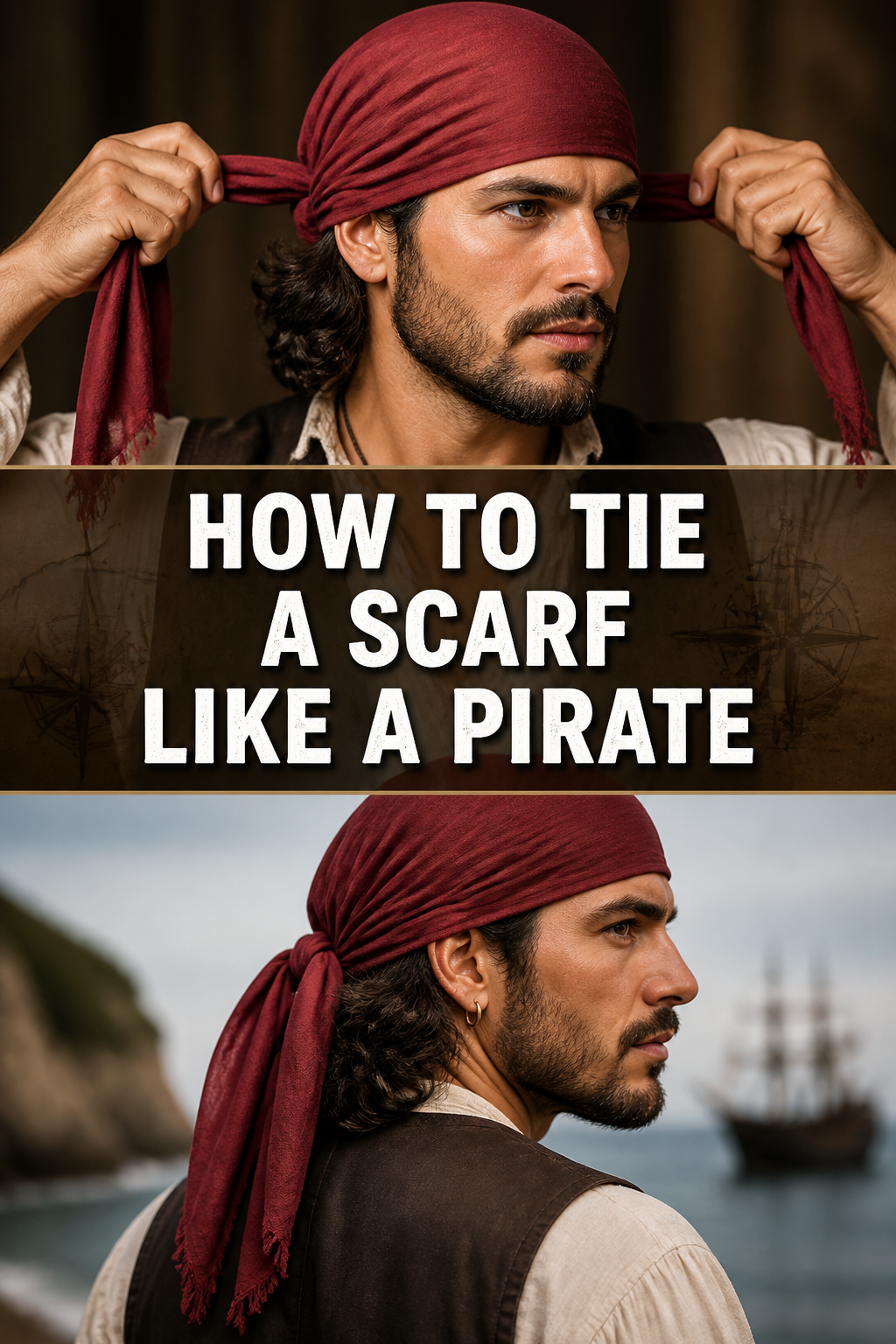
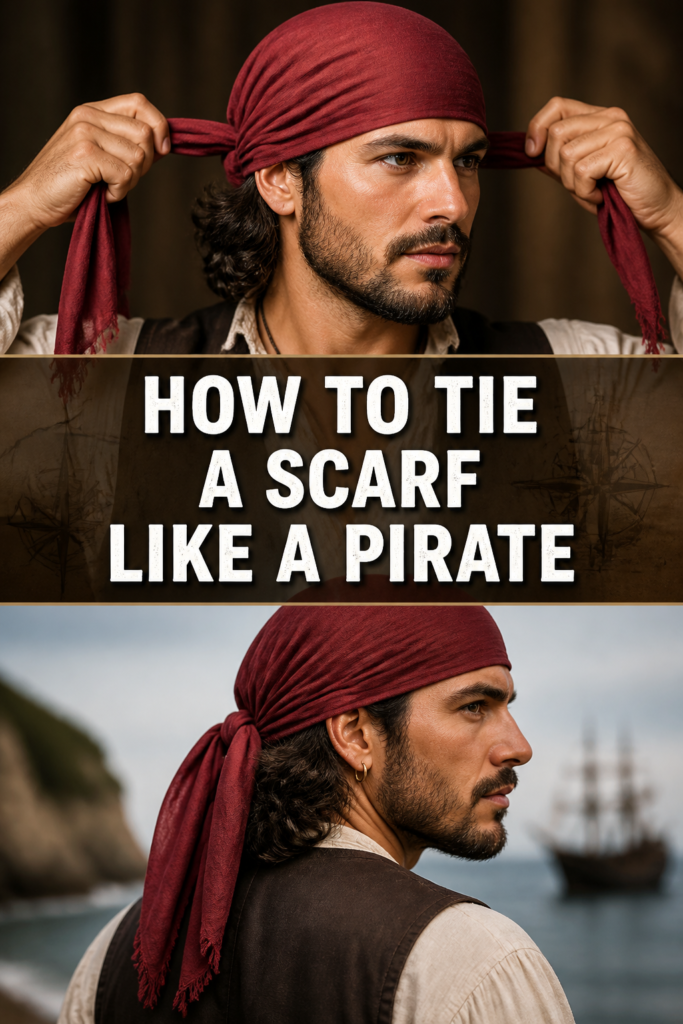
Pull the two side corners (the tails) back toward the nape of your neck, keeping the fabric tight against your temples.
Run your thumbs along the edge of the fabric as you pull to smooth out any ripples above your ears.
Make sure the fabric covers the tops of your ears slightly or sits just above them, depending on your personal comfort and the “look” you want to achieve.
Step 5: Trap the center point
Hold the two side tails in one hand for a moment while you use the other hand to find the center point hanging down your back.
Ensure this center point is tucked underneath the two side tails you are about to tie.
This is the secret to a secure pirate wrap; the tails must lock the center flap against the back of your skull to prevent the whole thing from riding up.
Pro Tip: If you have long hair, tie it in a low ponytail first so the scarf has a “shelf” to sit on.
Step 6: Execute the square knot
Cross the right tail over the left tail at the very base of your skull, right where your neck meets your head.
Loop the right tail under and through to create the first half of the knot, pulling it tight enough to feel secure but not so tight that it causes a headache.
Finish the knot by crossing left over right and pulling through, creating a sturdy square knot that won’t slip under tension.
Step 7: Adjust the center flap
Reach back and pull down on the center point of the triangle that is now trapped under your knot.
Smooth the fabric over the crown of your head to remove any “bubbles” or air pockets in the cloth.
The flap should hang straight down over the knot, providing protection for your neck against the sun.
Step 8: Check the tension
Shake your head gently from side to side to see if the scarf shifts or feels loose.
Insert two fingers under the fabric at your temple to ensure there is enough room for your skin to breathe.
If it feels like it is sliding, undo the knot and reposition the front edge slightly lower on your forehead before retightening.
Common Mistakes to Avoid
Using Slippery Materials
Many people try to use silk or satin scarves because they look fancy, but these materials are the enemy of a functional pirate wrap.
The smooth fibers do not create enough friction against your hair, meaning the scarf will slowly migrate backward until it falls off.
Stick to natural fibers like cotton, linen, or even a light wool blend if you want your headgear to stay in place during physical activity.
The High Forehead Placement
Placing the front edge of the scarf too high on the hairline is a classic mistake that results in the “lunch lady” look rather than the pirate look.
A true pirate wrap sits low on the brow, which helps absorb sweat and provides a more aggressive, rugged silhouette.
If you see your hairline peaking out from the front, pull the scarf down at least another inch to anchor it properly against the bone of your forehead.
The Loose Center Flap
If you forget to trap the back point of the triangle under the knot, the scarf will lose its structural integrity.
The center flap acts as a tension anchor; when it is loose, the sides of the scarf are more likely to slide upward toward the top of your head.
Always double-check that the point is tucked firmly beneath the cross of your knot before you pull the final loop tight.
Troubleshooting
The Scarf Keeps Sliding Up
This usually happens because the knot is tied too high on the back of the head rather than at the nape of the neck.
The back of the human skull curves inward as it meets the neck, and you must use this natural “hook” to your advantage.
Lower the position of your knot so it sits in that hollow area right above your spine, which will prevent the fabric from migrating upward.
Fabric Bunching at the Ears
If the fabric feels bulky or uncomfortable around your ears, you likely have too much excess material in your triangle fold.
Try folding the long edge of the triangle inward by an inch or two before you place it on your forehead.
This reduces the amount of fabric that has to pass over your ears and creates a cleaner line from the forehead to the back of the neck.
The Knot Is Digging Into Your Neck
A knot that feels like a rock against your spine is often the result of tying it too tight or using a scarf that is too thick.
Try a “flat” knot or a surgical knot instead of a standard overhand knot to distribute the pressure more evenly.
You can also shift the knot slightly to the left or right of your spine so it sits against the muscle rather than directly on the bone.
Key Takeaways
- Fabric choice is critical: Use cotton or linen to ensure the knot stays tight and the fabric doesn’t slide.
- Size matters: A 30×30 inch square is the ideal size for achieving the classic long-tailed pirate aesthetic.
- Low and tight: Position the front edge low on the brow and the knot low at the nape of the neck.
- Trap the point: Ensure the triangle’s center point is secured under the knot for maximum stability.
- The square knot: Use a proper square knot (left over right, then right over left) to prevent the scarf from loosening over time.
- Tension check: Always perform a “shake test” to ensure the wrap is secure before heading out.
Frequently Asked Questions
Can I tie a pirate scarf with a standard small bandana?
You can, but it will look more like a modern biker wrap than a traditional pirate headrail. The tails will be very short, and you may struggle to get the center flap to stay tucked under the knot. If you only have a small bandana, try not to fold it perfectly in half; instead, fold it so one side is longer, giving you more “tail” to work with.
How do I stop the scarf from making me too hot?
The key is choosing a breathable weave like cheesecloth or light linen. These fabrics allow heat to escape from the top of your head while still providing sun protection. If you are in a very hot climate, you can even soak the scarf in cold water before tying it to provide a natural cooling effect through evaporation.
Should I cover my ears or leave them out?
Historically, sailors often covered the tops of their ears to protect them from sun and windburn. However, for modern comfort, most people prefer to tuck the fabric just behind the ears. If you are wearing hoop earrings, leaving the ears out is generally the more comfortable and stylish choice.
How do I wash my pirate scarf without ruining the shape?
Most cotton and linen scarves can be tossed in a standard washing machine, but you should air dry them to prevent shrinking. Avoid using heavy fabric softeners, as these can make the fibers too “slick,” which will make it harder to keep the scarf tied securely the next time you wear it. If the scarf becomes wrinkled, a quick steam or iron will help it lay flat against your head.
Our Top Recommended Finds
- Premium Cotton Shemagh: While traditionally Middle Eastern, these large, textured cotton squares make the absolute best pirate wraps because of their size and grip.
- Linen Handkerchief (Oversized): A 30-inch linen square offers a more authentic, historical look and breathes better than almost any other material.
- Leather Cord: If you want to add extra flair, you can tie a thin leather cord over your scarf knot to give it a more rugged, “sea-dog” appearance.
Master The Nautical Look
Now that you have mastered the basic wrap, you can experiment with different colors and layering techniques.
A well-tied scarf is the foundation of any maritime outfit, providing both a practical shield against the elements and a distinct silhouette.
Try pairing your new headgear with a weathered vest or a simple linen shirt to complete the transformation.
Grab a piece of cloth and practice the square knot until you can do it without looking in a mirror.