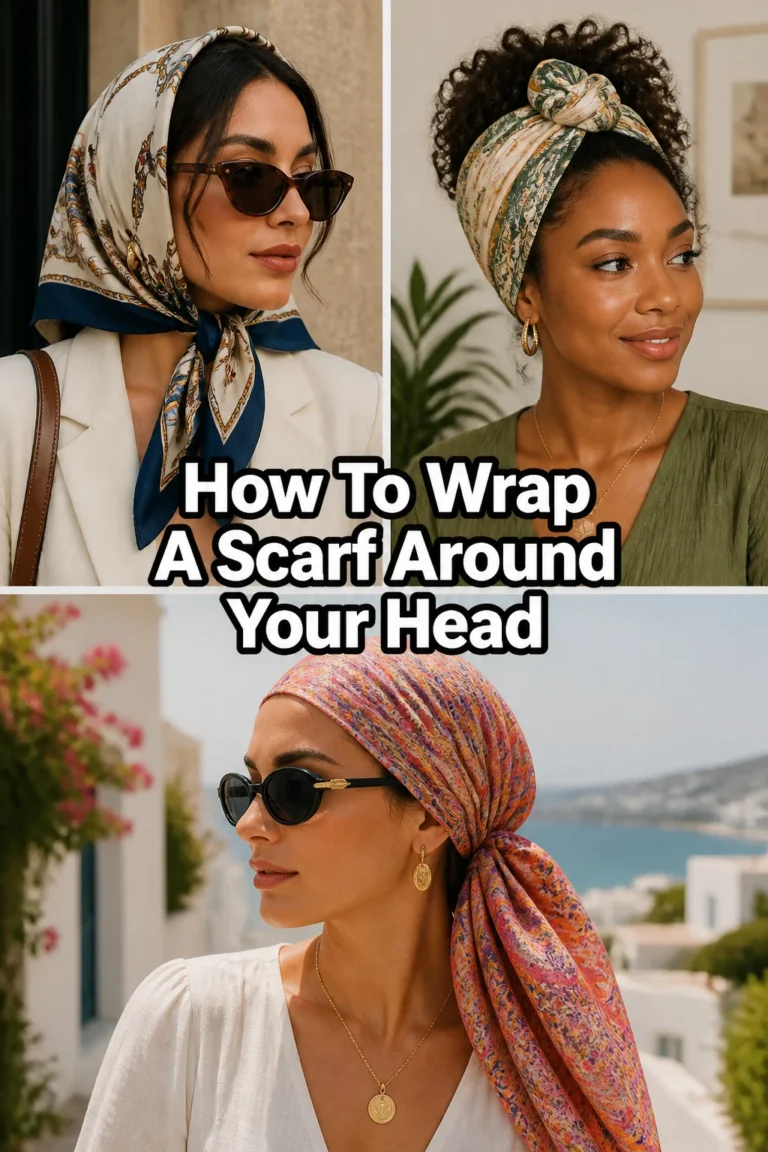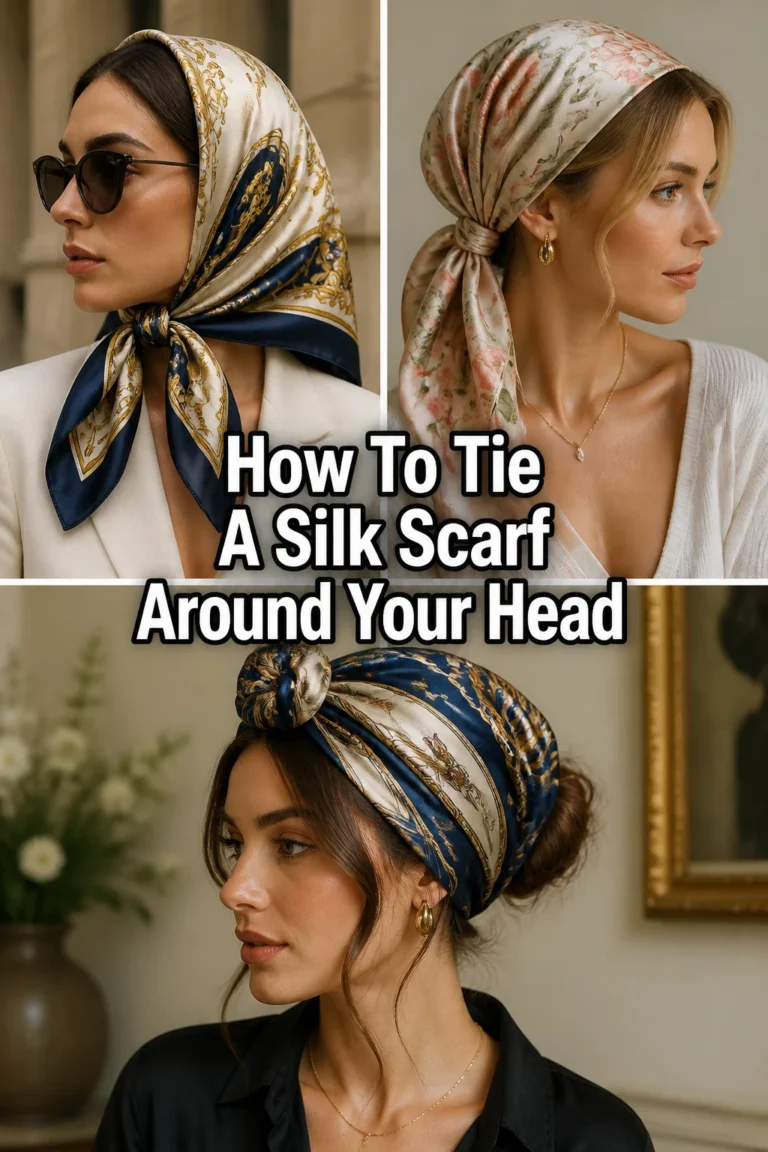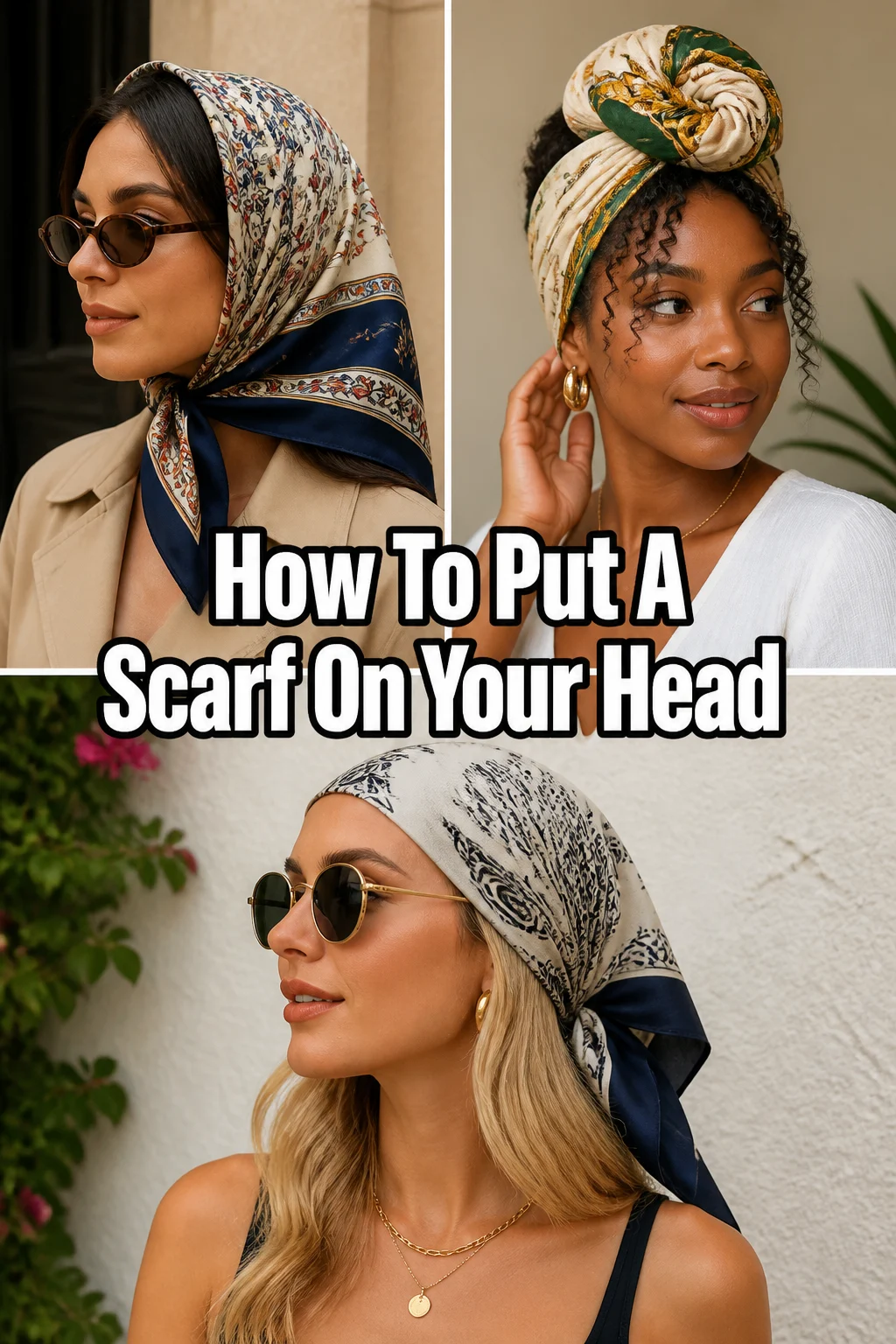
🧣 How To Put A Scarf On Your Head
Learning to tie a scarf on your head can transform your look and offer practical benefits.
I remember struggling with slippage and awkward knots when I first started experimenting with headscarves.
This guide compiles years of personal experience and shared wisdom to help you master this elegant art with confidence.
Quick Overview
This guide will walk you through the essential techniques to confidently and stylishly put a scarf on your head.
You’ll learn how to choose the right scarf, prepare your hair, and secure various wraps that stay put all day.
- Time needed: 10-20 minutes for initial learning, 2-5 minutes once practiced
- Difficulty: Beginner
- What you’ll need: A square or rectangular scarf, hair ties (optional), bobby pins (optional), mirror
Step-by-Step Instructions
Step 1: Choose Your Scarf Wisely
The type of scarf you select significantly impacts how easily it drapes and stays on your head.
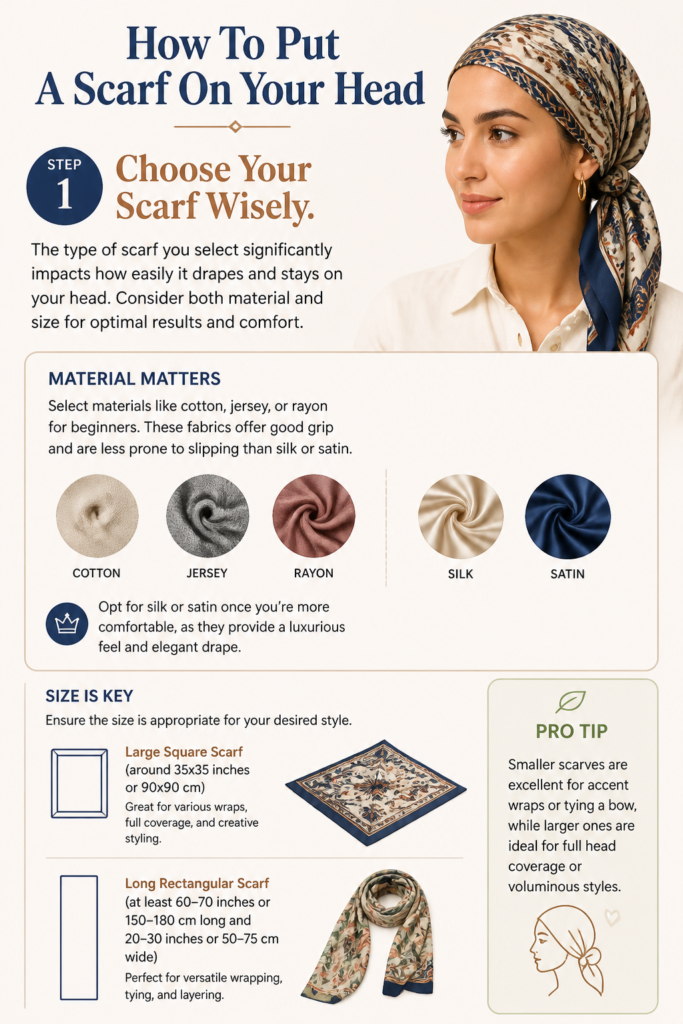
Consider both material and size for optimal results and comfort.
- Select materials like cotton, jersey, or rayon for beginners. These fabrics offer good grip and are less prone to slipping than silk or satin.
- Opt for silk or satin once you’re more comfortable, as they provide a luxurious feel and elegant drape.
- Ensure the size is appropriate for your desired style. A large square scarf (around 35×35 inches or 90×90 cm) or a long rectangular scarf (at least 60-70 inches or 150-180 cm long and 20-30 inches or 50-75 cm wide) offers more versatility.
Pro Tip: Smaller scarves are excellent for accent wraps or tying a bow, while larger ones are ideal for full head coverage or voluminous styles.
Step 2: Prepare Your Hair
Proper hair preparation creates a stable base, preventing your scarf from slipping and ensuring a smooth look.
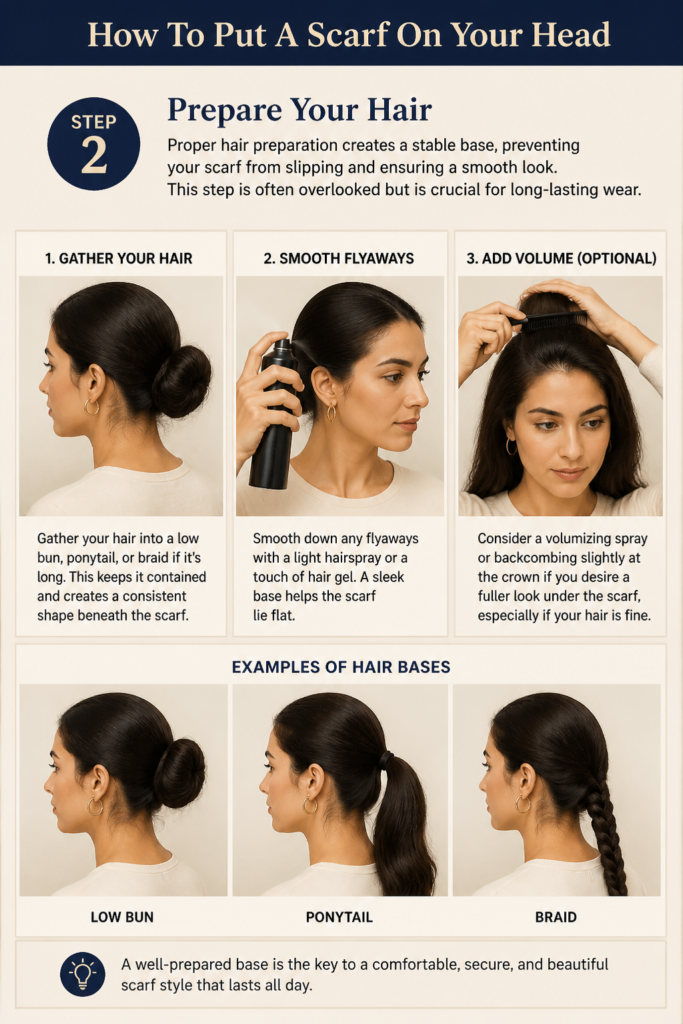
This step is often overlooked but is crucial for long-lasting wear.
- Gather your hair into a low bun, ponytail, or braid if it’s long. This keeps it contained and creates a consistent shape beneath the scarf.
- Smooth down any flyaways with a light hairspray or a touch of hair gel. A sleek base helps the scarf lie flat.
- Consider a volumizing spray or backcombing slightly at the crown if you desire a fuller look under the scarf, especially if your hair is fine.
Step 3: Fold Your Scarf for the Base
The initial fold determines the shape and coverage of your headscarf style.
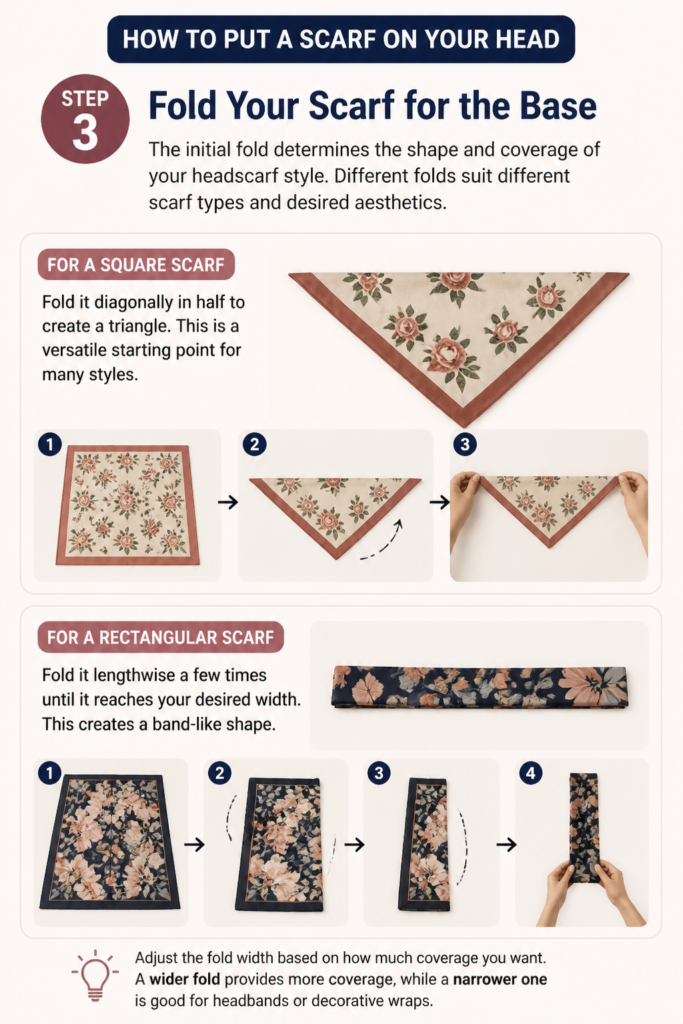
Different folds suit different scarf types and desired aesthetics.
- For a square scarf: Fold it diagonally in half to create a triangle. This is a versatile starting point for many styles.
- For a rectangular scarf: Fold it lengthwise a few times until it reaches your desired width. This creates a band-like shape.
- Adjust the fold width based on how much coverage you want. A wider fold provides more coverage, while a narrower one is good for headbands or decorative wraps.
Step 4: Position the Scarf
The placement of the scarf on your head sets the foundation for the entire look.
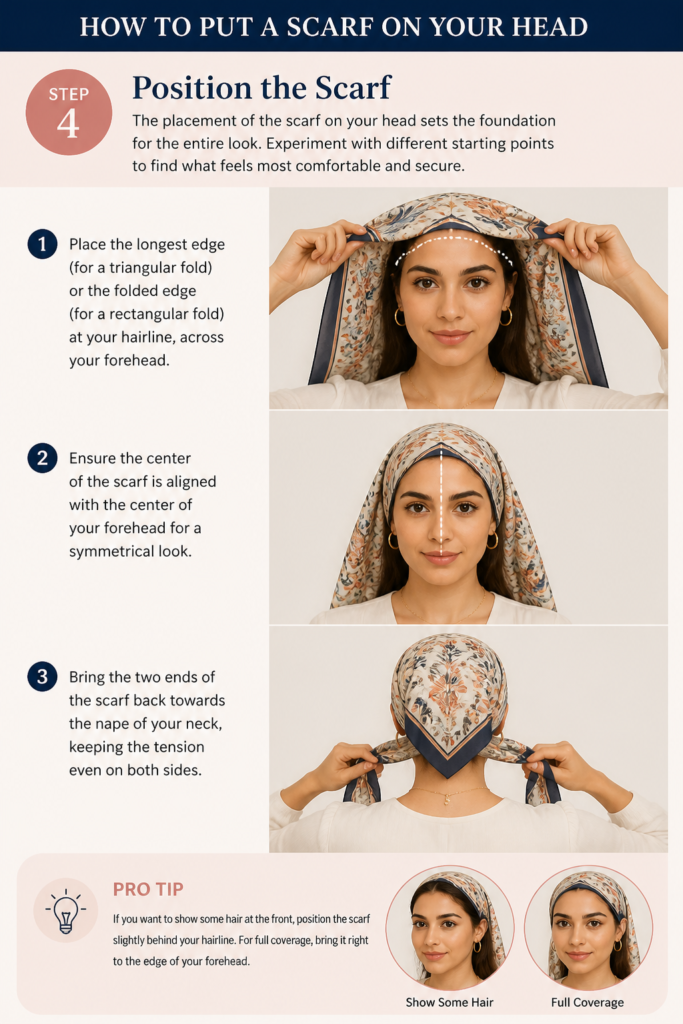
Experiment with different starting points to find what feels most comfortable and secure.
- Place the longest edge (for a triangular fold) or the folded edge (for a rectangular fold) at your hairline, across your forehead.
- Ensure the center of the scarf is aligned with the center of your forehead for a symmetrical look.
- Bring the two ends of the scarf back towards the nape of your neck, keeping the tension even on both sides.
Pro Tip: If you want to show some hair at the front, position the scarf slightly behind your hairline. For full coverage, bring it right to the edge of your forehead.
Step 5: Secure the First Knot
Creating a firm, yet comfortable, knot at the back of your head is essential for stability.
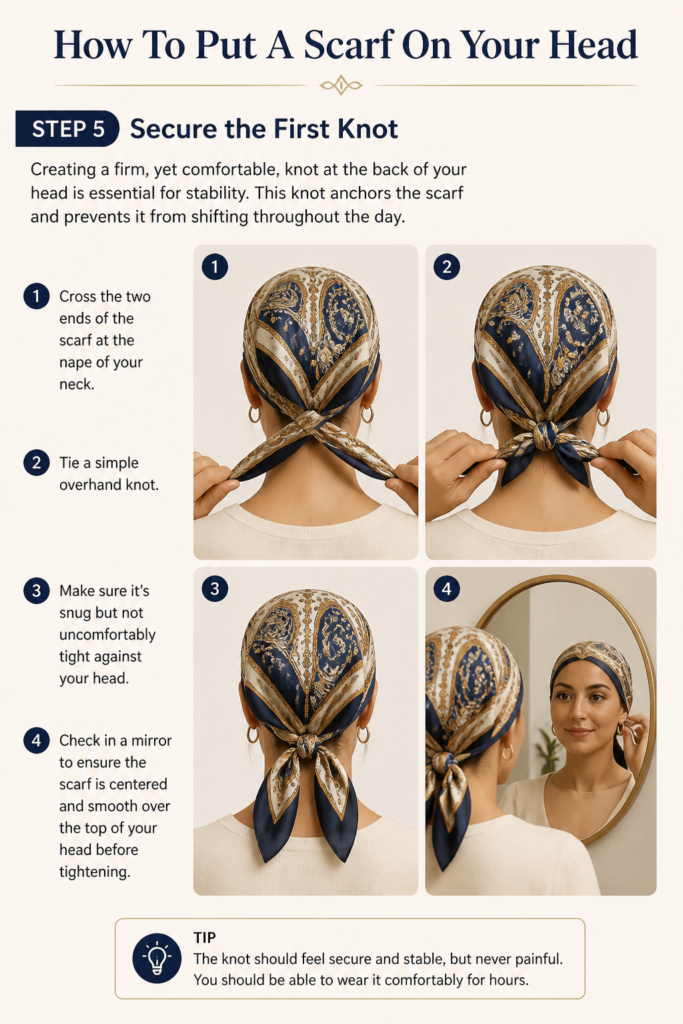
This knot anchors the scarf and prevents it from shifting throughout the day.
- Cross the two ends of the scarf at the nape of your neck.
- Tie a simple overhand knot. Make sure it’s snug but not uncomfortably tight against your head.
- Check in a mirror to ensure the scarf is centered and smooth over the top of your head before tightening.
Step 6: Wrap and Style the Ends
This is where your chosen style begins to take shape, offering many creative possibilities.
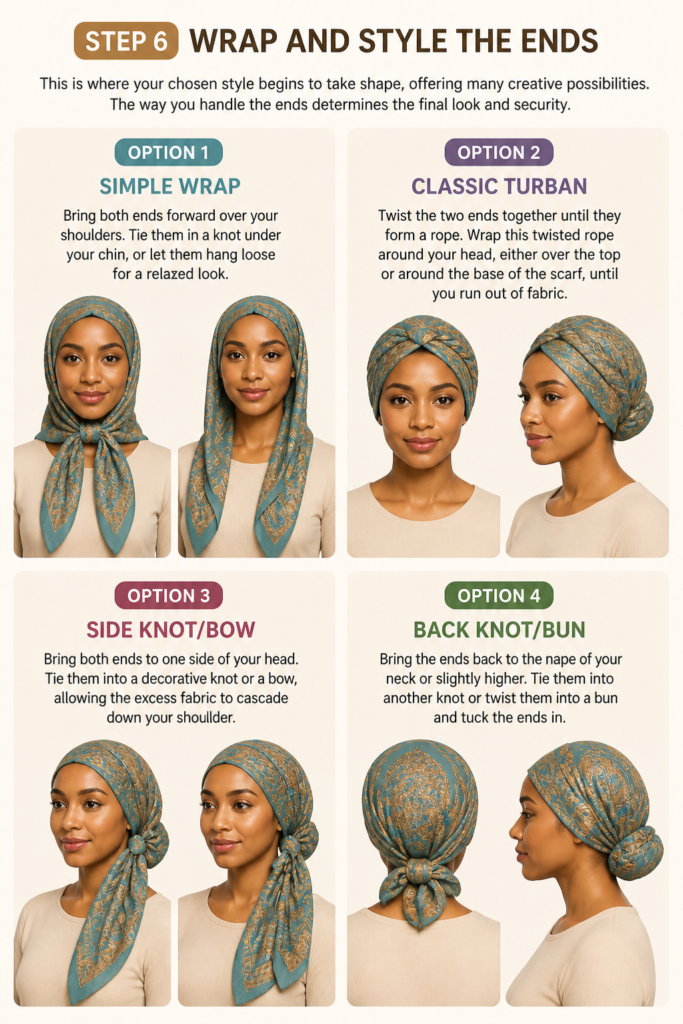
The way you handle the ends determines the final look and security.
- Option 1 (Simple Wrap): Bring both ends forward over your shoulders. Tie them in a knot under your chin, or let them hang loose for a relaxed look.
- Option 2 (Classic Turban): Twist the two ends together until they form a rope. Wrap this twisted rope around your head, either over the top or around the base of the scarf, until you run out of fabric.
- Option 3 (Side Knot/Bow): Bring both ends to one side of your head. Tie them into a decorative knot or a bow, allowing the excess fabric to cascade down your shoulder.
- Option 4 (Back Knot/Bun): Bring the ends back to the nape of your neck or slightly higher. Tie them into another knot or twist them into a small bun, tucking in any loose ends.
Step 7: Tuck and Pin for Security
The final touches ensure your headscarf remains perfectly in place, even with movement.
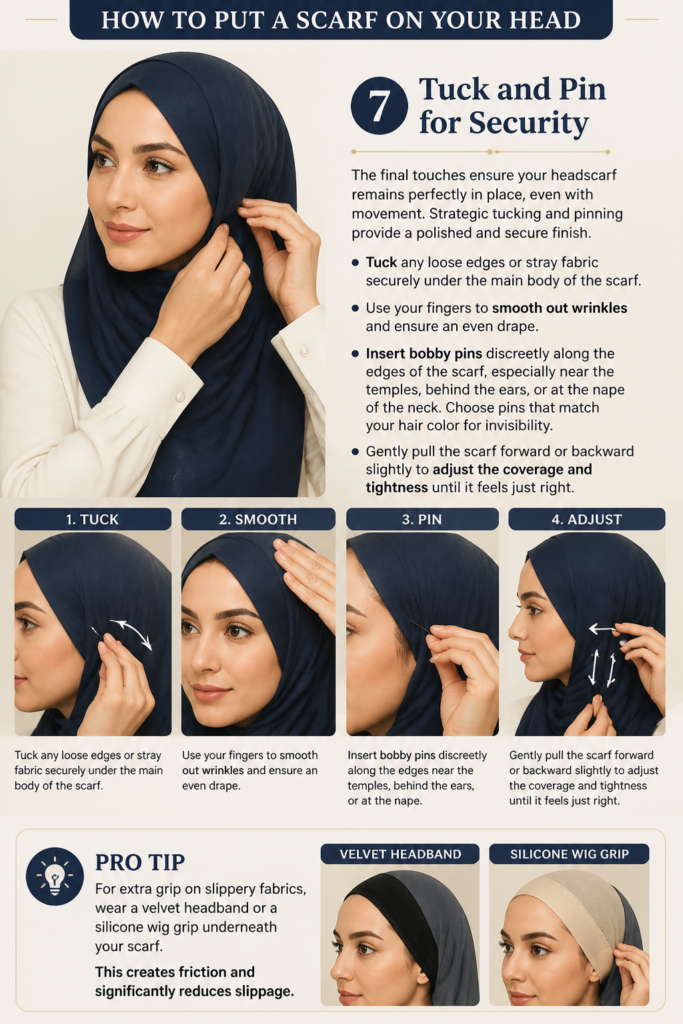
Strategic tucking and pinning provide a polished and secure finish.
- Tuck any loose edges or stray fabric securely under the main body of the scarf. Use your fingers to smooth out wrinkles and ensure an even drape.
- Insert bobby pins discreetly along the edges of the scarf, especially near the temples, behind the ears, or at the nape of the neck. Choose pins that match your hair color for invisibility.
- Gently pull the scarf forward or backward slightly to adjust the coverage and tightness until it feels just right.
Pro Tip: For extra grip on slippery fabrics, wear a velvet headband or a silicone wig grip underneath your scarf. This creates friction and significantly reduces slippage.
Common Mistakes to Avoid
Tying Too Loosely or Too Tightly
A scarf that’s too loose will slip and unravel throughout the day, requiring constant readjustment. It can look messy and feel unsecure.
Conversely, a scarf tied too tightly can cause discomfort, headaches, and leave marks on your skin. Aim for a snug fit that allows for comfortable movement without feeling restrictive.
Using the Wrong Fabric
Attempting to use a very slick fabric like pure silk without proper preparation can lead to frustration. These materials are beautiful but inherently slippery.
Beginners should start with cotton or jersey for their grip. If using silk, always prepare your hair well and consider using a velvet headband underneath to prevent slippage.
Ignoring Hair Preparation
Putting a scarf over loose, unmanaged hair often results in a lumpy, uneven appearance and increased slippage. Flyaways will escape, and the scarf won’t sit smoothly.
Always take a few moments to secure your hair, whether in a bun, ponytail, or braid. This creates a clean canvas and helps the scarf stay put.
Forgetting to Secure with Pins
Many people skip bobby pins, thinking the knot is enough. While the knot provides the primary hold, pins are crucial for securing edges and preventing minor shifts.
Strategic placement of a few discreet bobby pins can make a significant difference in the longevity and neatness of your headscarf style. They are your secret weapon for all-day wear.
Troubleshooting
Scarf Keeps Slipping Back
This is a common issue, often due to slippery hair or fabric. The scarf might feel secure initially but gradually slides backward, exposing your hairline.
To fix this, ensure you’ve prepared your hair by tying it back or using a bit of hairspray. Try placing a velvet headband or a silicone wig grip underneath the scarf to create friction. Pin the scarf securely at the temples and behind the ears, pushing the pins into your hair for a better grip.
Scarf Feels Too Tight or Causes Headaches
Discomfort from a headscarf usually stems from tying it too tightly or selecting a style that puts too much pressure on certain points of your head.
Loosen your initial knot slightly. If you’re wrapping the ends, ensure you’re not pulling them excessively tight with each pass. Opt for softer fabrics that have some stretch. Take breaks if you’re new to wearing headscarves, and gradually increase wear time as you get accustomed to the feeling.
Lumpy or Uneven Appearance
An uneven look often comes from improper hair preparation or inconsistent tension while tying the scarf. Bumps and bulges can detract from the elegance of the style.
Before putting on the scarf, make sure your hair is smoothed down and gathered evenly. If you have a bun, ensure it’s flat and centered. When tying, pull the scarf with consistent tension on both sides. Use your hands to gently smooth out any areas and tuck in stray hairs or fabric, using pins to hold them flat.
Key Takeaways
- Fabric Choice Matters: Start with cotton or jersey for easier handling and better grip before moving to silk.
- Hair Preparation is Key: Always secure your hair in a bun, ponytail, or braid for a smooth and stable base.
- Master the Initial Fold: The way you fold your scarf sets the foundation for coverage and style.
- Secure the First Knot: A snug, comfortable knot at the nape of the neck is crucial for preventing slippage.
- Don’t Forget the Pins: Discreet bobby pins are essential for holding edges and ensuring all-day security.
- Practice Makes Perfect: Experiment with different folds, wraps, and placements to find styles that suit you best.
Frequently Asked Questions
Can I wear a headscarf with short hair?
Absolutely! Short hair can be even easier to manage under a headscarf as there’s less bulk. You can use a headband style, a full wrap, or even just cover the top of your head, letting your short hair frame your face. Bobby pins are particularly useful for securing the scarf to shorter strands.
How do I prevent my scarf from slipping on very fine hair?
Fine hair often lacks the friction needed to hold a scarf firmly. To combat this, use a velvet headband or a silicone wig grip underneath your scarf. You can also lightly backcomb your hair at the crown before putting on the scarf to create some texture. Ensure your scarf is tied firmly and use plenty of bobby pins.
What’s the best way to clean my headscarves?
The best way to clean your headscarves depends on the fabric. For cotton or jersey, machine wash on a gentle cycle with mild detergent and air dry. For silk or delicate fabrics, hand wash in cool water with a gentle soap formulated for delicates, then lay flat to dry away from direct sunlight. Always check the care label if available.
Can I wear a headscarf in hot weather?
Yes, headscarves can be very comfortable in hot weather if you choose the right material. Opt for lightweight, breathable fabrics like cotton, linen, or rayon. Avoid heavy synthetics or thick knits. Styles that allow for airflow, like a loose turban or a simple tie at the back, are also more comfortable in the heat.
Your Stylish Journey Awaits
Putting a scarf on your head is more than just a practical skill; it’s an expression of personal style and creativity.
With each practice, you’ll gain confidence and discover new ways to adorn yourself.
Don’t hesitate to experiment with different scarf sizes, colors, and patterns to truly make this art your own.
Embrace the versatility and elegance that a well-tied headscarf brings to your everyday look.
Start practicing today and watch how effortlessly you transform your appearance!