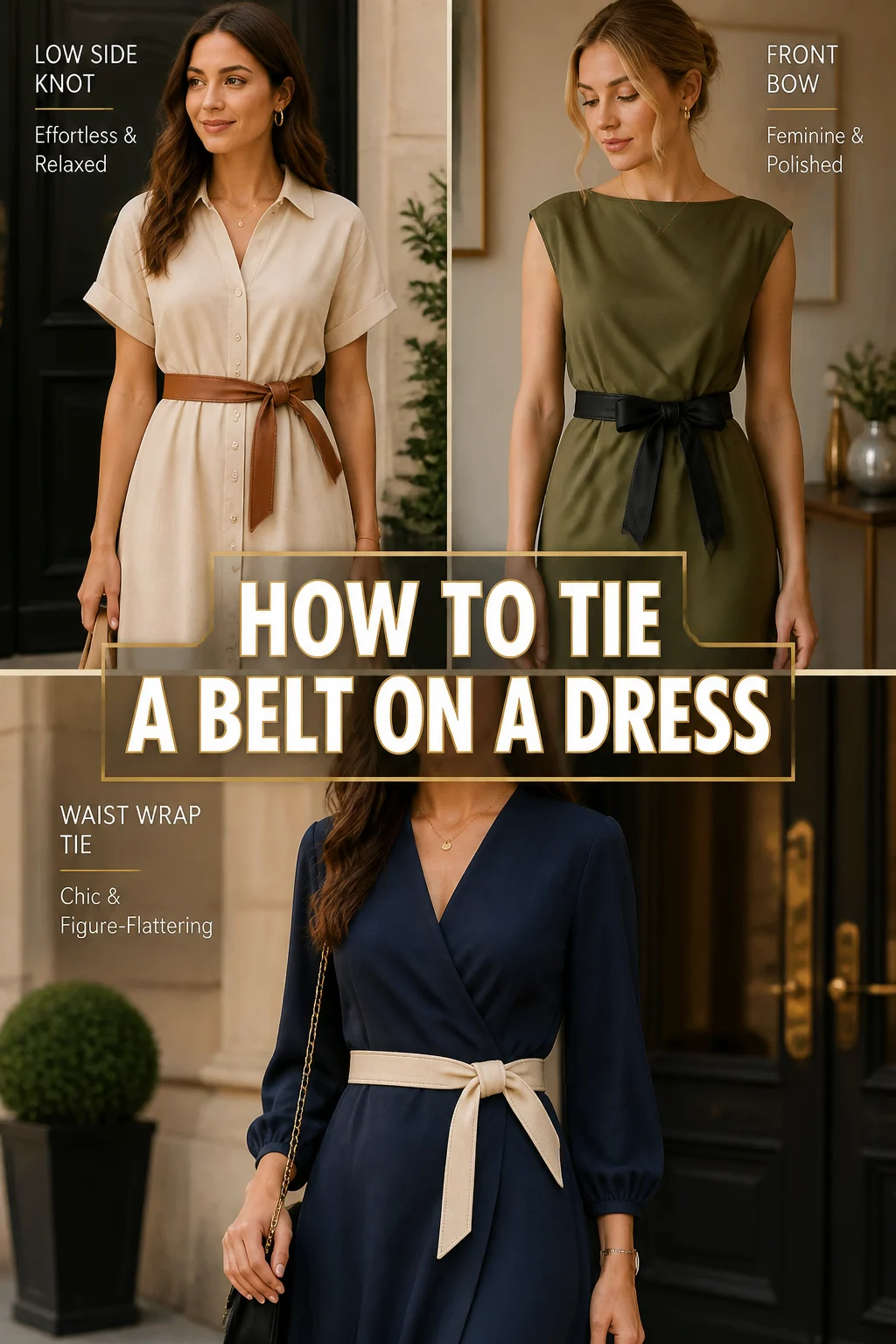
🎀 How To Tie A Belt On A Dress
I remember countless times staring at a dress, feeling like it was missing something. A belt, I learned, is often that perfect finishing touch. It truly transforms an outfit from simple to sophisticated, and I’ve seen it work wonders for my own wardrobe.
This guide will walk you through making that stylish transformation yourself, giving you the confidence to cinch any dress beautifully. You’ll discover how to choose the right belt and tie it with flair.
Quick Overview
This guide will empower you to master various belt-tying techniques for any dress style. You’ll learn to enhance your silhouette and add a polished touch. We’ll cover everything from basic knots to more decorative finishes.
- Time needed: 5-15 minutes (depending on practice)
- Difficulty: Beginner to Intermediate
- What you’ll need: A dress, one or more belts (various widths recommended), a full-length mirror.
Step-by-Step Instructions
Step 1: Choose Your Dress and Belt Wisely
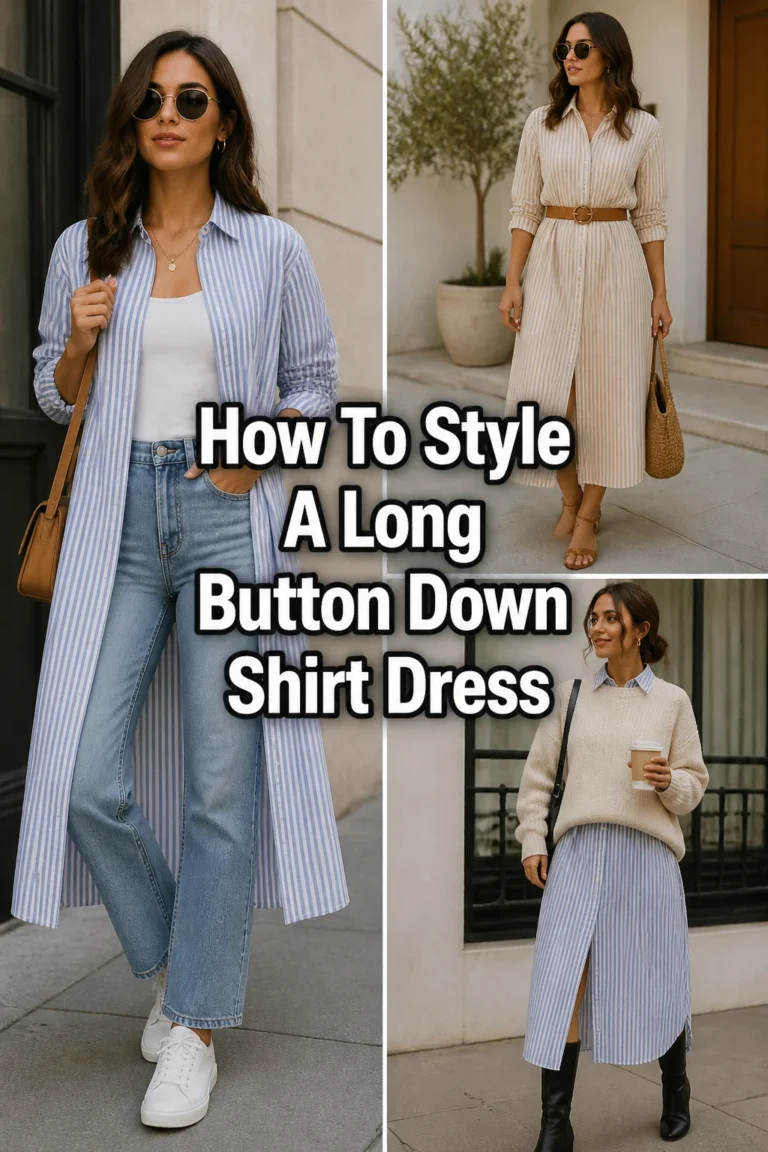
Before you even think about tying, select the right dress and belt combination. Consider the dress’s fabric, silhouette, and the overall look you want to achieve. A flowy maxi dress might suit a wide, structured belt, while a tailored shift dress could benefit from a delicate, thin belt.
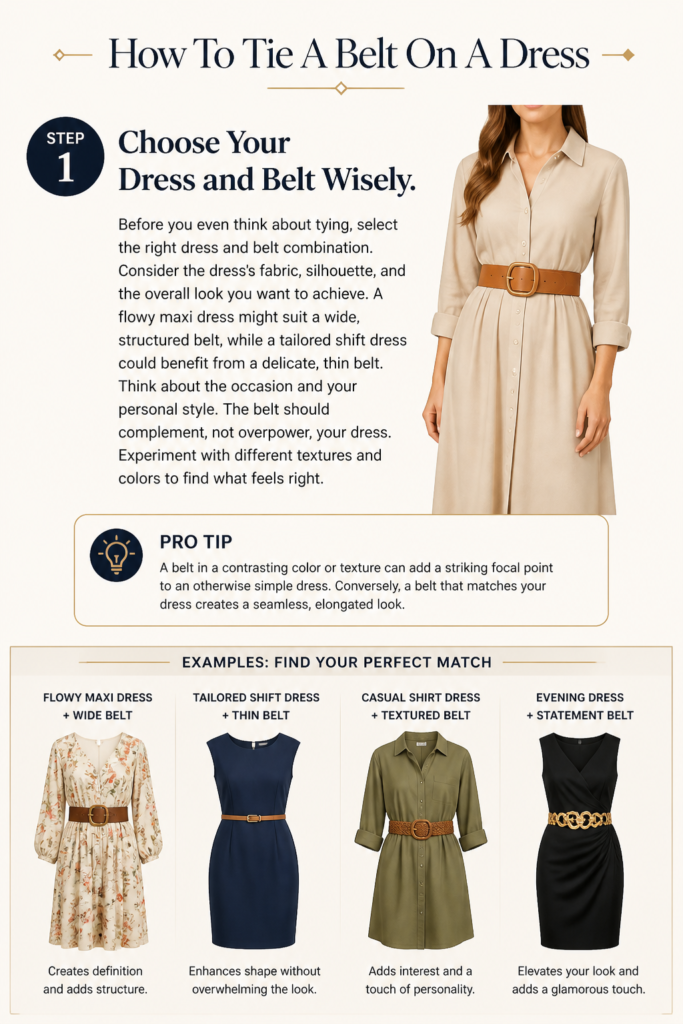
Think about the occasion and your personal style. The belt should complement, not overpower, your dress. Experiment with different textures and colors to find what feels right.
Pro Tip: A belt in a contrasting color or texture can add a striking focal point to an otherwise simple dress. Conversely, a belt that matches your dress creates a seamless, elongated look.
Step 2: Understand Your Waistline
Identify where your natural waistline sits. This is typically the narrowest part of your torso, often just above your belly button. Belting here creates an hourglass shape and is universally flattering.
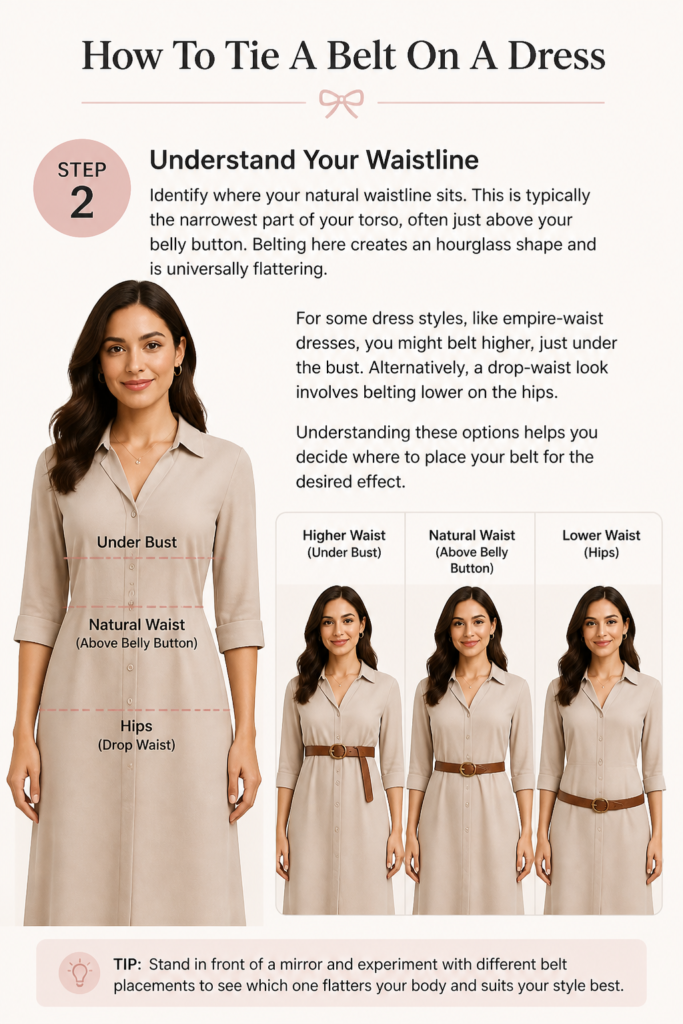
For some dress styles, like empire-waist dresses, you might belt higher, just under the bust. Alternatively, a drop-waist look involves belting lower on the hips. Understanding these options helps you decide where to place your belt for the desired effect.
Step 3: Position the Belt Correctly
Wrap the belt around your chosen waistline. Ensure it feels comfortable – not too tight, not too loose. The belt should lay flat against your dress without pulling or bunching the fabric excessively.
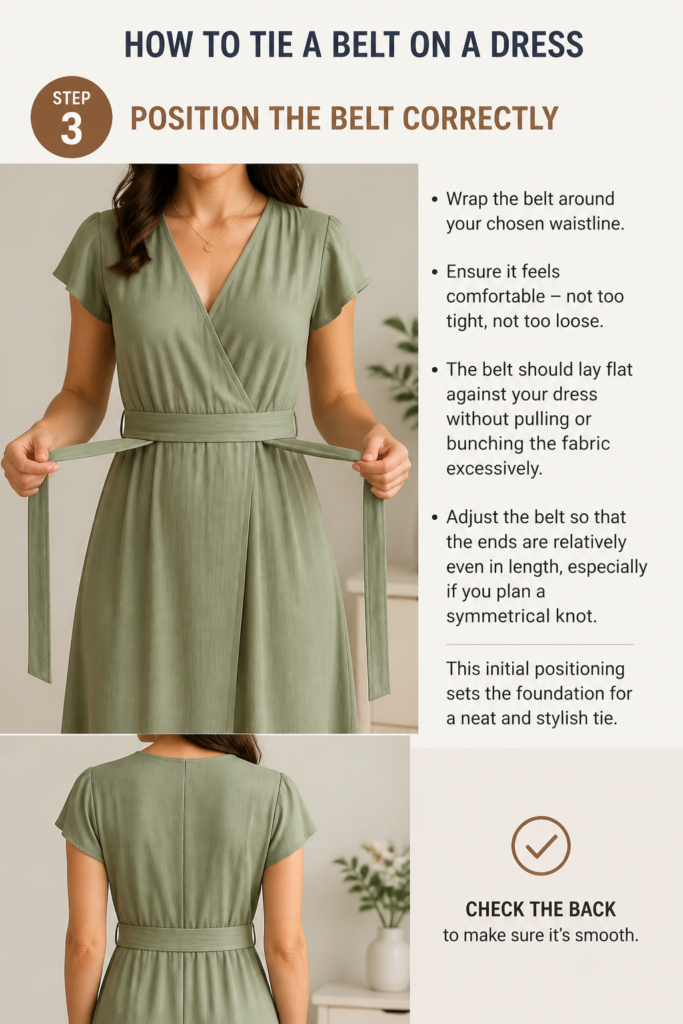
Adjust the belt so that the ends are relatively even in length, especially if you plan a symmetrical knot. This initial positioning sets the foundation for a neat and stylish tie. Check the back to make sure it’s smooth.
Step 4: The Simple Loop and Tuck (Basic Method)
For most belts with a buckle, thread one end through the buckle. Pull it taut until it’s snug but comfortable around your waist. This is the most common and straightforward way to secure a belt.
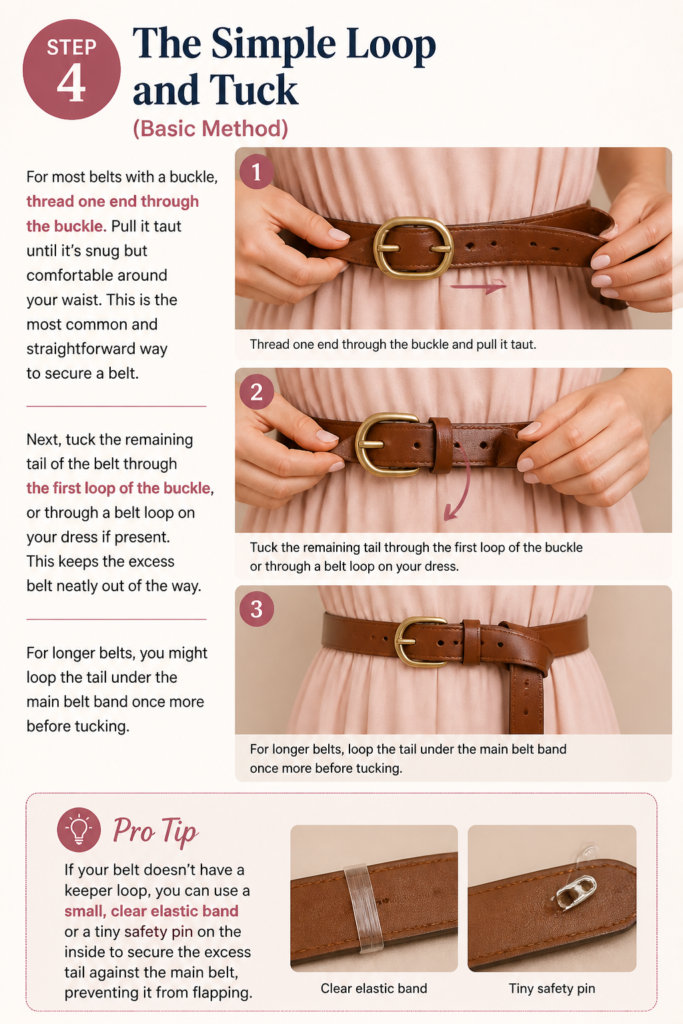
Next, tuck the remaining tail of the belt through the first loop of the buckle, or through a belt loop on your dress if present. This keeps the excess belt neatly out of the way. For longer belts, you might loop the tail under the main belt band once more before tucking.
Pro Tip: If your belt doesn’t have a keeper loop, you can use a small, clear elastic band or a tiny safety pin on the inside to secure the excess tail against the main belt, preventing it from flapping.
Step 5: The Classic Single Knot (For Buckle-less Belts or Long Tails)
If your belt has no buckle, or you want a more relaxed look with a long-tailed belt, cross one end over the other. Bring the top end underneath and through the loop you just created. This forms a basic knot.
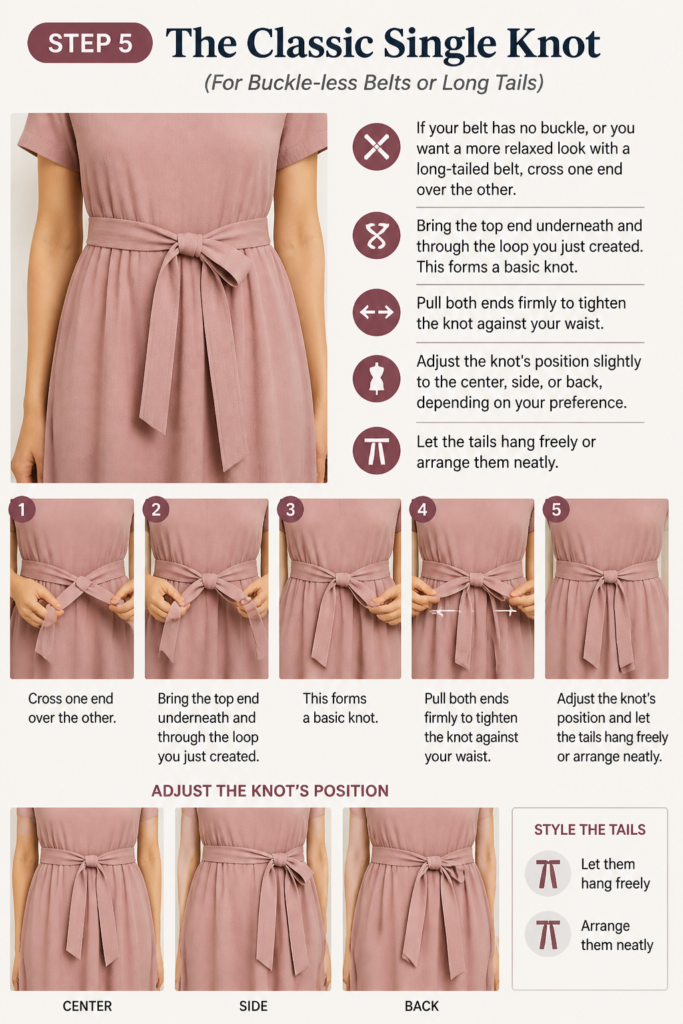
Pull both ends firmly to tighten the knot against your waist. Adjust the knot’s position slightly to the center, side, or back, depending on your preference. Let the tails hang freely or arrange them neatly.
Step 6: The Half Bow Knot (Elegant and Feminine)
To create a half bow, begin by making a simple knot as described in Step 5. Instead of letting both tails hang, take one of the tails and form a loop. This will be the “ear” of your bow.
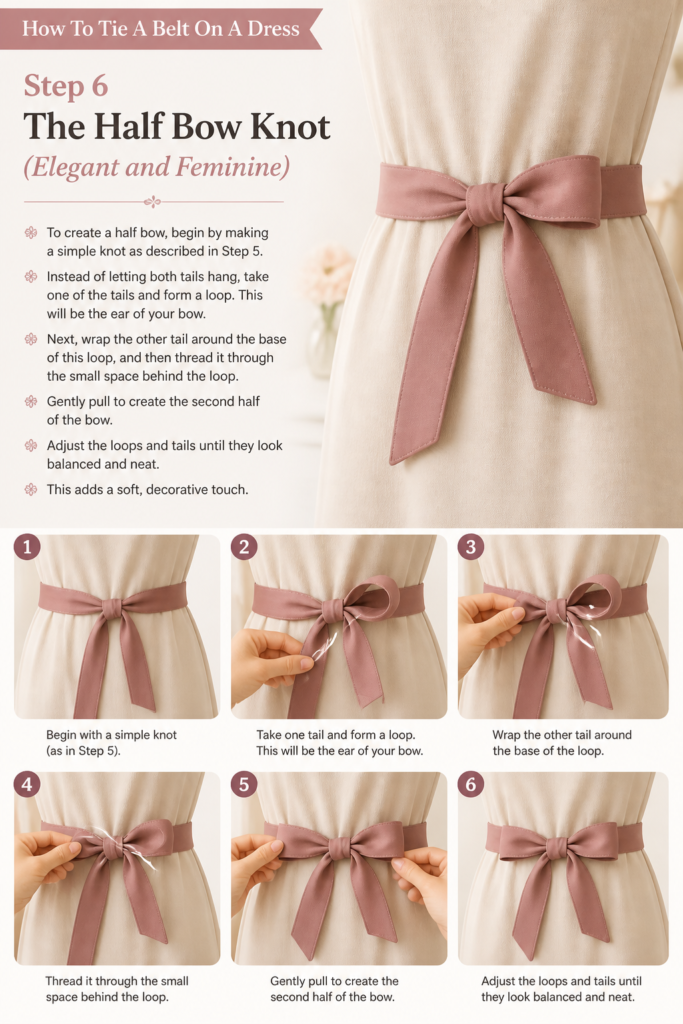
Next, wrap the other tail around the base of this loop, and then thread it through the small space behind the loop. Gently pull to create the second half of the bow. Adjust the loops and tails until they look balanced and neat. This adds a soft, decorative touch.
Step 7: The Simple Loop Knot (For Obi or Wide Belts)
For wider belts, especially obi styles, start by crossing the ends over each other at your desired waist point. Take the top end and loop it underneath and over the other end. This creates a secure, flat knot.
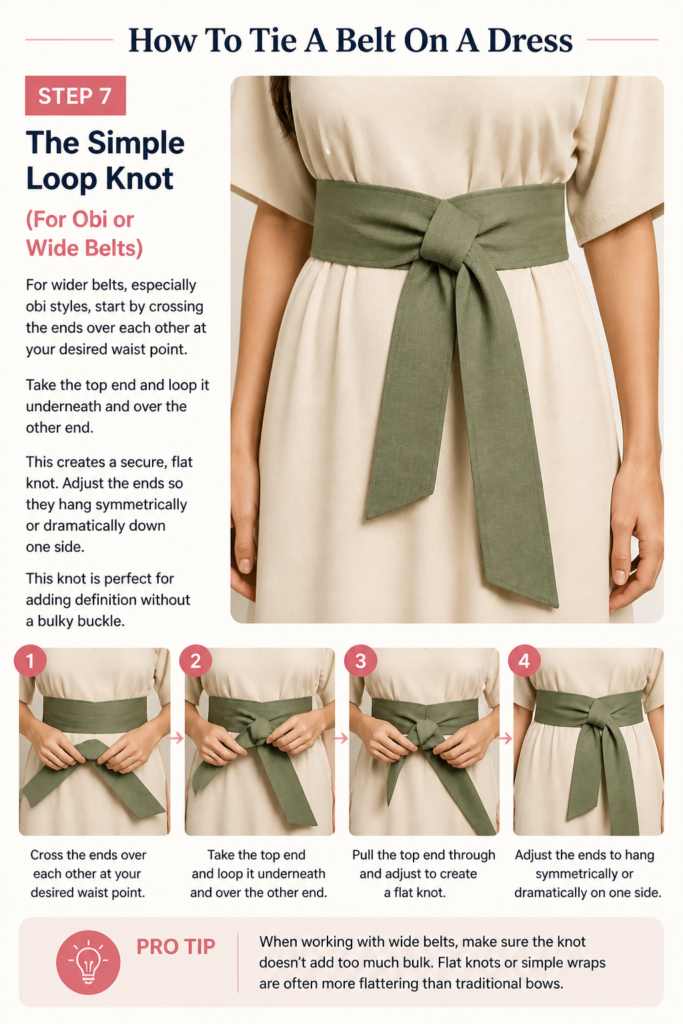
Adjust the ends so they hang symmetrically or dramatically down one side. This knot is perfect for adding definition without a bulky buckle. Ensure the knot lies flat against your dress for a sleek finish.
Pro Tip: When working with wide belts, make sure the knot doesn’t add too much bulk. Flat knots or simple wraps are often more flattering than traditional bows.
Step 8: The Double Knot and Tuck (Secure and Stylish)
For a more secure and slightly more substantial knot, begin with a simple knot (Step 5). Then, take one of the tails and loop it around the main belt once more, threading it through the knot again. This creates a double knot.
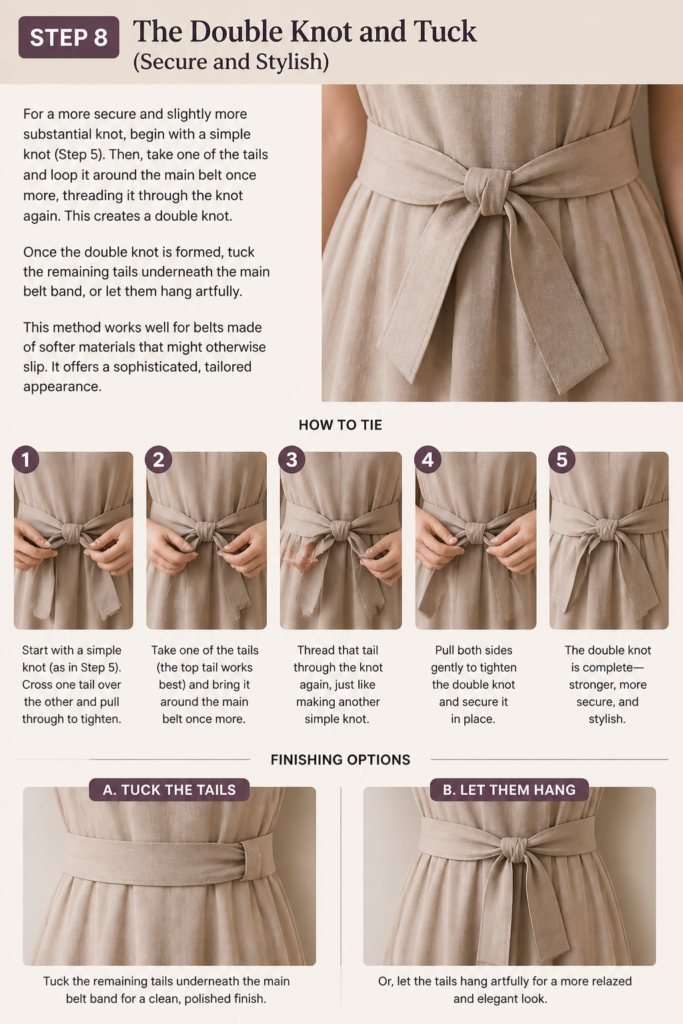
Once the double knot is formed, tuck the remaining tails underneath the main belt band, or let them hang artfully. This method works well for belts made of softer materials that might otherwise slip. It offers a sophisticated, tailored appearance.
Step 9: Experiment with Asymmetry and Placement
Don’t be afraid to play with the placement of your knots and buckles. Instead of always centering them, try shifting your knot or buckle to one side. This can add an unexpected, modern twist to your outfit.
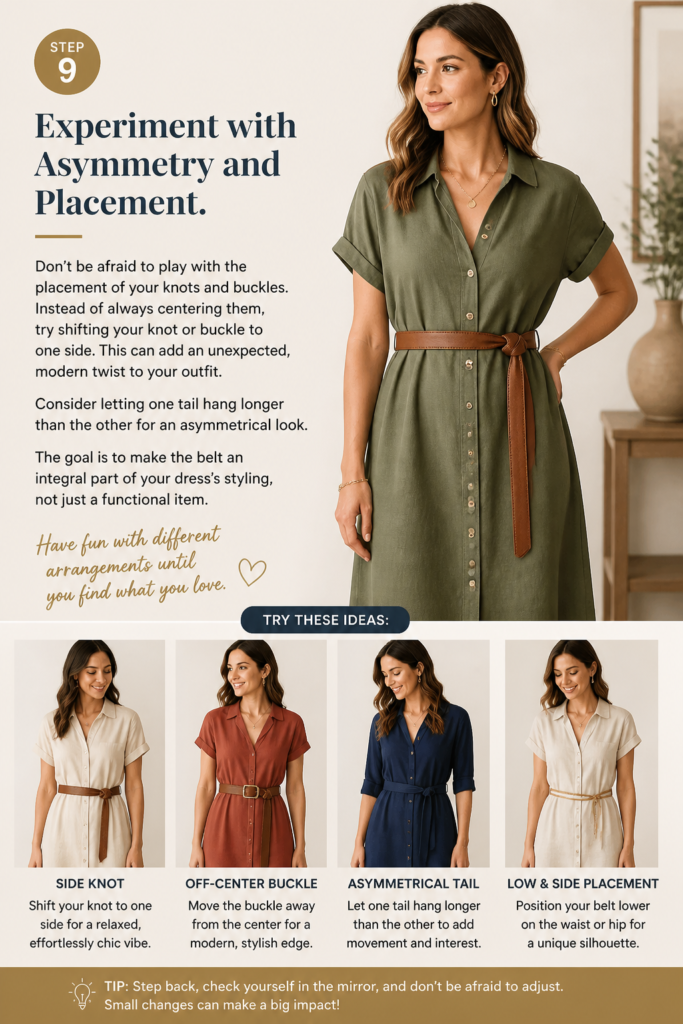
Consider letting one tail hang longer than the other for an asymmetrical look. The goal is to make the belt an integral part of your dress’s styling, not just a functional item. Have fun with different arrangements until you find what you love.
Common Mistakes to Avoid
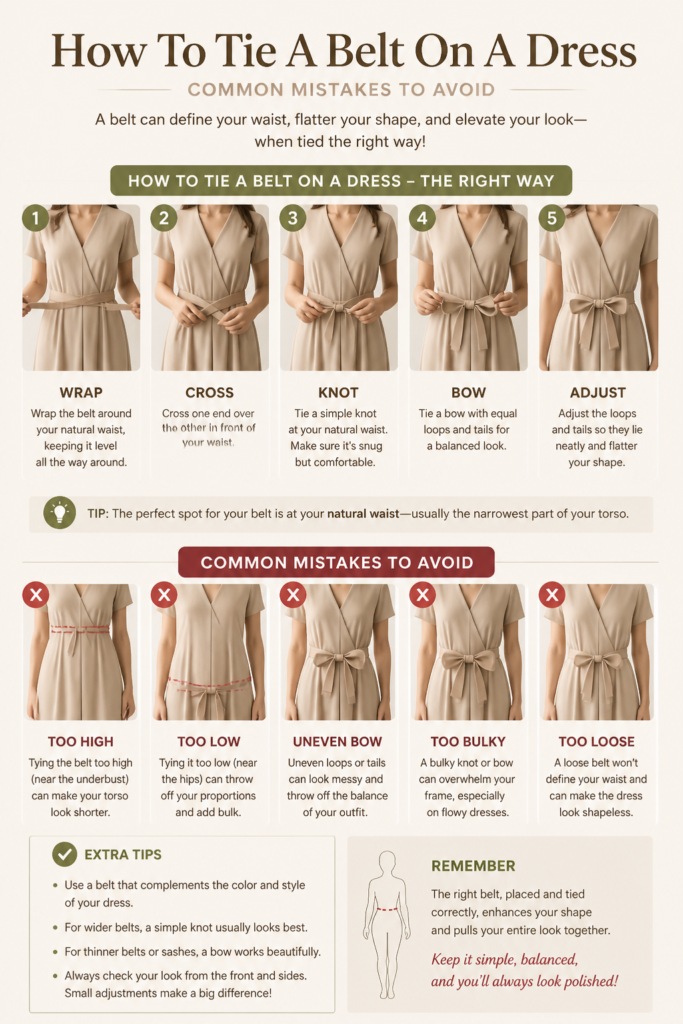
Belting Too Tightly or Too Loosely
A common error is cinching your belt so tightly that it creates uncomfortable bulges or restricts movement. This can also make your dress look strained. On the other hand, a belt that’s too loose will slide around and fail to define your waist effectively, looking sloppy.
Always aim for a comfortable snugness. You should be able to breathe and move freely without the belt digging in or feeling like it’s about to fall off. Test it by sitting down and standing up a few times.
Ignoring Dress Fabric and Silhouette
Many people try to force any belt onto any dress. A stiff, wide belt might look out of place on a delicate, flowing chiffon dress, creating an awkward contrast. Similarly, a thin, flimsy belt can get lost on a heavy, structured wool dress.
Always consider the weight and drape of your dress fabric when choosing a belt. Match the belt’s style and material to the dress for a harmonious and polished look. A soft, supple belt complements flowy fabrics, while a structured belt works well with more tailored garments.
Overpowering the Dress
Sometimes, the belt becomes the main event in a way that detracts from the dress. A belt that is too wide, too brightly colored, or has too much embellishment can overwhelm a simple dress. The belt should enhance, not compete with, your outfit.
Choose a belt that complements the dress’s overall design and color palette. If your dress has intricate details, opt for a simpler belt. If the dress is plain, a statement belt can be a great choice, but ensure it balances the look.
Forgetting About the Back
It’s easy to focus solely on how the belt looks from the front. However, neglecting the back can lead to an untidy appearance. A buckle that twists, a knot that’s lumpy, or excess belt material bunching up can ruin the overall effect.
Always take a moment to check your reflection from all angles, including the back. Ensure the belt lies flat, and any excess material is neatly tucked or draped. A smooth back view completes your polished look.
Troubleshooting
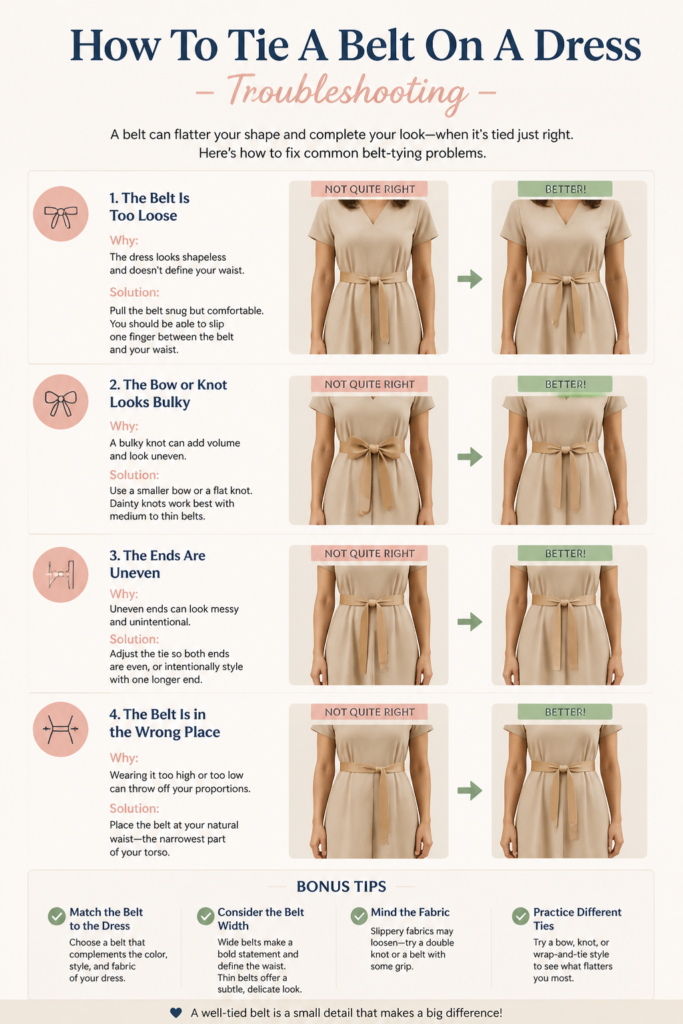
Belt Keeps Slipping Down
If your belt constantly slides out of place, it might be too loose. First, try tightening it by one notch or adjusting your knot more securely. Sometimes, the belt material itself is too smooth for the dress fabric.
Consider adding a small piece of double-sided fashion tape to the inside of the belt where it touches the dress. This can provide just enough grip to keep it in position. For dresses with internal loops, threading the belt through them can also help.
Excess Belt Tail is Too Long
A very long belt tail can sometimes look messy or get in the way. Instead of letting it hang haphazardly, try looping it around the main belt band a second time before tucking it. This creates a neat, layered look.
Alternatively, you can tie a decorative knot, like a half bow, using the long tail. If the belt is consistently too long for your preference, consider having it professionally shortened or punching an extra hole to allow for a tighter fit and less excess.
Belt Buckle Twists or Digs In
A twisting buckle often indicates that the belt is either too tight or the belt material is too stiff for the dress. Try loosening the belt slightly to see if that resolves the issue. Ensure the belt is sitting flat against your body.
If the problem persists, the belt might be too wide or rigid for your body shape or the dress fabric. Consider using a softer, more pliable belt, or one with a flatter buckle design. Sometimes, simply adjusting the buckle’s position slightly can alleviate pressure.
Key Takeaways
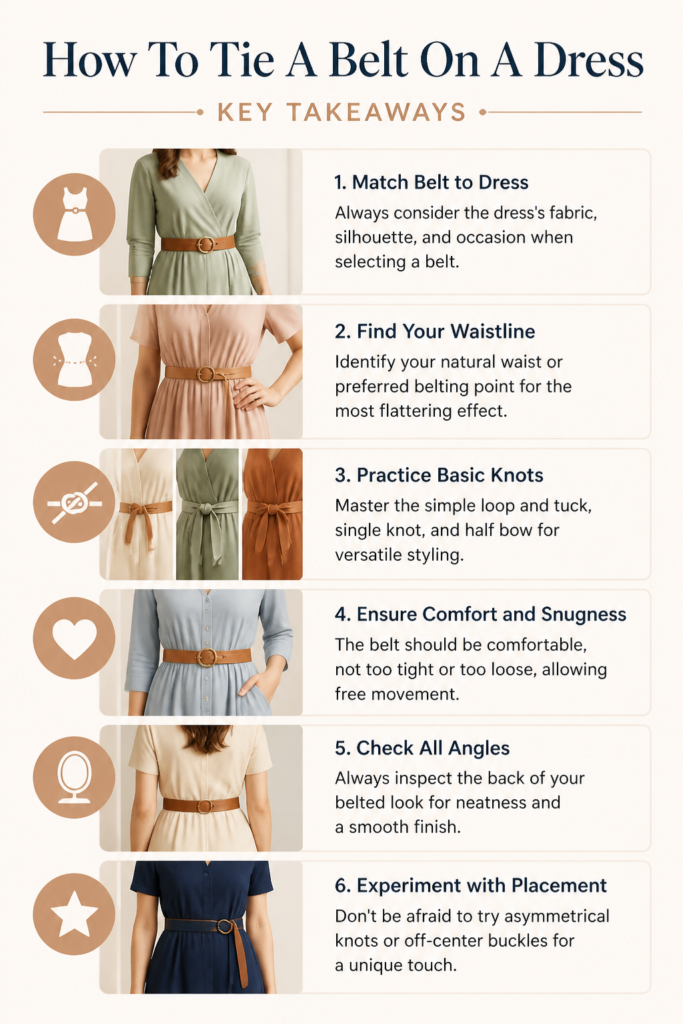
- Match Belt to Dress: Always consider the dress’s fabric, silhouette, and occasion when selecting a belt.
- Find Your Waistline: Identify your natural waist or preferred belting point for the most flattering effect.
- Practice Basic Knots: Master the simple loop and tuck, single knot, and half bow for versatile styling.
- Ensure Comfort and Snugness: The belt should be comfortable, not too tight or too loose, allowing free movement.
- Check All Angles: Always inspect the back of your belted look for neatness and a smooth finish.
- Experiment with Placement: Don’t be afraid to try asymmetrical knots or off-center buckles for a unique touch.
Frequently Asked Questions
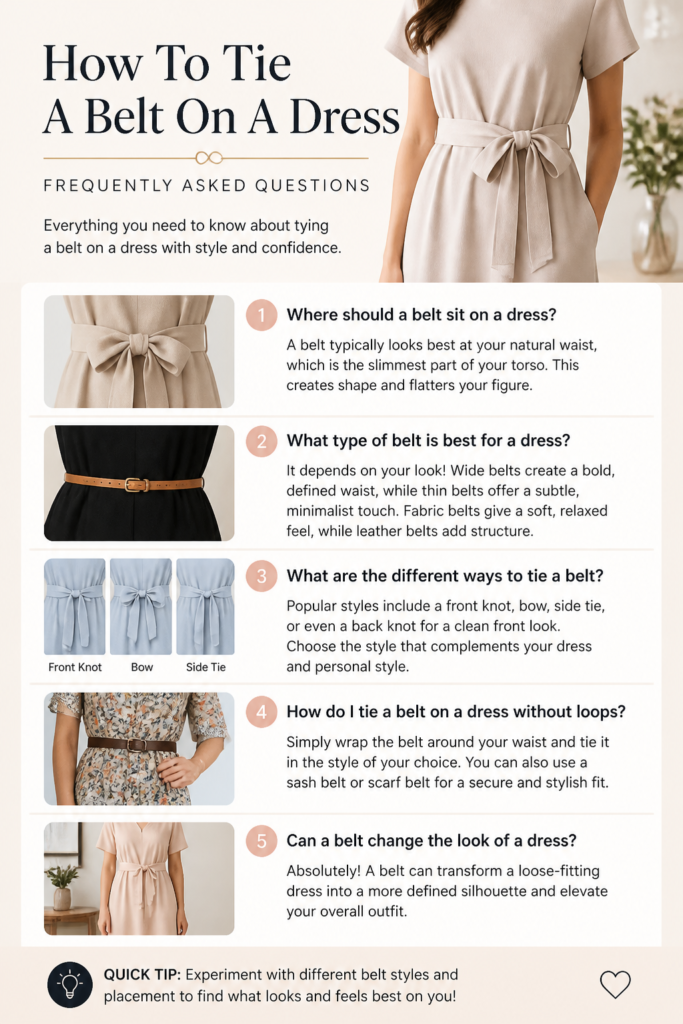
Can I wear a belt with any dress?
While most dresses can be enhanced with a belt, some styles work better than others. Very fitted bodycon dresses or highly structured dresses might not need a belt, as they already define the silhouette. Flowy, A-line, or shift dresses often benefit most from belting.
How do I choose the right belt width?
Thin belts (0.5-1 inch) are elegant and subtle, great for delicate fabrics or adding a hint of definition. Medium belts (1.5-2 inches) are versatile and universally flattering. Wide belts (2.5+ inches) make a strong statement and are best for creating a dramatic waistline, especially with looser dresses. Your body proportions also play a role; taller individuals can carry wider belts more easily.
Should the belt match my shoes or bag?
The old rule of matching your belt to your shoes and bag is largely outdated. While you certainly can, it’s more fashionable to coordinate colors and textures rather than exact matches. Think about complementary tones or using the belt as an accent piece that introduces a new color to your outfit.
What’s the best way to store my belts to prevent damage?
To keep your belts in top condition, hang them from a hook or a dedicated belt hanger. This prevents creasing, bending, and keeps them from getting tangled. For delicate or embellished belts, roll them loosely and store them in a drawer to protect their details.
Our Top Recommended Finds
- Classic Leather Belt Set: A versatile pack including black, brown, and tan belts in various widths to cover all your basic needs. These are essential for any wardrobe.
- Obi-Style Wrap Belt: Perfect for transforming simple dresses, this wide, soft belt cinches the waist dramatically and adds a fashionable, architectural element. It’s a great way to experiment with statement belting.
- Delicate Chain Belt: For adding a touch of sparkle and texture without bulk, a thin metallic chain belt can elevate an evening dress or add a bohemian touch to a daytime look.
Embrace Your Style with Confidence
Tying a belt on a dress is more than just a functional act; it’s an art that allows you to sculpt your silhouette and express your personal style. Each knot, each tuck, offers a new opportunity to refine your look. You now have the tools and techniques to transform any dress in your closet.
So, gather your favorite dresses and belts, stand in front of that mirror, and start experimenting. Discover the power of a perfectly placed belt to elevate your outfit and your confidence. Don’t just wear your clothes; style them.