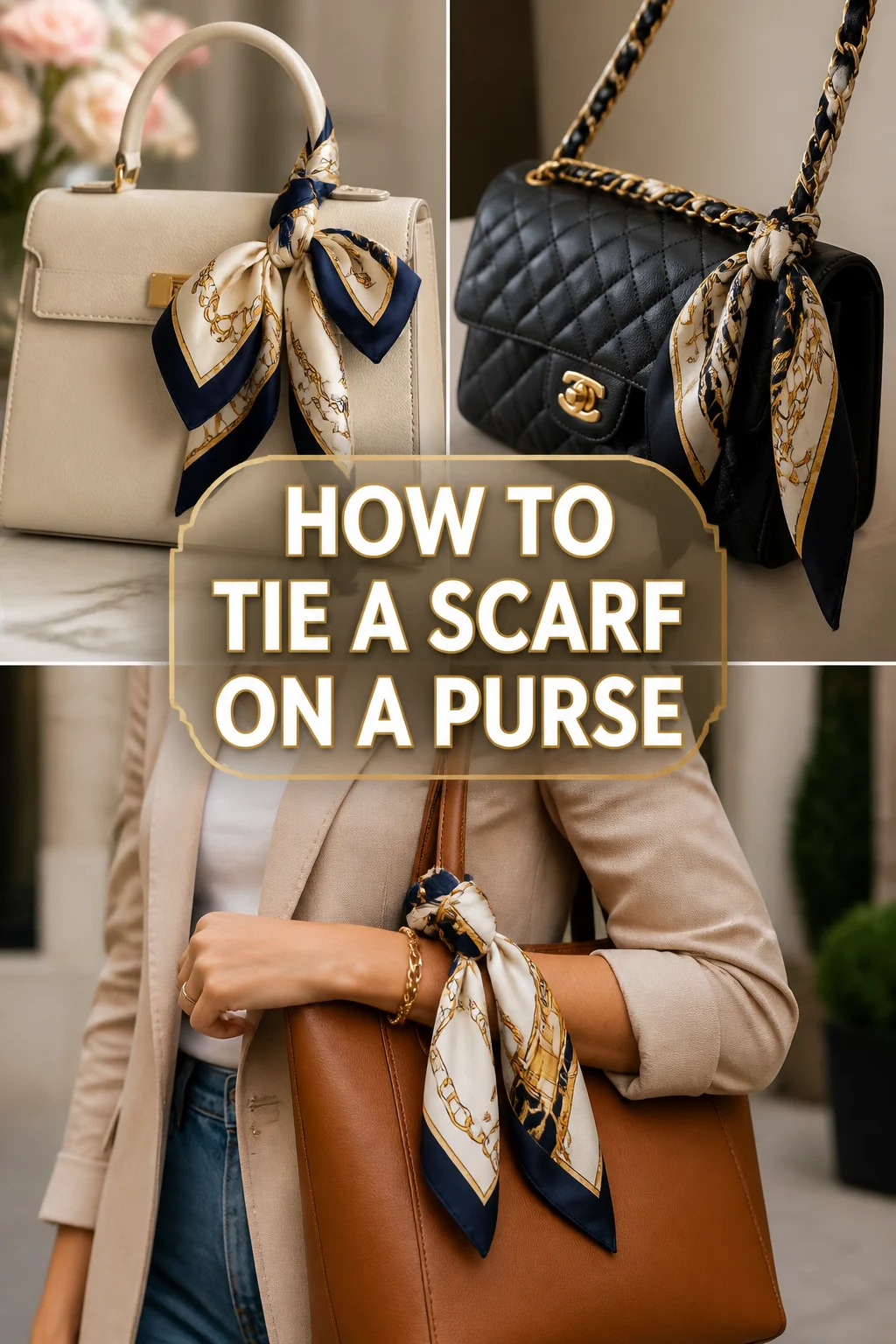
👜 How To Tie A Scarf On A Purse
Adding a scarf to your purse instantly elevates its look, transforming an everyday accessory into a statement piece. It’s a simple trick that brings personality and a touch of elegance to any outfit. I’ve personally experimented with countless scarf and bag combinations, discovering the most effective ways to create a polished finish.
This guide shares everything you need to know, drawing from years of styling experience to help you master this chic detail. You’ll soon be able to customize your bags with confidence and flair.
Quick Overview
This guide will walk you through various techniques to stylishly tie a scarf onto your purse, ensuring a sophisticated and personalized accessory. You’ll learn the foundational knots and creative wraps to refresh your favorite bags.
- Time needed: 5-15 minutes per style
- Difficulty: Beginner
- What you’ll need: A scarf (silk, cotton, or blend), a purse with handles or hardware
Step-by-Step Instructions
Step 1: Choose Your Scarf and Purse
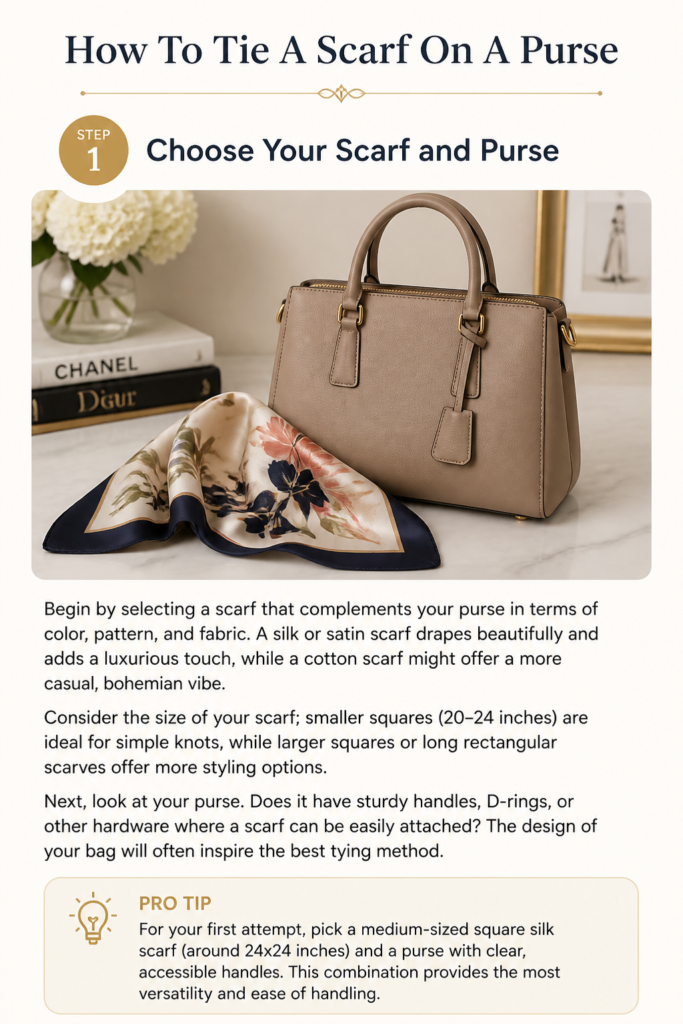
Begin by selecting a scarf that complements your purse in terms of color, pattern, and fabric. A silk or satin scarf drapes beautifully and adds a luxurious touch, while a cotton scarf might offer a more casual, bohemian vibe. Consider the size of your scarf; smaller squares (20-24 inches) are ideal for simple knots, while larger squares or long rectangular scarves offer more styling options.
Next, look at your purse. Does it have sturdy handles, D-rings, or other hardware where a scarf can be easily attached? The design of your bag will often inspire the best tying method.
Pro Tip: For your first attempt, pick a medium-sized square silk scarf (around 24×24 inches) and a purse with clear, accessible handles. This combination provides the most versatility and ease of handling.
Step 2: The Classic Knot Handle Wrap
This method involves weaving the scarf directly around one of your purse handles, creating a soft, elegant grip. Start by folding your chosen square scarf diagonally into a long, thin strip, or simply use a rectangular scarf. Hold one end of the strip firmly against the base of a purse handle.
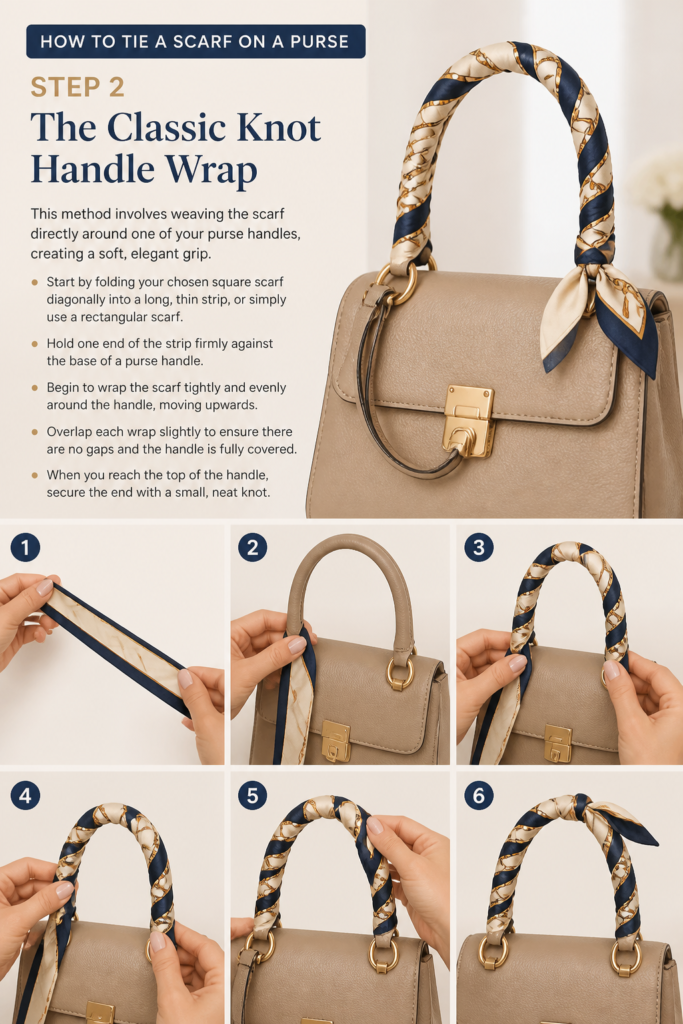
Begin to wrap the scarf tightly and evenly around the handle, moving upwards. Overlap each wrap slightly to ensure there are no gaps and the handle is fully covered. When you reach the top of the handle, secure the end with a small, neat knot.
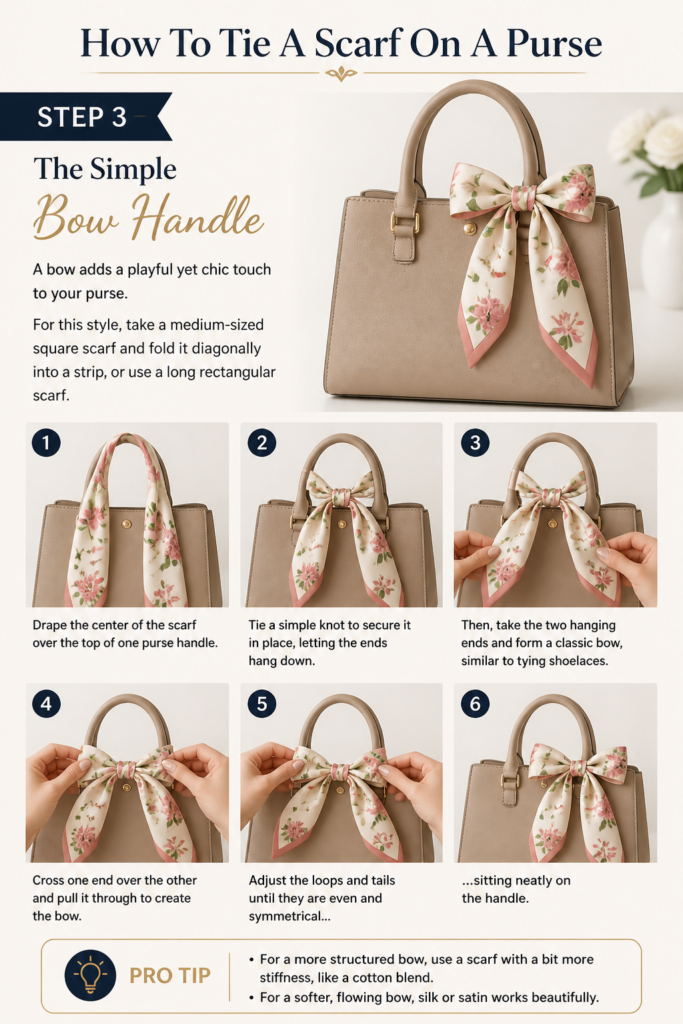
Step 3: The Simple Bow Handle
A bow adds a playful yet chic touch to your purse. For this style, take a medium-sized square scarf and fold it diagonally into a strip, or use a long rectangular scarf. Drape the center of the scarf over the top of one purse handle.
Tie a simple knot to secure it in place, letting the ends hang down. Then, take the two hanging ends and form a classic bow, similar to tying shoelaces. Adjust the loops and tails until they are even and symmetrical, sitting neatly on the handle.
Pro Tip: For a more structured bow, use a scarf with a bit more stiffness, like a cotton blend. For a softer, flowing bow, silk or satin works beautifully.
Step 4: The Side Knot Accent
This method focuses on attaching a scarf to the side hardware of your purse, such as a D-ring or a strap connector. Choose a smaller square scarf or a thin rectangular one for this accent. Fold the scarf into a narrow strip.
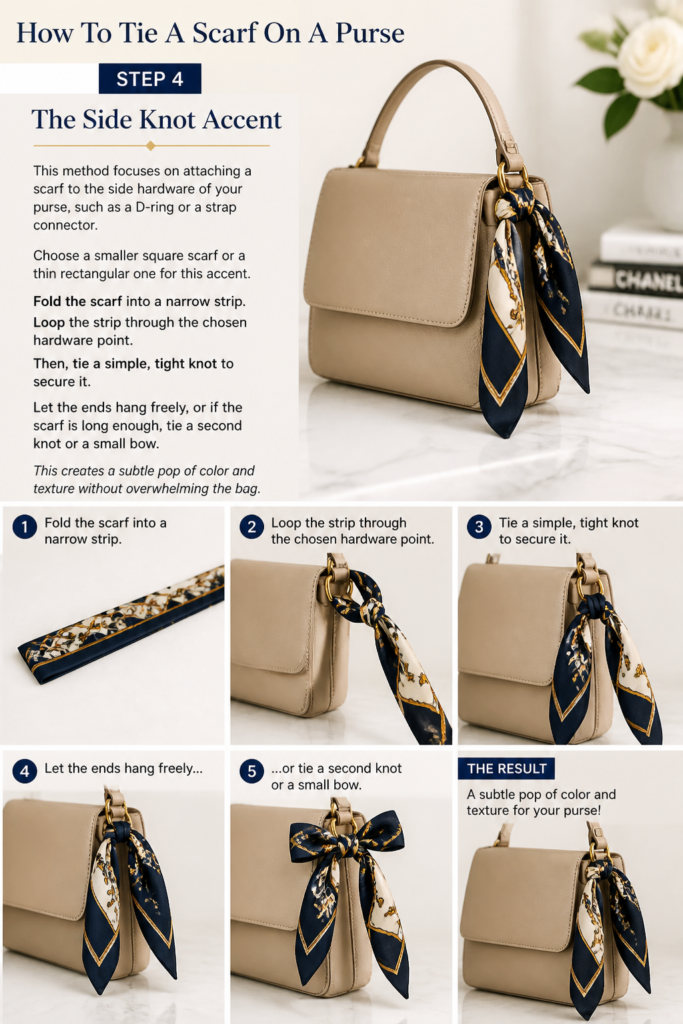
Loop the strip through the chosen hardware point. Then, tie a simple, tight knot to secure it. Let the ends hang freely, or if the scarf is long enough, tie a second knot or a small bow. This creates a subtle pop of color and texture without overwhelming the bag.
Step 5: The Full Handle Wrap
For a more dramatic and protective look, you can wrap both handles of your purse completely. This technique also helps to preserve leather handles from wear and tear. Start by folding your scarf into a thin strip.
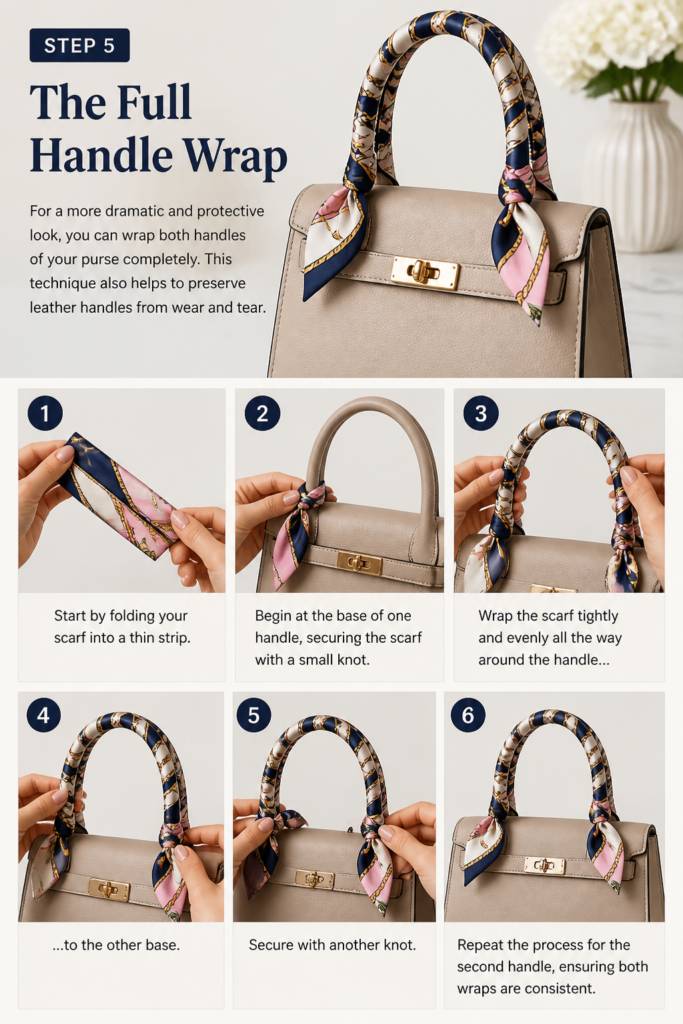
Begin at the base of one handle, securing the scarf with a small knot. Wrap the scarf tightly and evenly all the way around the handle to the other base. Secure with another knot. Repeat the process for the second handle, ensuring both wraps are consistent.
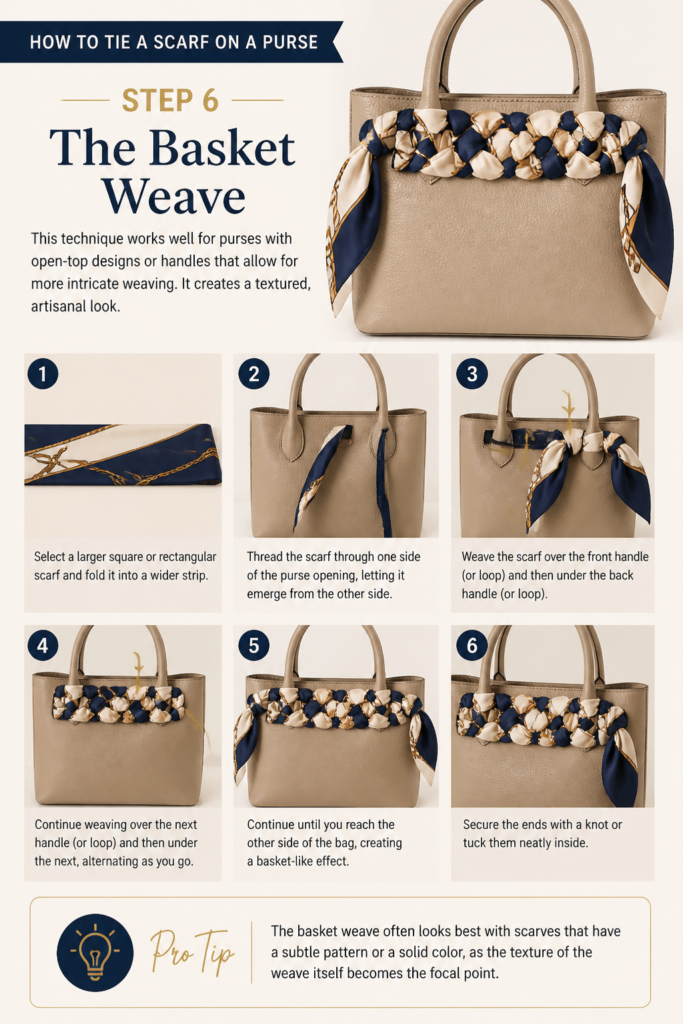
Step 6: The Basket Weave
This technique works well for purses with open-top designs or handles that allow for more intricate weaving. It creates a textured, artisanal look. Select a larger square or rectangular scarf and fold it into a wider strip.
Thread the scarf through one side of the purse opening, letting it emerge from the other side. Then, weave it over and under the existing handle structure or through loops if your bag has them. This creates a basket-like effect across the top or front of the bag. Secure the ends with a knot or tuck them neatly inside.
Pro Tip: The basket weave often looks best with scarves that have a subtle pattern or a solid color, as the texture of the weave itself becomes the focal point.
Step 7: The Simple Drape and Tie
Sometimes the most effortless look is the most chic. This method involves simply draping a scarf over your purse and securing it with a single knot. Take a medium to large square or rectangular scarf.
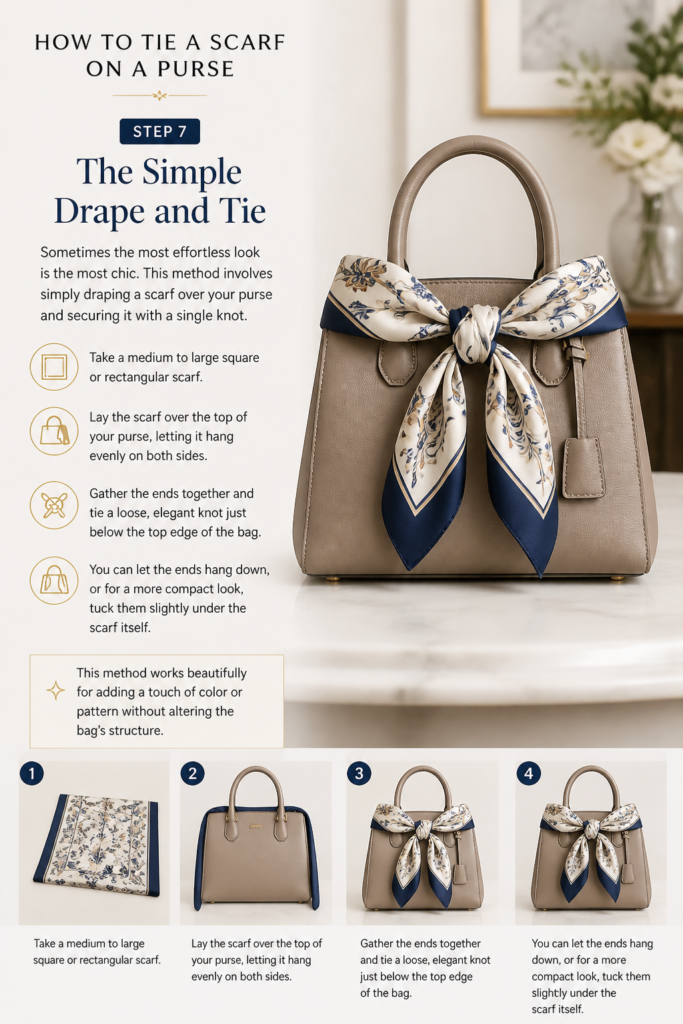
Lay the scarf over the top of your purse, letting it hang evenly on both sides. Gather the ends together and tie a loose, elegant knot just below the top edge of the bag. You can let the ends hang down, or for a more compact look, tuck them slightly under the scarf itself. This method works beautifully for adding a touch of color or pattern without altering the bag’s structure.
Step 8: The Rosette or Flower
For a truly decorative touch, transform your scarf into a rosette. This works best with smaller, silkier scarves. Fold the scarf into a narrow strip.
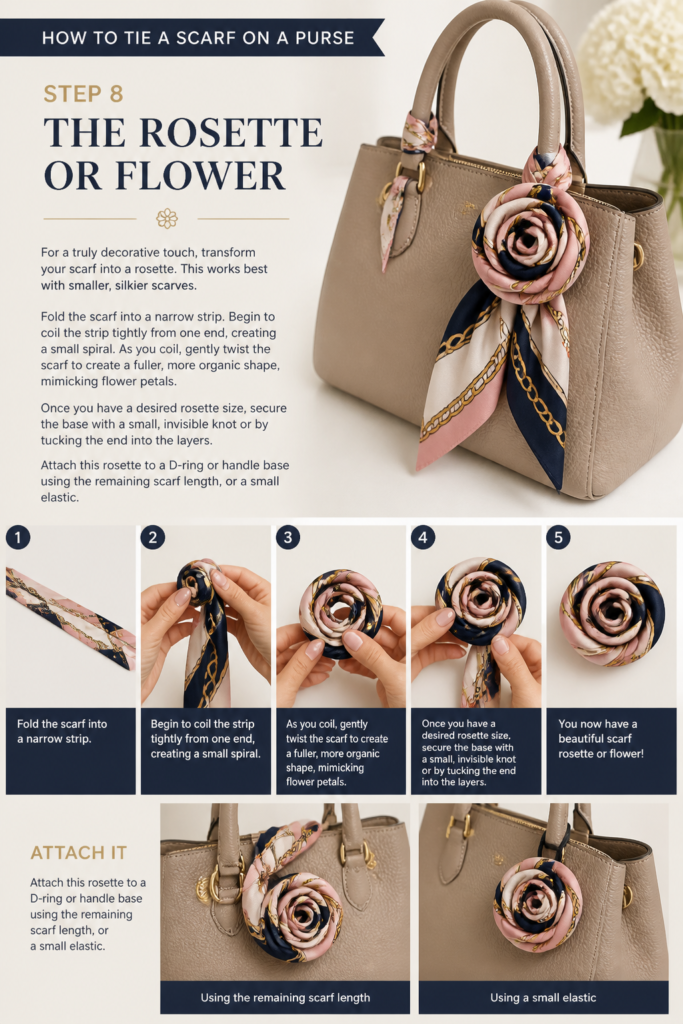
Begin to coil the strip tightly from one end, creating a small spiral. As you coil, gently twist the scarf to create a fuller, more organic shape, mimicking flower petals. Once you have a desired rosette size, secure the base with a small, invisible knot or by tucking the end into the layers. Attach this rosette to a D-ring or handle base using the remaining scarf length, or a small elastic.
Common Mistakes to Avoid
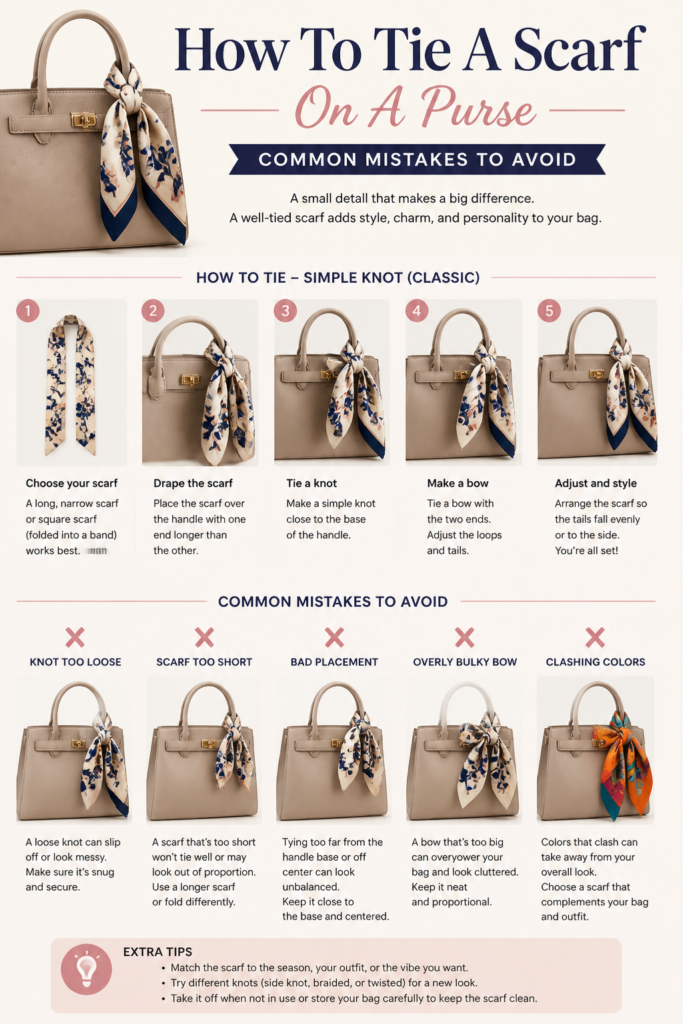
Using the Wrong Scarf Size
A common pitfall is trying to force a large scarf onto a small handle or using a tiny scarf that gets lost on a substantial bag. A scarf that is too big can make your purse look bulky and messy, while one that is too small might appear insignificant or easily come undone. Always consider the proportions of your scarf relative to your purse.
The key is balance. For handle wraps, a scarf that’s roughly 20-30 inches square is often ideal. For a simple knot accent, smaller squares or thin rectangular scarves work best. Experiment with different sizes to find what looks most harmonious with your specific bag.
Tying Knots Too Loosely or Too Tightly
Loose knots can unravel throughout the day, leaving your scarf dragging or lost. Conversely, knots that are too tight can wrinkle the scarf excessively, make it difficult to adjust, or even damage delicate fabric. Finding the right tension is crucial for both aesthetics and security.
When tying, aim for a firm but not strained knot. It should feel secure enough to withstand movement but still allow for minor adjustments. Practice helps you develop a feel for the correct tension, ensuring your scarf stays in place without looking constricted.
Overwhelming the Purse’s Design
The goal of adding a scarf is to enhance your purse, not to overshadow it. Sometimes, an overly elaborate tie, a very busy pattern, or a highly contrasting color can clash with the bag’s inherent style, creating a disjointed look. The scarf should complement the purse, not compete with it.
Before finalizing your tie, step back and look at the overall effect. Does the scarf integrate well with the bag’s hardware, material, and color? Choose patterns and colors that harmonize with your purse and outfit, allowing both elements to shine.
Ignoring Scarf Fabric and Draping
Different scarf fabrics behave very differently when tied. A stiff cotton scarf will hold a more defined shape, while a silky material will drape softly and fluidly. Trying to achieve a crisp bow with a very slippery silk scarf, or a flowing drape with a rigid linen scarf, can lead to frustration and an unsatisfactory result.
Always consider how the fabric will fall and hold its shape. If you want a structured look, opt for stiffer materials. For a soft, elegant touch, silk or satin are excellent choices. Matching the fabric to your desired style will make the tying process much easier and the outcome more successful.
Troubleshooting
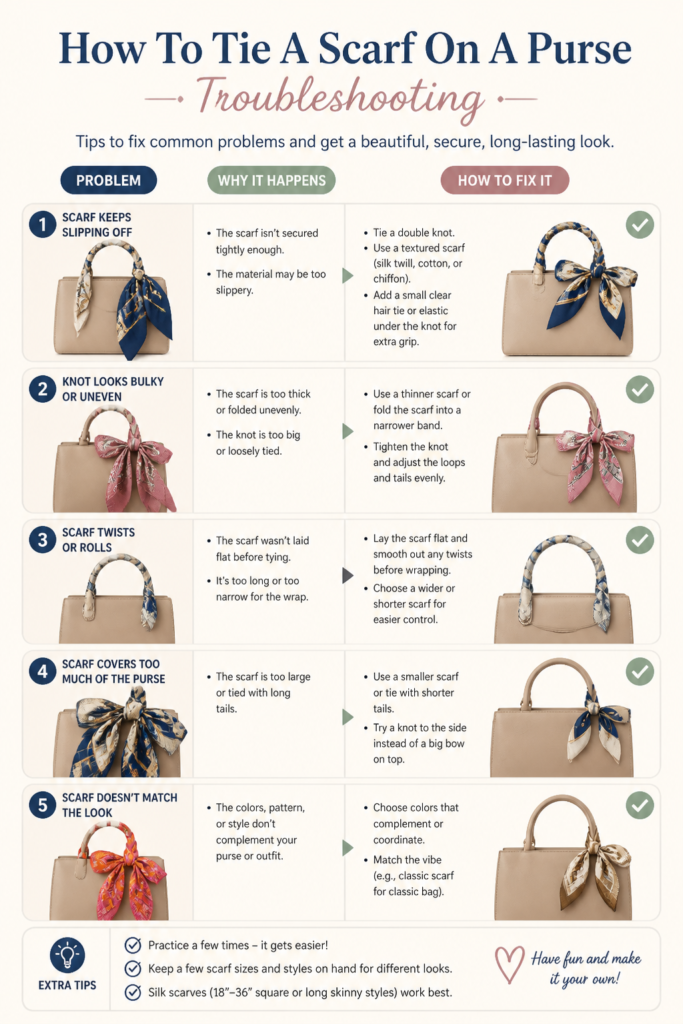
Scarf Keeps Slipping Off
If your scarf is constantly coming loose or sliding down the handle, the knot might not be secure enough, or the fabric might be too slippery for the chosen tie. Re-evaluate the tightness of your initial knot. Ensure it’s firm but not overly strained.
Consider using a small, clear elastic band (like those used for hair) to secure the scarf to the handle before you start wrapping or tying. This provides an invisible anchor point. Alternatively, choose a scarf with a slightly less slippery texture, such as a silk blend or a cotton sateen, if pure silk is proving too challenging.
Bulky or Uneven Look
A bulky or uneven appearance usually stems from inconsistent wrapping or an overly thick scarf for the chosen style. When wrapping handles, ensure each coil overlaps smoothly and evenly, avoiding lumps. If your scarf is quite thick, consider folding it into a narrower strip before you begin.
For bows or knots, ensure you’re adjusting both sides equally. Pull gently on each loop or tail to balance the shape. Sometimes, simply re-tying from scratch with more attention to evenness can solve the problem. Practice helps develop a consistent technique.
Scarf Wrinkles Easily
Delicate fabrics like silk are prone to wrinkling, especially when tied tightly. If your scarf looks creased shortly after tying, try to use looser wraps and knots where possible. Avoid pulling the fabric too taut against the purse handle.
When not in use, store your scarf flat or rolled, rather than crumpled, to minimize wrinkles. If wrinkles appear, a quick steam or a gentle press with a cool iron can refresh the fabric. For daily wear, consider scarf materials that are more wrinkle-resistant, like certain polyester blends, if this is a consistent concern.
Key Takeaways
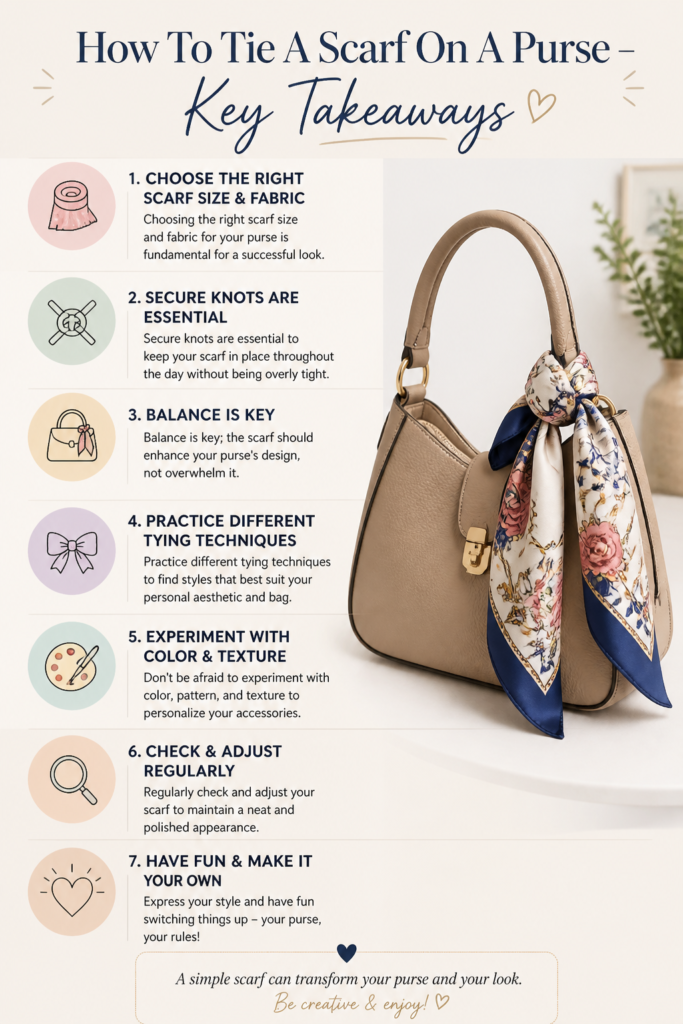
- Choosing the right scarf size and fabric for your purse is fundamental for a successful look.
- Secure knots are essential to keep your scarf in place throughout the day without being overly tight.
- Balance is key; the scarf should enhance your purse’s design, not overwhelm it.
- Practice different tying techniques to find styles that best suit your personal aesthetic and bag.
- Don’t be afraid to experiment with color, pattern, and texture to personalize your accessories.
- Regularly check and adjust your scarf to maintain a neat and polished appearance.
Frequently Asked Questions
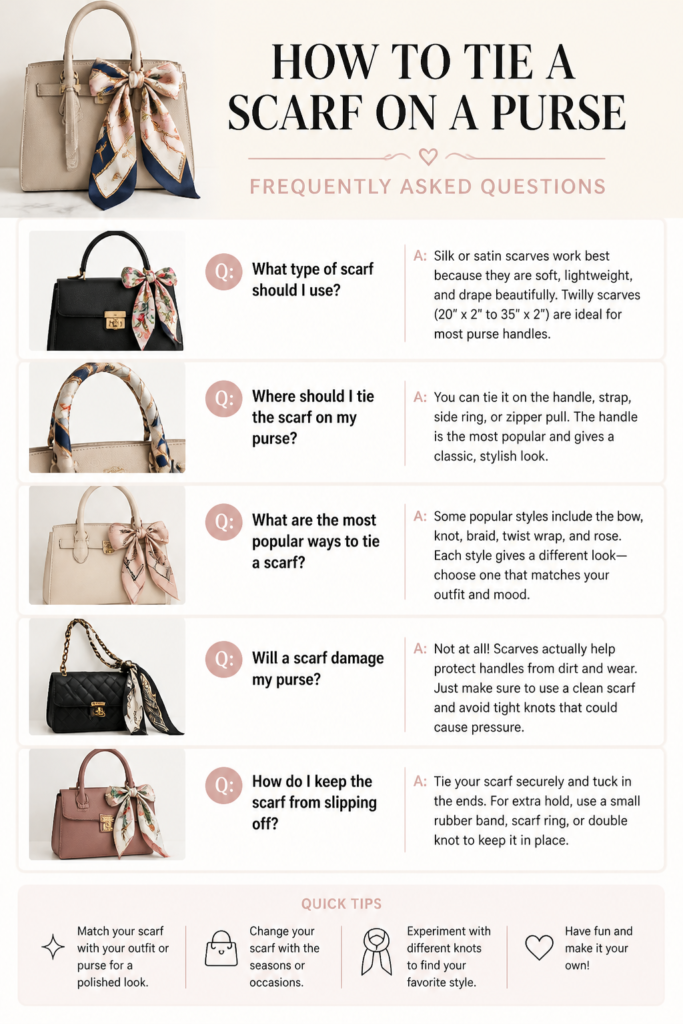
Can I tie any type of scarf on any purse?
While you can technically tie any scarf, the best results come from matching the scarf’s fabric and size to the purse’s style and your desired look. Silk or satin scarves are ideal for elegant drapes, while cotton or linen can give a more casual feel. Consider the purse’s size and hardware for optimal placement.
How do I prevent my scarf from getting dirty on my purse?
To minimize dirt, position your scarf so it doesn’t drag on the ground or rub excessively against rough surfaces. If wrapping handles, ensure the scarf is securely fastened. For light-colored scarves, avoid placing them on areas of the purse that frequently touch dark clothing or hands. Regular gentle cleaning of your scarves will also keep them looking fresh.
What’s the best way to clean a scarf after it’s been on a purse?
The cleaning method depends on the scarf’s material. Silk scarves often require dry cleaning or very gentle hand washing with a mild detergent and cool water. Cotton or polyester blends can usually be machine washed on a delicate cycle. Always check the care label on your specific scarf for the most accurate instructions to preserve its fabric and color.
Can I use the same scarf for multiple tying styles?
Absolutely! A versatile scarf, especially a medium-sized square (around 24-30 inches) or a long rectangular one, can be adapted to many different tying styles. Experiment with folding techniques and knot variations to get the most out of a single scarf. This allows for endless creative possibilities with your existing collection.
Our Top Recommended Finds
- Silk Twill Scarf (24×24 inches): Perfect for crisp knots and elegant handle wraps, offering a luxurious feel and vibrant patterns.
- Long Rectangular Satin Scarf: Ideal for flowing bows, full handle wraps, and more elaborate drapes, adding a touch of glamour.
- Scarf Ring or Clip: A small accessory that can help secure scarf ends or create decorative focal points without complex knots.
Embrace Your Inner Stylist
You now have the tools and techniques to transform your everyday purse into a unique fashion statement. Adding a scarf is a simple, effective way to infuse personality and polish into your accessories, reflecting your unique style. Don’t let your scarves sit unused; let them breathe new life into your favorite bags.
Take a moment right now to grab a scarf and a purse, and try one of these methods. You’ll be amazed at the immediate impact. This small detail can make a big difference in how you feel about your outfit, giving you an extra boost of confidence.