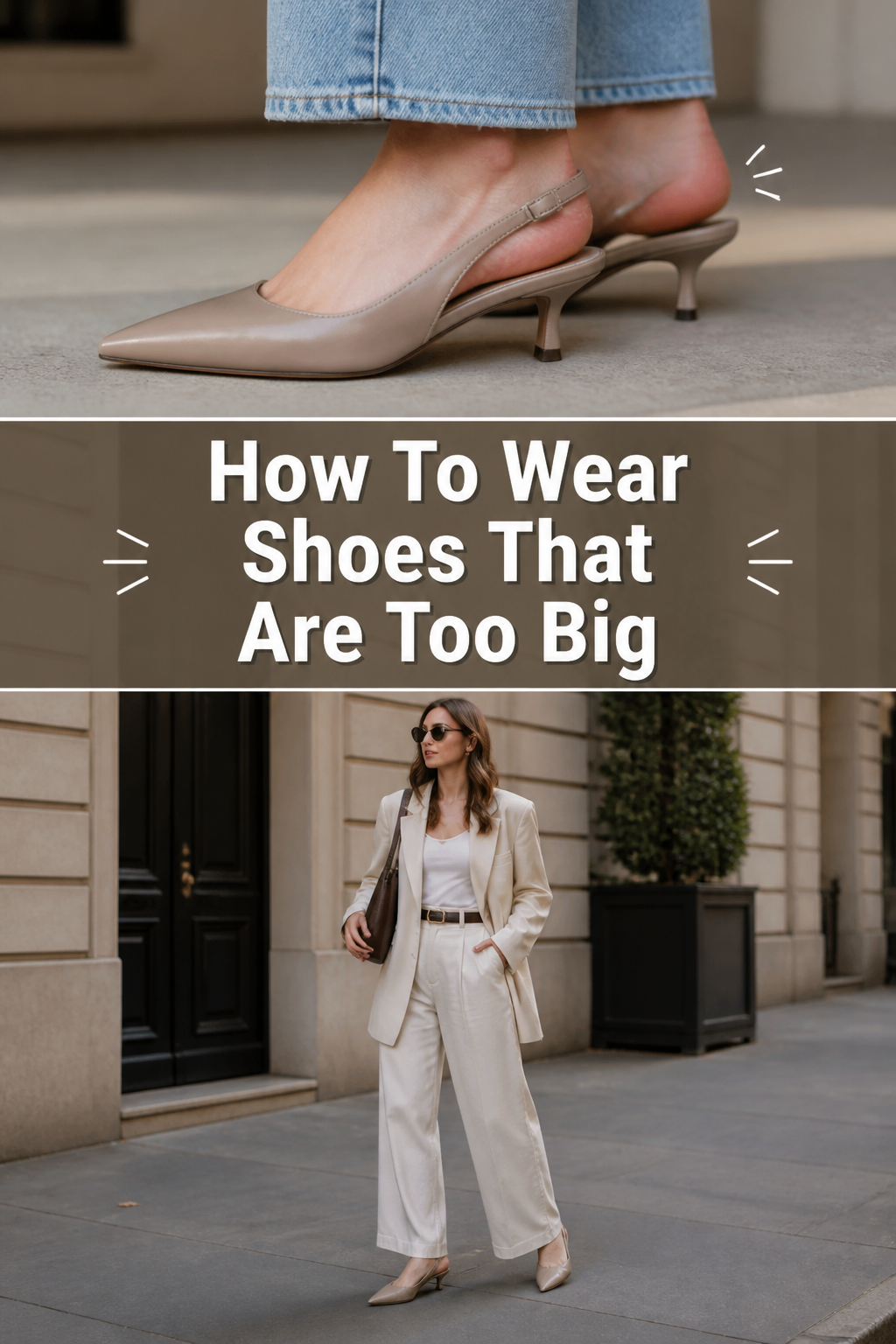
👟 How To Wear Shoes That Are Too Big
We have all been there: you find the perfect pair of shoes on sale, but they are just a half-size too large.
Instead of sending them back or letting them collect dust in your closet, you can use a few clever tricks to make them fit like a glove.
I have spent years testing these methods on everything from vintage leather boots to oversized designer heels, so I know exactly what works and what just causes blisters.
Quick Overview
This guide will show you how to reduce the internal volume of your footwear so your feet stay secure and comfortable all day long.
- Time needed: 5 to 15 minutes
- Difficulty: Beginner
- What you’ll need: Thick socks, insoles, heel grips, toe inserts, or moleskin tape
Understanding the Fit Gap
Before you start stuffing your shoes with materials, it is important to understand why the fit is off.
Shoes that are too big cause your foot to slide forward, which puts pressure on your toes and makes your heel slip out with every step.
This constant friction is the primary cause of painful blisters and can even lead to long-term foot strain if not corrected.
Most fit issues fall into two categories: length problems and volume problems.
Length problems occur when the shoe is simply too long for your foot, leaving a gap behind the heel or in front of the toes.
Volume problems happen when the shoe is too “tall” or wide, meaning your foot rattles around inside even if the length is mostly correct.
The following steps address both of these issues by filling the empty space and anchoring your foot in the proper position.
Step-by-Step Instructions
Step 1: Assess the Extra Space
Put on the shoes and slide your foot all the way to the front until your toes touch the tip.
Check the gap at the heel by seeing how many fingers you can fit between your foot and the back of the shoe.
If you can fit one finger, you likely need a simple insole or thick socks.
If you can fit two fingers, you will need a combination of methods to fill the significant void.
Pro Tip: Always measure your fit at the end of the day when your feet are slightly swollen to ensure you don’t make the shoes too tight.
Step 2: Layer Your Socks
Choose a pair of thick, padded socks to naturally increase the size of your foot.
Try wool hiking socks, as they offer excellent bulk and cushioning without making your feet feel excessively sweaty.
If one pair isn’t enough, you can wear a thin “liner” sock underneath a thicker pair to add even more volume.
This method is ideal for boots and athletic sneakers where the extra bulk won’t look out of place.
However, this might not be the best choice for dress shoes or heels where you want a more streamlined look.
Step 3: Insert Full-Length Insoles
Buy a pair of high-quality foam or gel insoles from a local drugstore or shoe shop.
Place the insole directly on top of the existing footbed to lift your foot higher toward the ceiling of the shoe.
This closes the vertical gap and prevents your foot from sliding around inside the wide opening.
Gel insoles provide great shock absorption, while foam insoles are often thicker and better for filling large spaces.
If the shoe is still too loose, you can actually stack a second, thinner insole on top of the first one.
Pro Tip: Look for “trim-to-fit” insoles so you can customize the shape perfectly to your specific shoe brand.
Step 4: Apply Heel Grips
Peel the adhesive backing off a set of padded heel grips, which are often made of silicone or moleskin.
Stick the grip to the inside back of the shoe, exactly where your heel bone makes contact.
These strips act as a “spacer” that pushes your foot forward slightly and provides a textured surface to prevent slipping.
This is the most effective solution for loafers or pumps where the heel keeps popping out as you walk.
Make sure the area is clean and dry before applying the adhesive to ensure it stays in place for months.
Step 5: Utilize Toe Fillers
Insert a specialized foam toe filler or a small amount of cosmetic cotton wool into the front of the shoe.
Adjust the material so it fills the tip without putting painful pressure on your toenails.
Avoid using paper towels or toilet paper, as these will compress and become lumpy after just an hour of walking.
Toe fillers are specifically designed to maintain their shape and provide a soft “wall” for your toes to rest against.
This is particularly helpful for pointed-toe shoes where there is often a lot of wasted space at the very front.
Step 6: Install Tongue Pads
Attach a small, adhesive padded strip to the underside of the shoe’s tongue.
Position it so it rests against the top of your foot (the instep) to push your foot down and back into the heel cup.
Many people overlook the tongue, but filling this vertical space is often the “secret weapon” for a perfect fit.
This works exceptionally well for Oxfords, Derbies, and sneakers that feel loose across the top of the foot.
It keeps the foot anchored so it doesn’t slide forward into the toe box with every stride.
Pro Tip: If you don’t have a tongue pad, a small piece of adhesive-backed felt can serve as a great DIY alternative.
Step 7: Adjust the Lacing Technique
Unlace your shoes and re-lace them using a technique called “heel lock” or “runner’s loop.”
Create a small loop with the laces at the very top eyelets before crossing them over and pulling tight.
This creates extra leverage that pulls the heel of the shoe snugly against your Achilles tendon.
It effectively minimizes the internal movement of your foot without needing to over-tighten the laces across the middle of your foot.
This is a game-changer for athletic shoes or any footwear with a traditional lacing system.
Step 8: Use Moleskin for Custom Padding
Identify any specific “hot spots” where your foot feels like it is rubbing against the shoe material.
Cut a small piece of moleskin tape and apply it directly to the inside of the shoe or even to your own skin.
Moleskin is a heavy cotton fabric with a soft nap that reduces friction and adds a tiny bit of thickness where you need it most.
It is perfect for the sides of the feet or the area around the ankle bone if the shoe opening is too wide.
This provides a final layer of customized comfort that standard insoles might miss.
Common Mistakes to Avoid
Using Paper Products as Fillers
Many people reach for tissues or newspaper to fill the toes of their shoes in a pinch. This is a mistake because paper breaks down quickly when exposed to the natural moisture and heat of your feet. Within an hour, the paper will turn into a hard, uncomfortable ball that provides no support and can cause toe cramping.
Over-Tightening the Laces
It is tempting to just pull your laces as tight as possible to keep a big shoe on your foot. However, this can restrict blood flow to your toes and cause the top of your foot to go numb. It is much better to fill the internal space with padding than to rely solely on lace tension to hold the shoe in place.
Ignoring the Arch Support
When you add thick insoles to a shoe that is too big, you might inadvertently shift where the arch support sits relative to your foot. If the arch of the shoe is now hitting your foot in the wrong place, it can lead to plantar fasciitis or general foot fatigue. Always ensure that your modifications keep your foot in a neutral, supported position.
Troubleshooting
The Shoes Still Squeak When Walking
Squeaking often happens when an added insole rubs against the interior leather of the shoe. To fix this, lift the insole and sprinkle a small amount of baby powder or talcum powder underneath it. This reduces the friction between the two surfaces and should silence the noise immediately.
The Heel Grip Keeps Falling Off
Adhesives often struggle to stick to suede or textured linings. If your heel grip won’t stay put, try cleaning the area with a tiny bit of rubbing alcohol first to remove any oils. If that fails, you may need to use a small dab of shoe-specific glue to permanently bond the grip to the heel counter.
The Shoe Feels Too Tight in One Specific Spot
If your padding has made the shoe tight in the toes but it is still loose in the heel, you have an uneven distribution of volume. Remove the toe filler and focus more on the tongue pad and heel grips. The goal is to anchor the back of the foot so the front has room to breathe without sliding forward.
Key Takeaways
- Start with socks: Thick wool or double-layered socks are the easiest way to add bulk to your feet.
- Fill the vertical space: Use insoles and tongue pads to push your foot down and back into the heel cup.
- Stop the slide: Heel grips and toe fillers prevent the forward and backward motion that causes blisters.
- Use quality materials: Avoid paper fillers and opt for foam, gel, or moleskin for long-lasting comfort.
- Check the arch: Ensure your modifications don’t compromise the structural support of the shoe.
- Test the fit: Walk around your house for at least thirty minutes before committing to wearing the shoes outside.
Frequently Asked Questions
Can I wear shoes that are two sizes too big?
Generally, it is not recommended to wear shoes that are more than one full size too large. While you can fill the space, the “break point” of the shoe (where it naturally bends at the toes) will not align with your foot. This can lead to significant discomfort and may even cause you to trip because the toes of the shoes extend too far forward.
Will wearing big shoes damage my feet?
In the short term, the main risks are blisters and foot fatigue. However, wearing oversized shoes regularly can cause your toes to “claw” as they try to grip the shoe for stability. This can eventually lead to issues like hammertoes or strained tendons, so it is important to use the padding methods mentioned above to create a secure fit.
Are gel insoles better than foam ones?
It depends on your goal. Gel insoles are excellent for impact protection and are generally thinner, making them good for shoes that are only slightly too large. Foam insoles are usually thicker and better at filling significant gaps, but they may compress over time and need to be replaced more frequently than gel versions.
Our Top Recommended Finds
- High-Density Foam Insoles: These provide the most volume for shoes that are a full size too large and offer great cushioning.
- Self-Adhesive Heel Liners: A must-have for preventing heel slippage in loafers, flats, and dress shoes.
- Adjustable Toe Fillers: These foam inserts are shaped specifically for the toe box and can be trimmed to fit various shoe widths.
Taking the Next Step Toward Comfort
Now that you have the tools to fix your oversized footwear, go through your closet and identify the pairs that have been sitting idle.
Start by trying the sock method today, as it requires the least amount of preparation and provides immediate results.
If you find that your shoes still feel a bit loose, consider ordering a set of tongue pads or heel grips to fine-tune the fit.
Once your shoes fit correctly, you might want to look into professional shoe stretching or cobbler services for your other footwear needs.
A well-fitting shoe changes your entire posture and confidence, so don’t settle for a pair that doesn’t support you properly.