👖 How To Fold Jeans To Save Space
Do your jean stacks constantly topple over?
Are your drawers overflowing, making it impossible to find the pair you want?
I used to struggle with a chaotic closet, but after years of trial and error, I discovered a folding method that changed everything for my denim collection.
Quick Overview
This guide will walk you through a simple, effective folding technique that will transform your messy jean piles into neat, compact parcels.
You’ll learn how to maximize space, prevent wrinkles, and keep your wardrobe organized.
- Time needed: 5-10 minutes (per batch)
- Difficulty: Beginner
- What you’ll need: Your jeans, a flat surface
Step-by-Step Instructions
Step 1: Prepare Your Work Surface and Jeans
Clear a flat, clean surface like a bed, table, or even a clean floor.
Make sure you have enough room to lay your jeans out fully without them hanging off the edges.
Lay your jeans flat, face up, ensuring there are no major wrinkles or creases already present.
Smooth out any existing folds or bumps with your hands to create a clean foundation for folding.
Step 2: Fold Jeans in Half Lengthwise
Take one leg of the jeans and fold it over the other leg.
Align the outer seams perfectly, creating one long, narrow rectangle.
Make sure the waistband, crotch, and hems are neatly stacked on top of each other.
Smooth out any new wrinkles that form during this initial fold.
Run your hands firmly down the length of the folded jeans to press out air and create a crisp line.
Pro Tip: For jeans with a wider leg opening, slightly tuck the excess fabric from the bottom leg underneath the top leg before aligning, to maintain a straight edge. This prevents bulkiness at the hem.
Step 3: Tuck in the Crotch Area
Identify the bulky crotch area that protrudes from the folded rectangle.
This excess fabric can prevent a neat, compact fold if not addressed.
Fold the crotch fabric inwards, creating a straight line along the inner seam.
This step transforms the irregular shape into a clean, uniform rectangle, which is crucial for efficient folding.
The goal is to eliminate any odd angles or extra material that would disrupt the final shape.
Step 4: Fold the Bottom Hem Upwards
Grasp the bottom hem of the jeans.
You will now fold this section upwards to begin creating the final compact shape.
Fold the hem about 2-3 inches (5-8 cm) up towards the waistband.
This creates a small, stable base for the subsequent folds and helps maintain the integrity of the roll or stack.
Ensure this first fold is tight and even across the width of the jeans.
Step 5: Continue Folding in Sections
Continue folding the jeans upwards from the bottom, working your way towards the waistband.
Each fold should be roughly the same size as the initial hem fold, about 2-3 inches.
Press firmly on each fold as you go.
This action helps to release air trapped within the fabric layers and creates a denser, more compact package.
Aim for a consistent fold size to ensure an even and stable final shape.
Pro Tip: The number of folds will depend on the length of your jeans. For longer jeans, you might make 4-5 folds before reaching the waistband area. Keep them uniform.
Step 6: Reach the Waistband and Create the Pocket
Stop folding when you reach the waistband, leaving a small section of the waistband exposed.
This remaining waistband section will be used to secure the entire fold.
Flip the entire folded bundle over.
You should now see the inside of the waistband facing you, creating a natural “pocket” or flap.
Step 7: Tuck and Secure the Fold
Take the waistband flap and pull it over the entire folded bundle.
This action creates a secure envelope for the jeans, preventing them from unraveling.
Tuck the end of the folded jeans snugly into the waistband pocket.
Ensure it’s tight and firm, creating a self-contained, compact package that will hold its shape.
This final tuck is what makes this method so effective for space-saving and stability.
Step 8: Store Your Compact Jeans
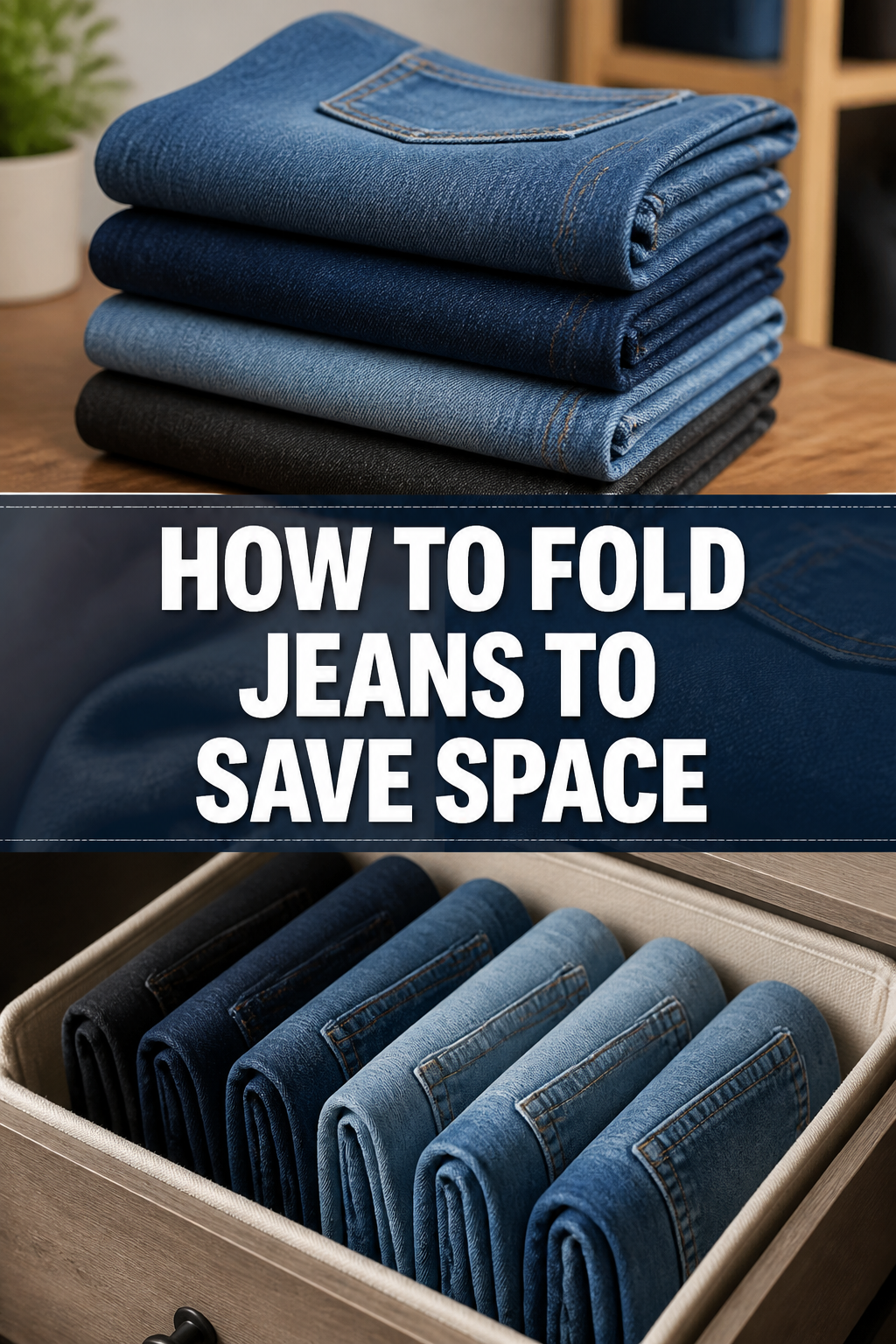
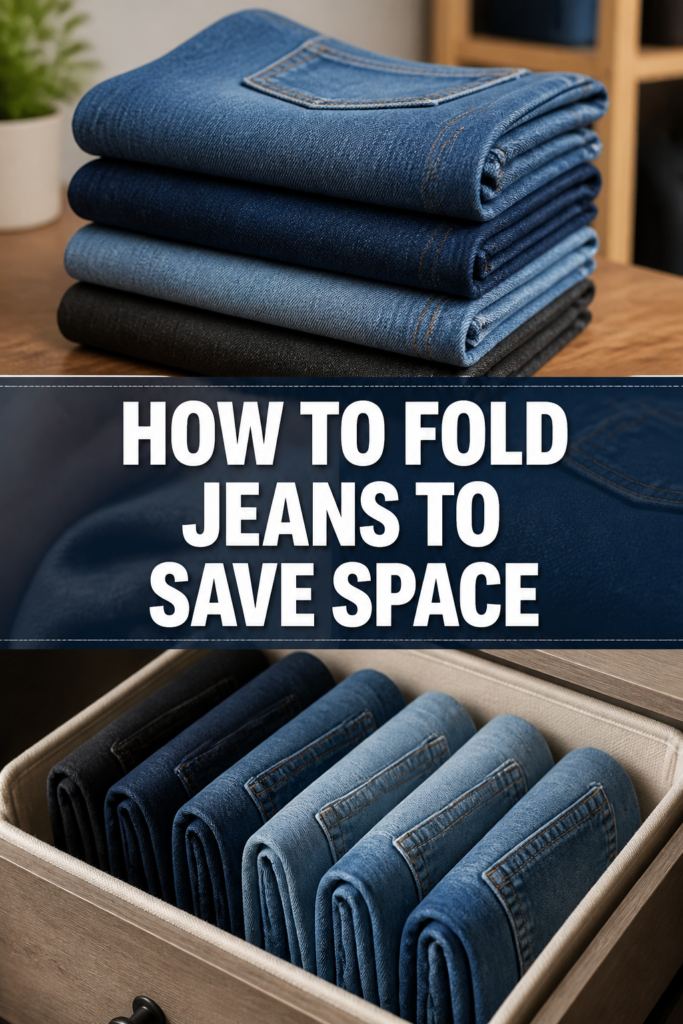
Place your neatly folded jeans vertically in a drawer, on a shelf, or in a storage bin.
The self-securing fold allows them to stand upright like files, making it easy to see each pair.
Arrange them side-by-side, maximizing every inch of available space.
This vertical storage method prevents stacks from toppling and makes selecting a pair effortless.
Enjoy your newly organized and space-efficient denim collection.
Common Mistakes to Avoid
Folding Too Loosely
Many people rush through the folding process, leaving too much air trapped within the fabric layers.
This results in a bulky, uncompact fold that takes up just as much space as an unfolded pair.
Always take the time to press firmly on each fold, expelling air and creating a dense, tight bundle.
A loose fold will also be more prone to unraveling, defeating the purpose of a secure fold.
Inconsistent Fold Sizes
Varying the size of your folds throughout the process can lead to an uneven, unstable package.
This makes stacking or standing them upright difficult, and they’re more likely to collapse.
Strive for uniform folds, roughly 2-3 inches (5-8 cm) each, from the hem to the waistband.
Consistency ensures a balanced and compact final shape that holds its form reliably.
Neglecting the Crotch Area
Ignoring the bulk of the crotch fabric is a common oversight that prevents a truly neat fold.
If not tucked in, this area creates an awkward bulge that makes the jeans difficult to fold into a clean rectangle.
Always fold the crotch fabric inwards to create a straight, clean edge along the inner seam.
This small adjustment makes a significant difference in the final compactness and appearance of your folded jeans.
Not Securing the Waistband Properly
Failing to use the waistband as a securing flap means your neatly folded jeans are likely to unravel.
This negates all your efforts to save space and keep things tidy, as they’ll quickly become a loose pile.
Ensure you tuck the entire folded bundle securely into the waistband “pocket” you create.
This final step is crucial for creating a self-contained, stable package that stays folded in your drawer or on your shelf.
Troubleshooting
Jeans Still Seem Bulky After Folding
If your folded jeans still feel larger than expected, you might not be pressing out enough air during the folding process.
Each time you make a fold, run your hand firmly over the fabric to compress it and release trapped air.
Also, double-check that your initial lengthwise fold is as tight and even as possible, eliminating any excess width.
Ensure the crotch area is properly tucked in, as this is a major source of unnecessary bulk.
My Folded Jeans Keep Unraveling
An unraveling fold is usually a sign that the waistband wasn’t used effectively to secure the package.
Make sure you are flipping the jeans over at the end and tucking the entire folded section firmly into the waistband flap.
The waistband should act like an envelope, holding everything together tightly.
If the waistband itself is very loose or stretched, you may need to fold the jeans slightly shorter to ensure a snug fit when tucking.
Difficulty Folding Stiff or Thick Denim
Stiffer denim can be more challenging to fold tightly, but it’s still possible.
You may need to apply more pressure with your hands during each folding step to compress the fabric.
Consider making slightly smaller folds (e.g., 1.5-2 inches instead of 2-3 inches) to manage the thickness.
Working on a very firm, flat surface can also help you get crisper lines and a more compact result with heavy fabrics.
Key Takeaways
- Preparation is Key: Always start with smooth, flat jeans on a clear surface.
- Eliminate Bulk: Tuck the crotch fabric inwards to create a clean, rectangular shape.
- Consistent Folds: Make uniform, tight folds from the hem towards the waistband.
- Secure with Waistband: Use the waistband as a “pocket” to tightly secure the entire folded bundle.
- Store Vertically: Place folded jeans upright in drawers or bins for maximum visibility and space efficiency.
- Press Out Air: Firmly smooth each fold to remove trapped air, creating a compact package.
Frequently Asked Questions
Does this method work for all types of jeans?
Yes, this folding method is highly versatile and works well for most denim types, from skinny jeans to bootcut and even thicker selvedge denim.
For wider leg styles, just ensure you align the outer seams carefully and tuck in any excess fabric at the hem during the initial lengthwise fold.
The key is creating that initial uniform rectangle before you begin folding upwards.
Will this method cause creases or wrinkles?
Quite the opposite! Because the jeans are folded smoothly and kept compact, this method often helps prevent creases and wrinkles.
The tight, self-contained fold minimizes shifting and crushing, which are common causes of unwanted wrinkles when jeans are piled loosely.
Starting with wrinkle-free jeans and smoothing each fold ensures a crisp final result.
Can I use this folding technique for other garments?
Absolutely! This “file folding” or “KonMari” inspired technique is excellent for many other clothing items.
It works wonderfully for t-shirts, sweaters, trousers, and even some types of dresses.
The principle of creating a compact, self-supporting package translates well across different fabric types, maximizing space in any drawer or closet.
How long will the jeans stay folded using this method?
Once properly secured with the waistband, your jeans will stay neatly folded indefinitely, as long as they are stored without excessive disturbance.
The tightness of the tuck prevents them from unraveling, even when you pull other items from the drawer.
This durability is one of the main advantages of this particular space-saving folding technique.
Our Top Recommended Finds
- Drawer Dividers: These help keep your vertically folded jeans neatly separated and prevent them from shifting.
- Fabric Storage Bins: Perfect for holding multiple folded jeans on shelves or within larger drawers, keeping everything contained.
- Shelf Organizers: Add extra shelves or compartments to your closet, creating more dedicated space for your compact denim collection.
Embrace Your Organized Wardrobe
You now have the tools to transform your denim storage from chaotic to calm.
Imagine opening your drawer and seeing every pair of jeans neatly lined up, easy to grab, and free from wrinkles.
This simple change can make a significant difference in your daily routine and overall wardrobe satisfaction.
Take a few minutes today to apply these steps to your jeans, and enjoy the immediate impact of a more organized space.