👗 How To Dress According To Your Body Type
Understanding your body shape is a powerful tool for personal style.
I’ve spent years helping friends and clients find clothes that make them feel amazing, and it all starts with this fundamental insight.
This guide will equip you with practical steps to highlight your best features and build a wardrobe you love.
Quick Overview
This guide will help you identify your unique body type and choose clothing that flatters your natural silhouette. You’ll learn how to create balanced proportions and shop with confidence.
- Time needed: 30-60 minutes for initial assessment and planning
- Difficulty: Beginner
- What you’ll need: A full-length mirror, measuring tape, well-fitting clothes (or just undergarments), and an open mind.
Step-by-Step Instructions
Step 1: Understand Your Proportions
The first step is to objectively look at your body. Stand in front of a full-length mirror, preferably in your underwear or close-fitting clothes.
Observe the width of your shoulders, bust, waist, and hips. Don’t focus on size, but rather on the relationship between these areas.
You can also use a measuring tape for accuracy. Measure the widest point of your shoulders, the fullest part of your bust, the narrowest part of your waist, and the widest part of your hips.
Step 2: Identify Your Body Type
Based on your observations and measurements, you can categorize your body into one of the common shapes. Remember, these are general guides, and many people are a blend of types.
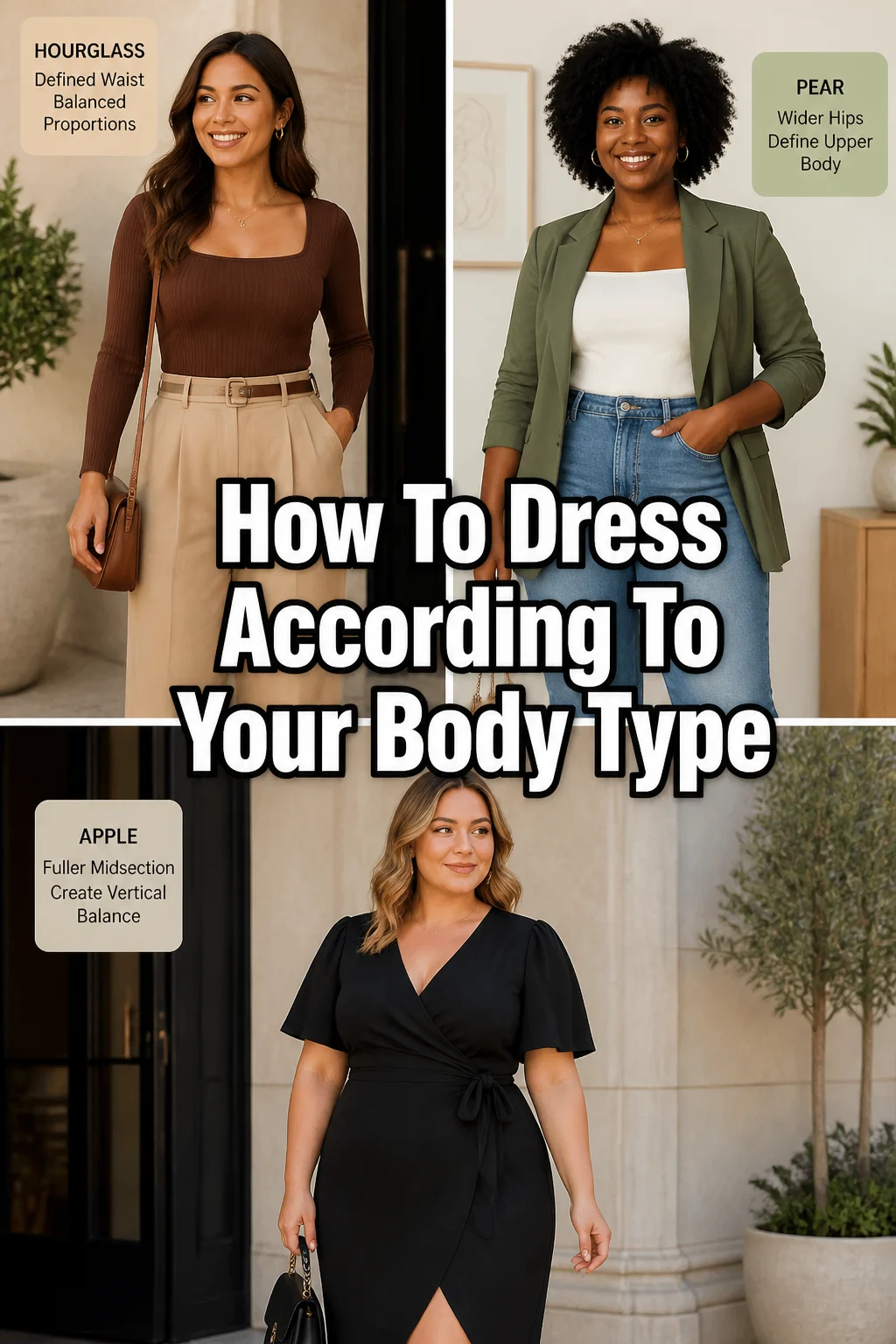
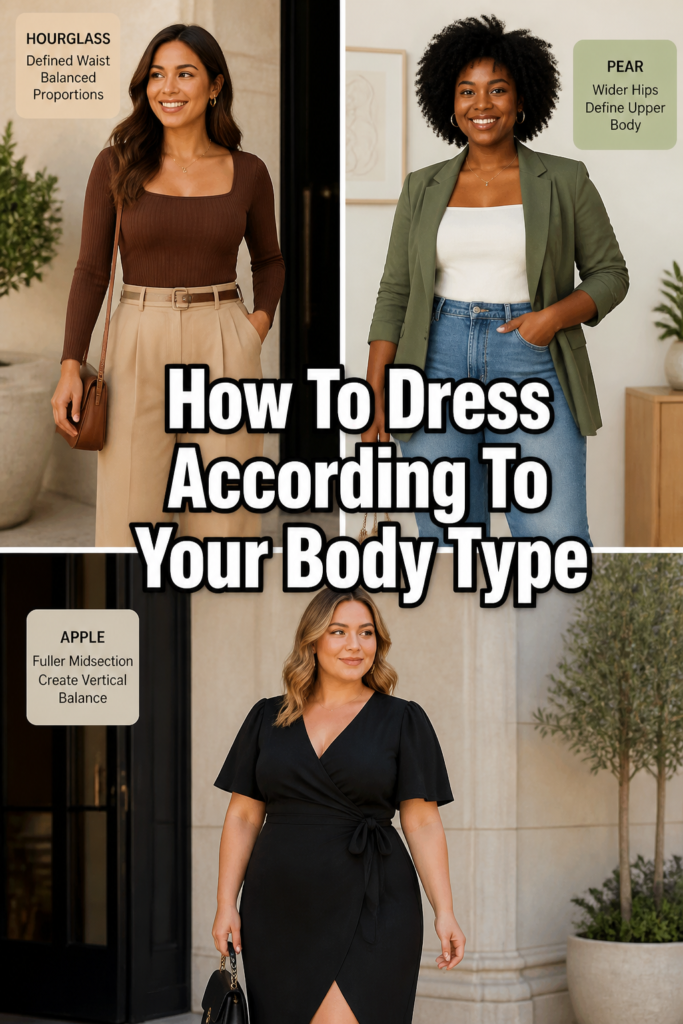
Apple Shape: You tend to carry weight around your midsection, with a less defined waist, slender legs, and a broader bust or shoulders.
Pear Shape: Your hips are wider than your bust and shoulders, and you often have a well-defined waist.
Hourglass Shape: Your bust and hips are roughly equal in width, with a clearly defined, narrow waist.
Rectangle Shape: Your shoulders, bust, waist, and hips are fairly uniform in width, creating a straighter silhouette with less waist definition.
Inverted Triangle Shape: Your shoulders or bust are wider than your hips, often with narrower hips and legs.
Pro Tip: Don’t get hung up on a perfect match. The goal is to understand your general proportions, not to fit into a rigid category. Many people find they are a combination of two types.
Step 3: Define Your Style Goals
Once you know your body type, consider what you want your clothes to achieve. Do you want to create the illusion of a more defined waist?
Perhaps you aim to balance broader shoulders with narrower hips, or vice versa. Your goals will guide your clothing choices.
Think about which features you love to highlight. Dressing according to your body type is about celebrating your unique shape, not concealing it.
Step 4: Choose the Right Silhouettes for Your Body Type
Different clothing cuts and shapes will flatter each body type uniquely. This is where you apply your understanding to actual garments.
For Apple Shapes: Focus on drawing attention to your legs and décolletage. Opt for V-neck tops, A-line dresses, empire waistlines, and straight-leg or bootcut trousers.
Avoid clingy fabrics around the midsection and overly bulky tops. Structured jackets that fall below the waist can also create a flattering line.
For Pear Shapes: Emphasize your upper body and waist. Choose boat necks, off-the-shoulder tops, and brightly colored or patterned blouses.
Darker, straight-leg, or bootcut pants and A-line skirts will gracefully skim your hips. Avoid overly tight bottoms or anything that adds bulk to your hip area.
For Hourglass Shapes: Cinch your waist to highlight your natural curves. Wrap dresses, belted tops, high-waisted skirts, and tailored jackets are excellent choices.
V-necks and scoop necks can also be very flattering. Avoid shapeless garments that hide your waist, as they can make you look larger than you are.
For Rectangle Shapes: Create curves and definition. Look for tops with ruffles or embellishments at the bust, peplum tops, and belted dresses or jackets.
Layering can add dimension, and A-line skirts or bootcut jeans can create the illusion of wider hips. Avoid overly straight or boxy cuts that further emphasize a lack of waist definition.
For Inverted Triangle Shapes: Balance your wider upper body with your narrower lower body. Focus on adding volume to your hips and legs.
A-line skirts, wide-leg pants, and patterned bottoms are great. V-necks and scoop necks can soften the shoulder line, and dark-colored tops can de-emphasize width.
Pro Tip: Fabric choice is just as important as silhouette. Stiffer fabrics hold shape and can add structure, while softer drapes can skim curves beautifully.
Step 5: Master the Art of Balancing Proportions
The key to dressing well for your body type is often about creating visual balance. If you have a dominant feature, you can balance it by drawing attention to another area.
For example, if you have broader shoulders (inverted triangle), choose bottoms that add volume, like a full skirt or wide-leg pants. This creates a harmonious overall look.
Conversely, if you have wider hips (pear shape), select tops with details, patterns, or brighter colors to draw the eye upwards. This redirects attention and balances your figure.
Step 6: Pay Attention to Necklines and Sleeves
Necklines can dramatically impact how your upper body appears. V-necks and scoop necks lengthen the neck and can reduce the appearance of broad shoulders.
Boat necks and off-the-shoulder styles can broaden the shoulders, which is great for pear shapes. Experiment with different necklines to see what flatters your bust and shoulder width.
Sleeve length and style also matter. Bell sleeves or puffed sleeves can add volume to the shoulders or balance out wider hips, depending on where the volume is placed.
Step 7: Accessorize Strategically
Accessories are powerful tools for directing the eye and enhancing your silhouette. Belts are particularly effective for defining a waist on hourglass, pear, and rectangle shapes.
Long necklaces can create a vertical line, elongating the torso for apple and rectangle shapes. Scarves can add color and interest to your upper body.
Statement jewelry on your upper body can draw attention upwards, balancing out a heavier lower half. Conversely, interesting shoes or bags can draw attention downwards.
Step 8: Understand Fabric and Fit
The way fabric drapes and how a garment fits is crucial. Too tight can emphasize areas you might prefer to de-emphasize, while too loose can add unnecessary bulk.
Opt for fabrics that skim your body rather than cling. Look for materials with some stretch for comfort and a flattering drape.
Ensure that seams lie flat and that garments aren’t pulling or gaping anywhere. A perfect fit is more important than the size on the label.
Step 9: Experiment and Refine
Dressing according to your body type isn’t a rigid set of rules, but a guide. The best way to learn is by trying on different styles.
Take pictures of yourself in outfits you like and dislike. Over time, you’ll develop an intuitive understanding of what works best for you.
Your body may change over time, and your style preferences will evolve. Regularly revisit these steps to ensure your wardrobe continues to serve you well.
Common Mistakes to Avoid
Ignoring Fit
Buying clothes that are too big or too small is a common pitfall. Oversized clothing can make you look shapeless and larger, while clothes that are too tight can create bulges and discomfort.
Always prioritize fit over size. A well-fitting garment, even if it’s a size up or down from your usual, will always look better and be more comfortable.
Chasing Trends Blindly
Not every trend will suit every body type. While it’s fun to experiment, adopting a trend just because it’s popular can lead to unflattering outfits.
Instead, integrate trends thoughtfully. Find versions of current styles that align with the silhouettes and principles that flatter your specific shape.
Hiding Your Body
Some people try to hide their perceived “flaws” under baggy clothing. This often backfires, making the person appear larger or shapeless rather than camouflaging anything.
Embrace your body. The goal is to highlight your best features and create balance, not to disappear within your clothes. Confidence comes from dressing well, not from hiding.
Not Considering Proportions
Forgetting the overall balance of an outfit can lead to an unbalanced look. For instance, pairing a voluminous top with equally voluminous bottoms can overwhelm your frame.
Always think about how different pieces interact to create an overall silhouette. If one piece has a lot of volume, balance it with a more streamlined piece.
Troubleshooting
“I Can’t Figure Out My Body Type”
It’s common to feel like you don’t fit perfectly into one category. Many people are a blend. Focus on your most dominant features instead.
If your shoulders are clearly wider than your hips, lean towards inverted triangle advice. If your waist is very defined, consider hourglass principles, even if your bust and hips aren’t perfectly equal.
“Nothing Looks Right on Me”
This feeling often stems from trying on clothes that aren’t designed for your proportions. It’s not you; it’s the clothes.
Revisit Step 4 and specifically look for silhouettes recommended for your type. Try different brands, as sizing and cuts vary widely. Don’t be afraid to try on many items until you find what truly flatters.
“I Feel Limited by These Rules”
These are guidelines, not unbreakable laws. Once you understand them, you can strategically break them to express your personal style.
Think of it as knowing the fundamentals before you improvise. Your confidence in your choices will shine through, regardless of strict adherence to “rules.”
Key Takeaways
- Accurately identify your body type by observing and measuring your shoulders, bust, waist, and hips.
- Choose clothing silhouettes that naturally flatter your shape, enhancing your best features.
- Balance your proportions by adding or reducing visual volume to different areas of your body.
- Pay close attention to necklines, sleeves, and accessories to further refine your look.
- Always prioritize good fit and quality fabrics over blindly following trends or sizes.
- Experiment regularly and don’t be afraid to try new styles to discover what makes you feel confident.
Frequently Asked Questions
Can my body type change?
Yes, body types can subtly change over time due to factors like age, weight fluctuations, or muscle development. It’s a good idea to reassess your body type periodically, especially after significant life changes, to ensure your styling strategies remain effective.
Does my height affect how I dress for my body type?
While body type focuses on horizontal proportions, height affects vertical proportions. Taller individuals might carry off longer lines and larger patterns more easily, while petite individuals might benefit from monochromatic looks and shorter hemlines to avoid being overwhelmed by fabric.
Should I only wear clothes specifically for my body type?
Not at all. The goal is to understand what works best for you and why. These guidelines provide a strong foundation. You can adapt trends or wear items not specifically “for” your body type by styling them strategically with other garments and accessories.
How do I know if a garment truly flatters me?
Stand in front of a full-length mirror and assess. Does it create balance? Does it highlight a feature you like? Most importantly, how does it make you feel? If you feel confident, comfortable, and good about how you look, it’s likely a flattering piece.
Your Style Evolution Starts Now
You now have the tools to transform your wardrobe and how you feel about getting dressed each day.
Take these insights and apply them to your next shopping trip or when you’re simply putting together an outfit from your closet.
Start small, perhaps by focusing on one new silhouette or a strategic accessory. Your journey to confident, personalized style has just begun.